
 Online Shop
 English
 China - 简体中文
 Global - English
 Brazil - Português
 Netherlands - Dutch
 Italy - Italiano
 Germany - Deutsch
 Spain - Español
 France - Français
 Vietnam - Tiếng Việt
 Poland - Polski
 Australia - English
 Japan - 日本語
Blog

High-Capacity Three-Phase Low-Voltage Hybrid Inverter for Scalable Solar Storage
The SUN-14/15/16/18/20K-SG05LP3-EU-SM2 three-string version is a three-phase low-voltage hybrid inverter platform designed for residential, light commercial, agricultural, and small industrial energy systems that require flexible solar generation, battery storage, grid interaction, generator support, and off-grid backup in one integrated architecture.
With rated power options of 14 kW, 15 kW, 16 kW, 18 kW, and 20 kW, this inverter family addresses a growing market need: higher-power three-phase hybrid systems that can still work with 48 V low-voltage batteries. Many competing hybrid inverters in this power class require high-voltage battery banks, which can increase system cost, installation complexity, and battery compatibility limits. By supporting low-voltage battery operation while maintaining three-phase output, high PV input capacity, and large charge and discharge currents, this product offers installers and end users a practical balance of performance, safety, scalability, and system flexibility.
The inverter is particularly valuable for projects where energy independence matters. It can store surplus solar energy, support scheduled battery charging and discharging, work with diesel generators, retrofit existing solar systems through AC coupling, and operate in parallel with up to ten units for expanded on-grid or off-grid capacity. These characteristics make it more than a standard solar inverter. It is the control center of a complete energy management system.
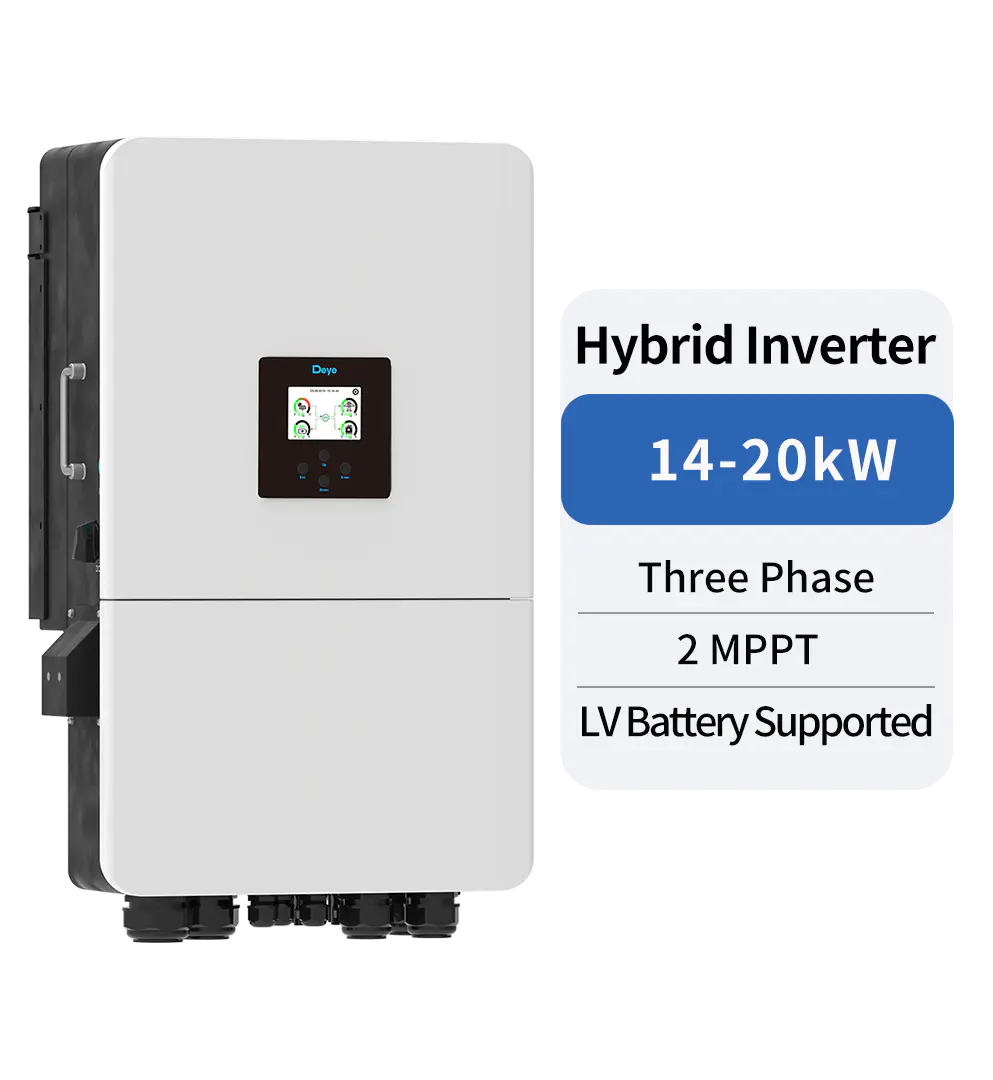
SUN-14/15/16/18/20K-SG05LP3-EU-SM2 (3-String Version)
Product Positioning and Core Value
The product belongs to the category of three-phase low-voltage hybrid inverters. It combines solar PV conversion, battery charge and discharge management, grid connection, backup power support, and monitoring interfaces. In practical terms, it allows users to consume more of their own solar power, reduce dependence on the grid, improve energy resilience, and design systems that can grow over time.
One of the most important product advantages is its support for 100% unbalanced output. In many real-world three-phase sites, electrical loads are not evenly distributed across phases. Some phases may carry more household appliances, pumps, compressors, lighting circuits, or machinery than others. A conventional three-phase inverter with limited phase imbalance capability can struggle in these conditions, causing reduced usable backup power or requiring complex load balancing. This inverter’s 100% unbalanced output capability improves usable power distribution and makes system design more forgiving.
Another major advantage is AC coupling for retrofitting existing solar systems. Many buildings already have grid-tied PV systems installed. Instead of replacing the existing inverter and redesigning the entire solar array, this hybrid inverter can be added to create a storage-enabled system. This reduces waste, protects the owner’s original investment, and enables a phased upgrade path from basic solar generation to full solar-plus-storage operation.
The inverter also supports a maximum of ten units in parallel for both on-grid and off-grid operation. This is a meaningful differentiator because it allows designers to begin with a single 14 kW to 20 kW unit and expand later as energy demand increases. Parallel capability is especially useful for commercial sites, farms, estates, workshops, telecom facilities, and community energy projects where future load growth is expected.
Model Range and Technical Overview
The series includes five model ratings: SUN-14K-SG05LP3-EU-SM2, SUN-15K-SG05LP3-EU-SM2, SUN-16K-SG05LP3-EU-SM2, SUN-18K-SG05LP3-EU-SM2, and SUN-20K-SG05LP3-EU-SM2. All models share the same fundamental architecture, including three-phase AC operation, low-voltage battery support, two MPPT trackers with a three-string arrangement, and intelligent air cooling.
The battery voltage range is 40 V to 60 V, supporting lead-acid and lithium-ion battery technologies. For lithium-ion batteries, the charging strategy adapts to the battery management system. This is important because the battery is one of the most valuable components in a storage system. Proper BMS communication and adaptive charging help support safer operation, better battery utilization, and longer service life.
Depending on the model, the maximum charging and discharging current ranges from 260 A to 350 A. The 20 kW model reaches 350 A, enabling strong battery-side power flow for demanding backup and self-consumption applications. This high current capability is a key reason the inverter can deliver substantial performance while still using a 48 V battery platform.
| Model | Rated AC Power | Max PV Access Power | Max DC Input Power | Max Charge/Discharge Current | Battery Voltage Range |
| SUN-14K-SG05LP3-EU-SM2 | 14,000 W | 28,000 W | 22,400 W | 260 A | 40-60 V |
| SUN-15K-SG05LP3-EU-SM2 | 15,000 W | 30,000 W | 24,000 W | 280 A | 40-60 V |
| SUN-16K-SG05LP3-EU-SM2 | 16,000 W | 32,000 W | 25,600 W | 300 A | 40-60 V |
| SUN-18K-SG05LP3-EU-SM2 | 18,000 W | 36,000 W | 28,800 W | 330 A | 40-60 V |
| SUN-20K-SG05LP3-EU-SM2 | 20,000 W | 40,000 W | 32,000 W | 350 A | 40-60 V |
The table shows one of the strongest design characteristics of this product family: the PV side is generously sized relative to the rated AC output. The maximum PV access power reaches twice the rated AC power. This allows designers to oversize the PV array, which can improve energy harvest during mornings, evenings, cloudy conditions, winter seasons, or non-ideal roof orientations. In many markets, PV module cost has declined significantly, making DC oversizing an effective way to increase daily energy production.
Three-String PV Design and MPPT Flexibility
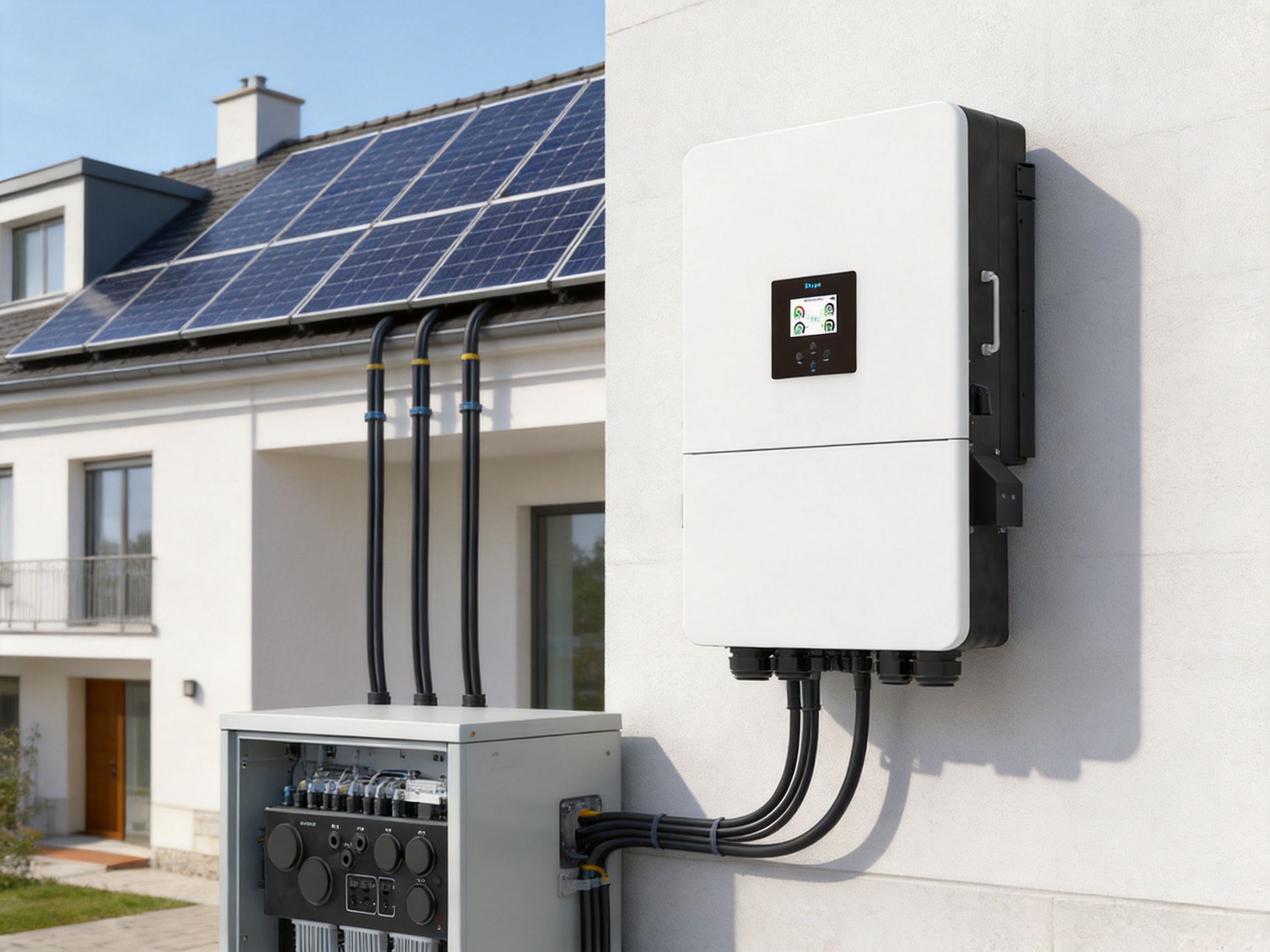
The inverter uses two MPPT trackers with a 2/2+1 string configuration. This means the PV input design supports three strings in total, with one MPPT handling two strings and the other MPPT handling one string. The maximum operating PV input current is 36 A plus 20 A, and the maximum input short-circuit current is 54 A plus 30 A. This current capability is useful in modern PV systems because many new solar modules have higher current outputs than older module generations.
The MPPT voltage range of 160 V to 650 V and a rated DC input voltage of 550 V provide practical flexibility for array design. The maximum DC input voltage is 800 V, while the start-up voltage is 160 V. These parameters make the inverter suitable for a wide range of string layouts, roof orientations, and module counts. Designers can create arrays that start producing earlier in the day and continue operating efficiently across variable irradiance conditions.
Compared with hybrid inverters that have fewer string inputs or lower MPPT current limits, this three-string version offers easier adaptation to complex rooftops. For example, one PV group may face east, another south, and another west. With separate MPPT tracking, the inverter can better optimize energy harvest under different sunlight profiles. This is particularly useful for buildings with multiple roof planes or partial shading.
Low-Voltage Battery Support as a Practical Advantage
Low-voltage battery compatibility is one of the defining strengths of this inverter. The system supports 40 V to 60 V battery operation and can work with lead-acid or lithium-ion batteries. In many installations, 48 V battery ecosystems are mature, widely available, and cost-effective. This can give installers more procurement options and can help users expand battery capacity over time.
Some high-power hybrid inverter competitors rely on high-voltage battery systems. High-voltage batteries can be effective, but they may also require stricter installation procedures, specialized battery models, and higher upfront costs. By contrast, a low-voltage battery platform is familiar to many solar professionals and can be attractive in regions where 48 V storage products are common.
The inverter’s maximum charging and discharging current of up to 350 A is especially important because low-voltage systems require higher current to achieve high power. Robust current handling demonstrates that the inverter was designed for serious storage applications, not only light backup functions. This makes it suitable for households or commercial buildings that need to run multiple loads during grid outages.
Support for multiple batteries in parallel further increases system adaptability. Users can start with a modest battery bank and expand later when energy needs grow or budget allows. This modular approach can reduce the barrier to entry for solar storage adoption.
100% Unbalanced Output for Real-World Three-Phase Loads
Three-phase power systems are often assumed to be balanced, but real installations rarely behave perfectly. Homes may have large single-phase appliances. Farms may have pumps, refrigeration units, or motors that operate at different times. Workshops may run machines unevenly across phases. In backup mode, the load distribution may become even more unpredictable.
The inverter’s 100% unbalanced output capability is therefore a major operational benefit. It means the system can deliver power more flexibly across phases instead of forcing the user to maintain strict load symmetry. For installers, this reduces the need for costly distribution board redesign. For end users, it improves backup usability because more existing circuits can remain powered.
When comparing hybrid inverters, phase imbalance capability is often overlooked in marketing materials, yet it can determine how well the system performs after installation. An inverter with excellent efficiency but limited unbalanced output may disappoint users when real load conditions appear. This model addresses that issue directly, making it more practical for demanding three-phase environments.
High Off-Grid Capability and Backup Performance
The inverter is not limited to simple grid-tied operation. It supports off-grid operation and can deliver peak power equal to two times rated power for 10 seconds. This short-duration overload capacity helps start loads with high inrush current, such as motors, pumps, compressors, and certain tools. In off-grid or backup systems, startup power is often more challenging than steady running power. The ability to handle peak demand improves user experience and reduces nuisance shutdowns.
The maximum continuous AC passthrough from grid to load is 70 A. This allows the inverter to support substantial loads while grid power is available. During normal operation, the inverter can coordinate between PV generation, batteries, the grid, and loads. During outages, it can supply backup power based on available PV and stored energy.
For remote properties, rural businesses, and weak-grid locations, off-grid performance can be critical. The product’s parallel operation capability also means backup systems can be scaled beyond a single inverter. Up to ten units can operate together, creating a platform for much larger power systems.
AC Coupling for Solar Retrofit Projects
One of the most practical features of this inverter is AC coupling. Many properties already have solar panels and a grid-tied inverter. These legacy systems often export surplus solar power during the day but provide little or no power during grid outages. Adding storage may require a complete redesign if the chosen hybrid inverter cannot integrate with existing equipment.
AC coupling enables a more flexible path. The hybrid inverter can be added to a site that already has solar generation, allowing battery storage and backup functions without removing the original solar system. This saves cost, reduces installation waste, and makes energy storage adoption more accessible.
Compared with competitors that require DC-side replacement or limited compatibility with existing inverters, AC coupling provides a stronger retrofit value proposition. It is especially suitable for markets where early solar adopters now want to add batteries, improve self-consumption, and protect against power outages.
Diesel Generator Energy Storage Support
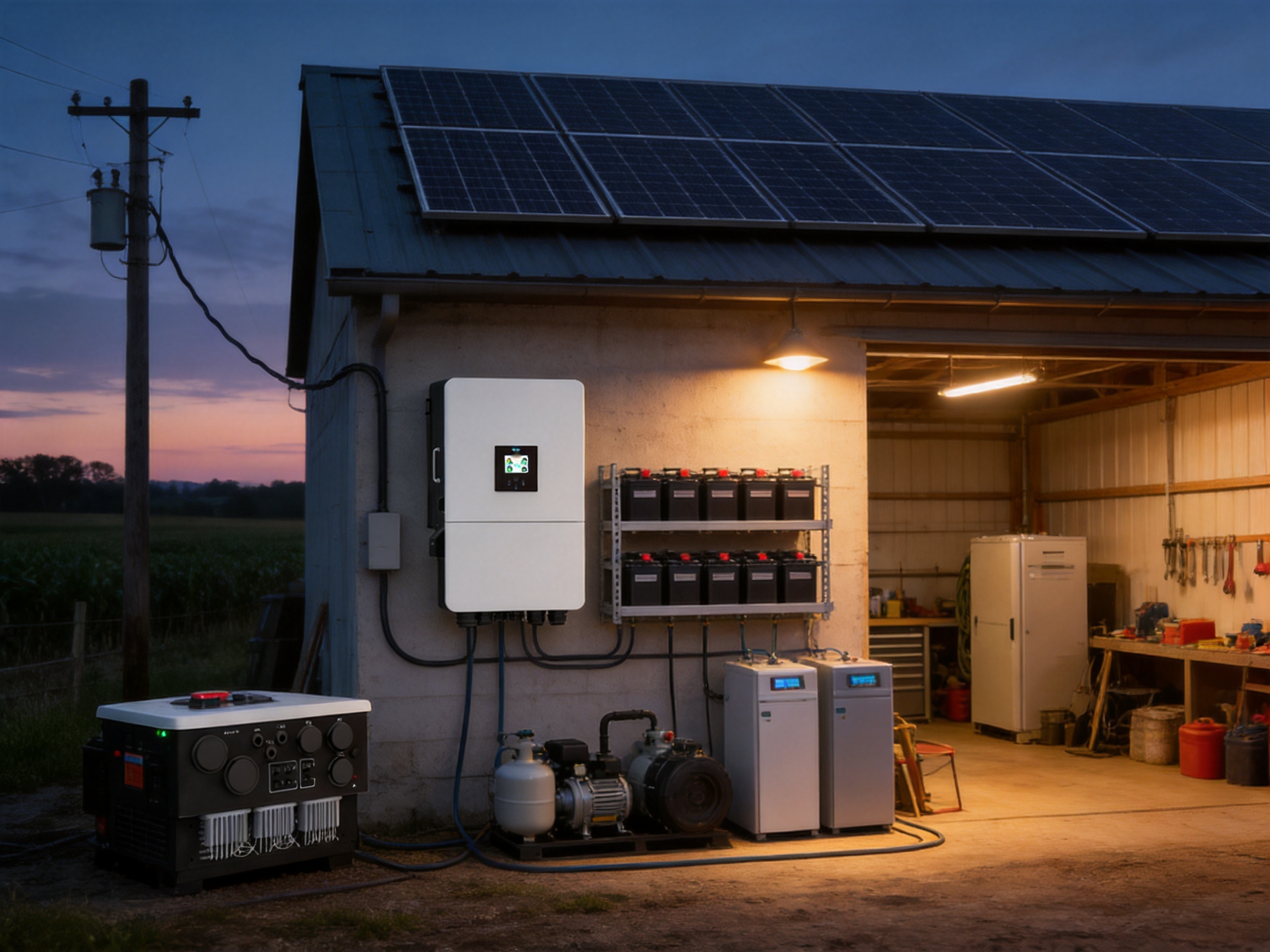
The inverter supports storing energy from a diesel generator. This feature is important for hybrid energy systems in remote areas, islands, farms, construction sites, and backup-critical facilities. Traditional generator operation can be inefficient because generators often run at partial load or must stay on for extended periods even when demand is low. By charging batteries from a generator, the system can reduce generator runtime, improve fuel efficiency, and provide quieter operation during low-load periods.
In a well-designed PV-battery-generator system, solar power supplies daytime loads and charges batteries. Batteries support evening and nighttime demand. The generator starts only when necessary, charging batteries and supporting loads during prolonged low-sun periods. This reduces fuel consumption, maintenance, noise, and emissions compared with generator-only power supply.
This generator support also differentiates the inverter from basic solar-plus-battery products intended only for urban grid-connected homes. It expands the product’s use cases into more demanding energy resilience applications.
Six Time Periods for Battery Charging and Discharging
The inverter supports six time periods for battery charging and discharging. This is valuable in regions with time-of-use electricity tariffs, demand charges, or variable energy pricing. Users can charge batteries when electricity is cheaper, discharge them when grid electricity is expensive, and reserve energy for backup according to daily routines.
For example, a commercial site may use solar power during the day, charge batteries during midday surplus production, discharge during evening peak tariff hours, and maintain a backup reserve overnight. A household may prioritize self-consumption in the evening while keeping emergency capacity for outages. Six programmable periods provide enough flexibility to match many energy strategies.
Compared with simpler inverters that offer only basic charge and discharge settings, this time-control function gives system owners more control over energy economics. It supports both energy independence and cost optimization.
Efficiency and Energy Yield
The inverter achieves a maximum efficiency of 97.6%, Euro efficiency of 97.0%, and MPPT efficiency above 99%. These figures indicate strong conversion performance in both peak and typical operating conditions. High efficiency matters because every percentage point of loss affects lifetime energy production. Over years of operation, small efficiency improvements can translate into significant additional usable energy.
MPPT efficiency above 99% means the inverter can accurately track the solar array’s maximum power point under changing irradiance and temperature conditions. This is especially relevant for systems with large PV arrays, multiple roof orientations, or partial shading. Good MPPT performance helps extract more energy from installed modules.
Efficiency should not be evaluated only by headline numbers. A strong hybrid inverter must also manage transitions between PV, battery, grid, generator, and load smoothly. The product’s integrated design, battery communication, and multiple operating modes contribute to overall system efficiency beyond simple conversion metrics.
Protection Architecture and Safety
The inverter includes a comprehensive set of protection functions. Integrated protections include DC polarity reverse connection protection, AC output overcurrent protection, thermal protection, AC output overvoltage protection, AC output short-circuit protection, DC component monitoring, overvoltage load drop protection, ground fault current monitoring, power network monitoring, islanding protection monitoring, earth fault detection, a DC input switch, DC terminal insulation impedance monitoring, residual current detection, and surge protection. Arc fault circuit interrupter functionality is optional.
Surge protection is rated Type II on both DC and AC sides. This is important for PV systems because solar arrays and long cable runs can be exposed to transient overvoltage events. Combined with proper external protection and installation practices, integrated surge protection helps improve system durability.
The inverter also supports grid regulation and safety standards including IEC 61727, IEC 62116, CEI 0-21, EN 50549, NRS 097, RD 140, UNE 217002, OVE-Richtlinie R25, G99, VDE-AR-N 4105, IEC/EN 61000 series standards, and IEC/EN 62109 standards. These certifications and regulatory references indicate readiness for international grid-connected applications and support installer confidence across multiple markets.
Environmental Durability
The operating temperature range is -40°C to +60°C, with derating above 45°C. This broad range supports installation in cold climates, hot climates, and variable outdoor environments. The inverter has an IP65 ingress protection rating, meaning it is designed to resist dust and water ingress in demanding installation conditions.
Permissible ambient humidity is 0% to 100%, and permissible altitude is 3000 m. These specifications extend the product’s application range to humid coastal regions, high-altitude areas, and diverse weather conditions. Noise is rated at no more than 60 dB, and cooling is handled by intelligent air cooling.
The cabinet size is 456 mm by 750 mm by 268.5 mm, excluding connectors and brackets, and the weight is 50.6 kg. For a 14 kW to 20 kW three-phase hybrid inverter with low-voltage battery capability and high current handling, this is a compact and manageable installation profile.
Monitoring and Communication
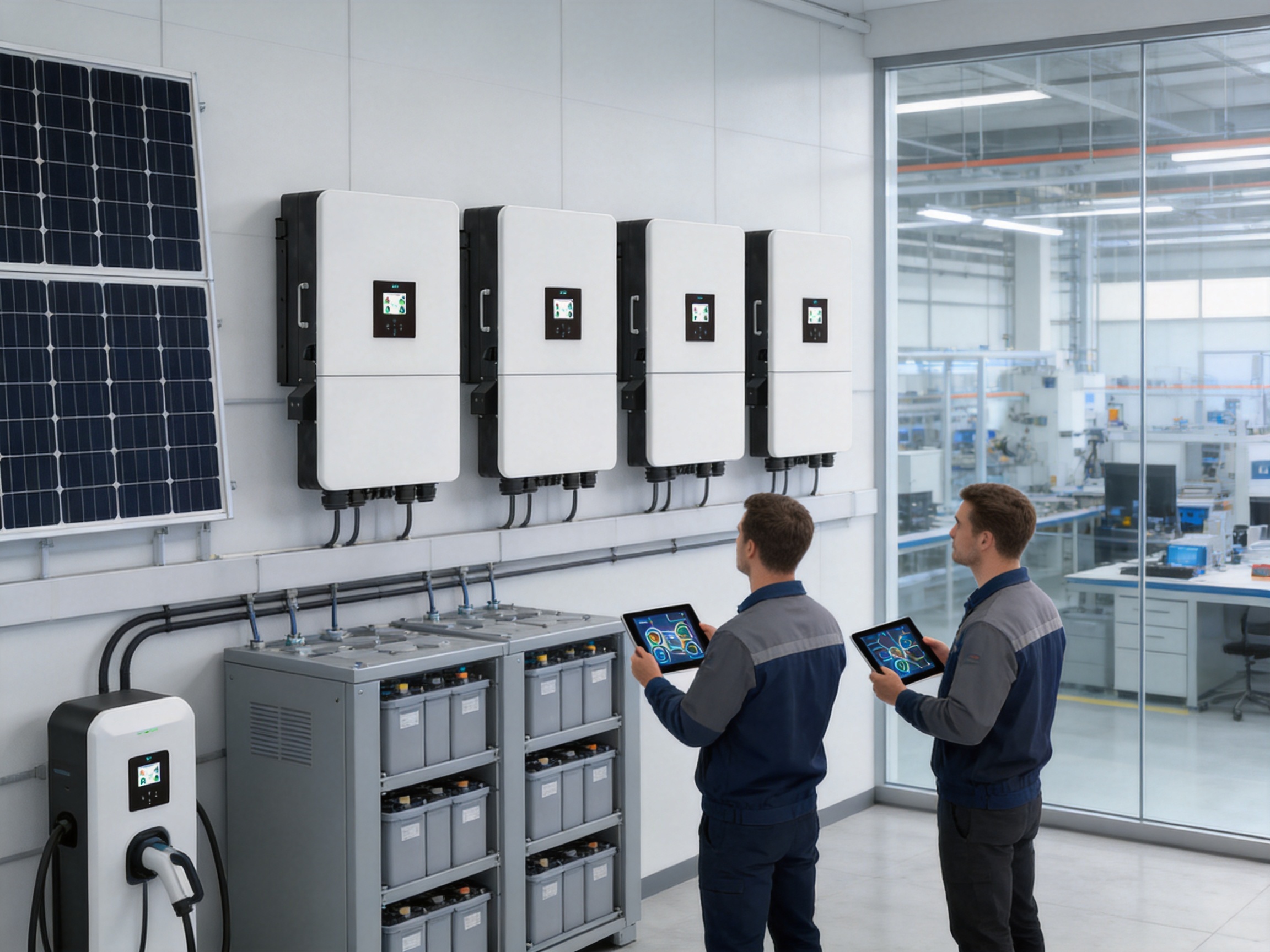
The inverter provides RS485, RS232, and CAN communication interfaces. Monitoring options include GPRS, WiFi, Bluetooth, 4G, and LAN depending on configuration. Communication flexibility is essential because modern solar storage systems are no longer isolated devices. They are connected assets that need remote monitoring, firmware support, energy analytics, and user control.
CAN communication is particularly important for lithium-ion battery integration because it allows interaction with battery management systems. RS485 and RS232 interfaces support broader integration with meters, controllers, and monitoring devices. Optional network methods allow installers to adapt the monitoring setup to local site conditions.
Through monitoring, users can observe PV production, battery state of charge, load consumption, grid exchange, fault conditions, and historical performance. For installers and service teams, remote monitoring reduces maintenance time and allows faster diagnosis. For commercial users, data visibility supports energy management decisions.
Advantages Over Competing Hybrid Inverters
The first competitive advantage is the combination of high three-phase power and 48 V battery support. Many hybrid inverters in the 14 kW to 20 kW class are designed around high-voltage batteries. This product provides a strong alternative for installers who prefer low-voltage battery ecosystems or need compatibility with existing 48 V battery banks.
The second advantage is high battery current capability. With maximum charging and discharging current up to 350 A, the inverter can support substantial energy flow between the battery bank and loads. This is critical for backup, self-consumption, and generator-assisted charging applications.
The third advantage is 100% unbalanced output. This feature directly addresses a real installation problem and improves usable backup power in three-phase systems. Competing models that require more balanced loads may require additional electrical work or may not support all desired circuits during outages.
The fourth advantage is PV oversizing capability. With maximum PV access power up to 40,000 W on the 20 kW model, the inverter can accept large solar arrays that improve energy yield throughout the day and across seasons. This is useful for users seeking high self-consumption and fast battery charging.
The fifth advantage is AC coupling. Retrofit compatibility allows the inverter to serve existing PV owners, not only new installations. This broadens the project range and reduces upgrade costs.
The sixth advantage is parallel scalability. Supporting up to ten units in parallel enables system expansion for larger homes, commercial buildings, farms, and microgrid applications. Instead of replacing equipment when demand grows, users can add more inverter capacity.
The seventh advantage is generator energy storage support. This makes the inverter suitable for hybrid power systems where fuel reduction, resilience, and long-duration backup matter. Many standard grid-tied hybrid products do not provide the same level of generator integration usefulness.
The eighth advantage is comprehensive protection and international compliance. A high-power hybrid inverter must be safe, stable, and grid-compatible. The broad range of integrated protections and standard references improves confidence for professional installations.
Manufacturing Strength and Industrial Capability
Ningbo Deye Inverter Technology Co., Ltd. benefits from the broader industrial foundation of Deye, a technology manufacturing enterprise founded in 2000. The company integrates research and development, design, production, sales, and service. Its listing on the Shanghai Stock Exchange in 2021 reflects a stage of accelerated growth and increased manufacturing scale.
The company’s inverter and energy storage businesses have developed strong research and production capabilities. Its product portfolio includes string inverters, hybrid energy storage inverters, microinverters, off-grid inverters, modular commercial and industrial energy storage systems, micro hybrid energy storage systems, EV chargers, accessories, monitoring products, and environmental appliances. This broad portfolio is important because hybrid inverter design requires expertise across power electronics, battery management, grid compliance, thermal design, embedded controls, and monitoring software.
Advanced manufacturing strength is not only about assembly capacity. It includes component selection, circuit design, firmware validation, thermal simulation, compliance testing, automated production, quality inspection, and after-sales traceability. For high-power hybrid inverters, these processes are essential because the product must operate safely under high current, variable weather, changing grid conditions, and frequent charge-discharge cycles.
The company’s experience in both PV inverters and ESS solutions gives it a systems-level understanding of solar energy. Rather than producing a single device in isolation, it develops products that fit into complete energy architectures: residential all-in-one ESS, commercial and industrial battery cabinets, modular ESS, PV-BESS-EV charging integrated systems, utility-scale liquid-cooled ESS, and energy IoT platforms. This ecosystem approach strengthens the inverter’s practical value because modern users need coordinated energy solutions.
Research and Development Orientation
Hybrid inverters require continuous research and development. Grid standards evolve, battery chemistries change, PV module currents increase, cybersecurity expectations grow, and users demand more intelligent monitoring. The development of a 14 kW to 20 kW three-phase low-voltage hybrid inverter reflects deep engineering focus because the product must handle high battery currents while maintaining stable three-phase AC output.
The inverter’s design choices show attention to real market needs: low-voltage battery compatibility, high PV oversizing, unbalanced output, AC coupling, diesel generator support, parallel scalability, time-based energy scheduling, multiple communication methods, and wide environmental tolerance. These are not superficial features. They are responses to actual installation challenges encountered by solar professionals.
In competitive markets, a manufacturer’s R&D strength becomes visible in how well a product balances performance, reliability, cost, and usability. This inverter family demonstrates that balance by providing high power without abandoning the widely used 48 V battery platform.
Quality Control and Reliability Considerations
For high-power energy equipment, reliability is a central purchasing factor. Inverters often operate outdoors, exposed to heat, humidity, dust, voltage transients, and daily thermal cycling. They also serve as critical infrastructure when they provide backup power. A failure can interrupt household life or business operations.
Manufacturing quality begins with design verification. Components must be selected for electrical stress, thermal behavior, and long-term durability. Power semiconductors, capacitors, relays, connectors, current sensors, and control boards must be validated under realistic operating conditions. Thermal protection and intelligent air cooling must be tuned to maintain performance while protecting internal components.
Production quality also depends on consistent assembly and inspection. High-current battery terminals, AC connections, DC input circuits, communication ports, and protective devices must be installed with precision. Electrical testing, insulation checks, functional testing, communication verification, and final inspection all contribute to field reliability.
The product’s IP65 rating, wide temperature range, integrated protection suite, and compliance with international safety and grid standards indicate a design intended for long-term dependable operation. For installers, this reduces service risk. For owners, it improves confidence in energy independence.
Applications in Residential Energy Storage
Large homes increasingly require three-phase hybrid systems. Electric heating, air conditioning, water pumps, EV charging, cooking appliances, and home workshops can create significant electrical demand. A smaller single-phase hybrid inverter may not be enough, especially when backup power is required.
The 14 kW to 20 kW power range is well suited for premium residential properties and multi-building estates. With battery storage, users can shift solar energy from daytime to evening, maintain power during grid outages, and reduce electricity purchases during peak tariff periods. The six time periods for battery scheduling allow homeowners to match energy behavior to their lifestyle and local tariff structure.
Because the inverter supports low-voltage batteries and multiple batteries in parallel, homeowners can build storage capacity step by step. This is useful when initial budget is limited or when energy demand increases later due to EV adoption or home electrification.
Applications in Commercial and Agricultural Sites
Small commercial buildings, workshops, farms, warehouses, clinics, and rural businesses often have three-phase loads and need reliable power. Grid interruptions can stop production, damage goods, interrupt refrigeration, or affect customer service. Solar-plus-storage systems can reduce operating costs and improve resilience.
The inverter’s ability to handle unbalanced output is especially useful in these environments because commercial load distribution is often uneven. Its generator support is also valuable for farms and rural sites where grid reliability may be limited. Batteries can reduce generator runtime and provide fast response when loads fluctuate.
Parallel operation up to ten units gives designers a path to larger systems. A single site may begin with one 20 kW inverter and later expand to multiple units as production grows, new buildings are added, or EV charging demand increases.
Applications in Microgrid and Weak-Grid Environments
Weak-grid environments require inverters that can manage instability, outages, and variable power sources. The SUN-14/15/16/18/20K-SG05LP3-EU-SM2 series is suitable for distributed energy systems that combine solar PV, batteries, grid input, and diesel generator backup.
In a microgrid configuration, PV power can serve daytime demand, batteries can stabilize supply and shift energy, and generators can provide long-duration backup when solar resources are insufficient. The inverter’s time scheduling, generator charging support, and off-grid peak power capability make it useful for these applications.
For communities, remote facilities, or islanded sites, the ability to parallel multiple units can create a scalable energy platform. Instead of relying entirely on fuel, users can increase renewable energy penetration and reduce operating costs over time.
Installation and System Design Considerations
Professional design is essential for any high-power hybrid inverter system. Installers should evaluate PV string voltage, current, orientation, battery capacity, cable sizing, protection devices, grounding, surge protection, ventilation, local grid regulations, and backup load priorities. Because this inverter supports high battery currents, proper battery cable sizing and connection quality are especially important.
Battery selection should consider chemistry, capacity, discharge rating, communication compatibility, and manufacturer recommendations. For lithium-ion batteries, BMS communication should be verified. For lead-acid batteries, charging parameters and usable depth of discharge should be configured carefully.
Backup load design should prioritize essential circuits. Even though the inverter provides strong output and overload capability, system autonomy depends on battery capacity and solar availability. Users should understand that high loads will consume stored energy quickly. A well-designed system balances inverter power rating, battery size, PV capacity, and expected outage duration.
Why This Inverter Represents a Strong Investment
The product’s value comes from more than its rated power. It combines high PV input capacity, low-voltage battery compatibility, flexible three-phase output, off-grid support, generator integration, AC coupling, parallel scalability, multiple communications, and comprehensive protection. These features allow it to serve a wide range of real-world applications.
For homeowners, it provides energy independence and backup power. For commercial users, it supports energy cost management and business continuity. For installers, it reduces design limitations and offers a scalable platform. For retrofit projects, it protects existing solar investments. For weak-grid and off-grid sites, it enables hybrid renewable energy systems with reduced generator reliance.
Compared with many competing products, the inverter’s strongest advantage is its ability to deliver high three-phase hybrid performance while maintaining compatibility with 48 V battery systems. This combination makes it distinctive in a market where high-power often means high-voltage battery dependency.
Q&A Section
What type of product is the SUN-14/15/16/18/20K-SG05LP3-EU-SM2?
It is a three-phase low-voltage hybrid inverter series with rated power options from 14 kW to 20 kW. It supports solar PV input, battery storage, grid connection, off-grid backup, AC coupling, diesel generator energy storage, and parallel operation.
What battery voltage does this inverter support?
It supports a 40 V to 60 V battery voltage range, making it suitable for 48 V low-voltage battery systems. It can work with lead-acid and lithium-ion batteries, and lithium-ion charging can adapt to the battery management system.
Why is 100% unbalanced output important?
In real three-phase installations, loads are often unevenly distributed across phases. 100% unbalanced output allows the inverter to supply power more flexibly, improving backup usability and reducing the need for complex load balancing.
Can it be used with an existing solar system?
Yes. The inverter supports AC coupling, which allows it to retrofit existing solar systems and add storage and backup capability without necessarily replacing the existing solar inverter.
How many units can operate in parallel?
Up to ten units can operate in parallel for on-grid and off-grid applications. This makes the system scalable for larger homes, commercial buildings, farms, and microgrid projects.
What is the maximum charging and discharging current?
The maximum current depends on the model. It ranges from 260 A on the 14 kW model to 350 A on the 20 kW model.
Does the inverter support diesel generators?
Yes. It supports storing energy from a diesel generator, which can reduce generator runtime, improve fuel efficiency, and strengthen backup performance in remote or weak-grid applications.
What monitoring options are available?
The inverter supports RS485, RS232, and CAN communication interfaces. Monitoring options include GPRS, WiFi, Bluetooth, 4G, and LAN depending on the selected configuration.
What protection features are integrated?
Integrated protections include reverse polarity protection, overcurrent protection, thermal protection, overvoltage protection, short-circuit protection, ground fault monitoring, islanding protection, residual current detection, insulation monitoring, and Type II surge protection on both DC and AC sides.
What makes this product competitive?
Its major competitive strengths include 48 V low-voltage battery support at high three-phase power levels, up to 350 A charge and discharge current, 100% unbalanced output, AC coupling, generator support, high PV oversizing capability, parallel scalability, and extensive protection features.
Conclusion
The SUN-14/15/16/18/20K-SG05LP3-EU-SM2 three-string version is a powerful and flexible three-phase hybrid inverter platform for modern solar energy storage systems. It addresses the central challenges of today’s distributed energy market: how to increase self-consumption, add reliable backup, integrate batteries safely, retrofit existing PV systems, support uneven three-phase loads, and scale capacity over time.
Its support for low-voltage batteries distinguishes it from many high-power competitors. Its 100% unbalanced output improves real-world performance. Its AC coupling and generator support broaden its application range. Its parallel capability enables growth from a single inverter to larger systems. Its high efficiency, advanced communication, robust protection functions, and international compliance references make it suitable for demanding residential, commercial, agricultural, and weak-grid projects.
Backed by Ningbo Deye Inverter Technology Co., Ltd.’s manufacturing experience, R&D capability, broad solar and energy storage portfolio, and global market presence, this inverter represents a mature solution for users seeking scalable, safe, and practical energy independence.
References
Deye Product Datasheet: SUN-14/15/16/18/20K-SG05LP3-EU-SM2 Three Phase Hybrid Inverter.
Deye Product Manual: SUN-14/20K-SG05LP3-EU-SM2 Installation and Operation Documentation.
IEC 61727: Photovoltaic Systems Characteristics of the Utility Interface.
IEC 62116: Utility-Interconnected Photovoltaic Inverters Test Procedure of Islanding Prevention Measures.
IEC/EN 62109-1 and IEC/EN 62109-2: Safety of Power Converters for Use in Photovoltaic Power Systems.
EN 50549: Requirements for Generating Plants to be Connected in Parallel with Distribution Networks.
IEC/EN 61000 Series: Electromagnetic Compatibility Standards for Electrical and Electronic Equipment.
Product: SUN-14/15/16/18/20K-SG05LP3-EU-SM2 (3-String Version)
PREV:High-Efficiency Low-Voltage Three-Phase String Inverter for Commercial Solar PV Systems
NEXT:Smart Solar-Integrated EV Charging for Homes and Businesses
Share
Product recommendations
news recommendations
-
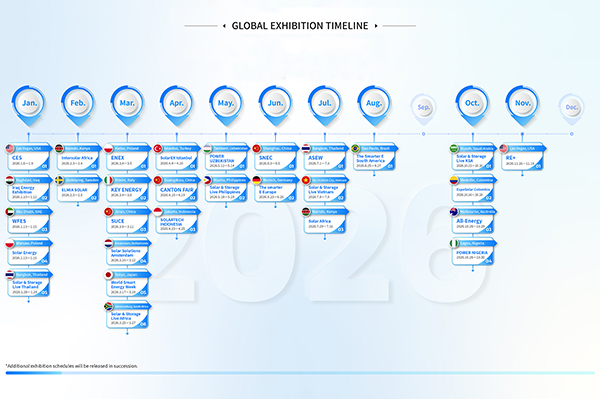 GLOBAL EXHIBITION TIMELINE
*Click to view larger image
-
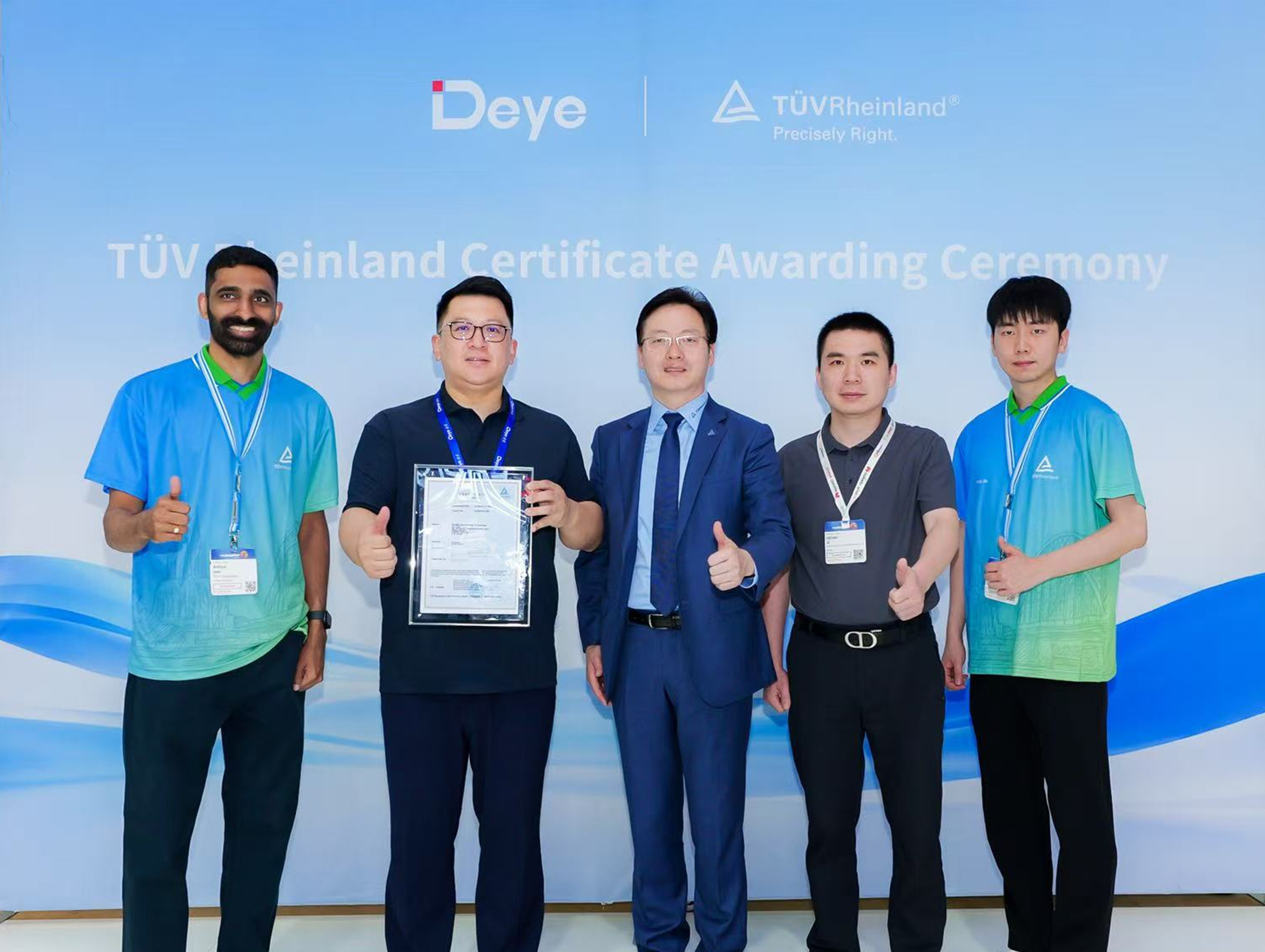 Deye Secures Multiple TÜV Rheinland Certifications at The smarter E Europe
On June 23, the opening day of The smarter E Europe 2026, Deye was officially awarded several presti...
-
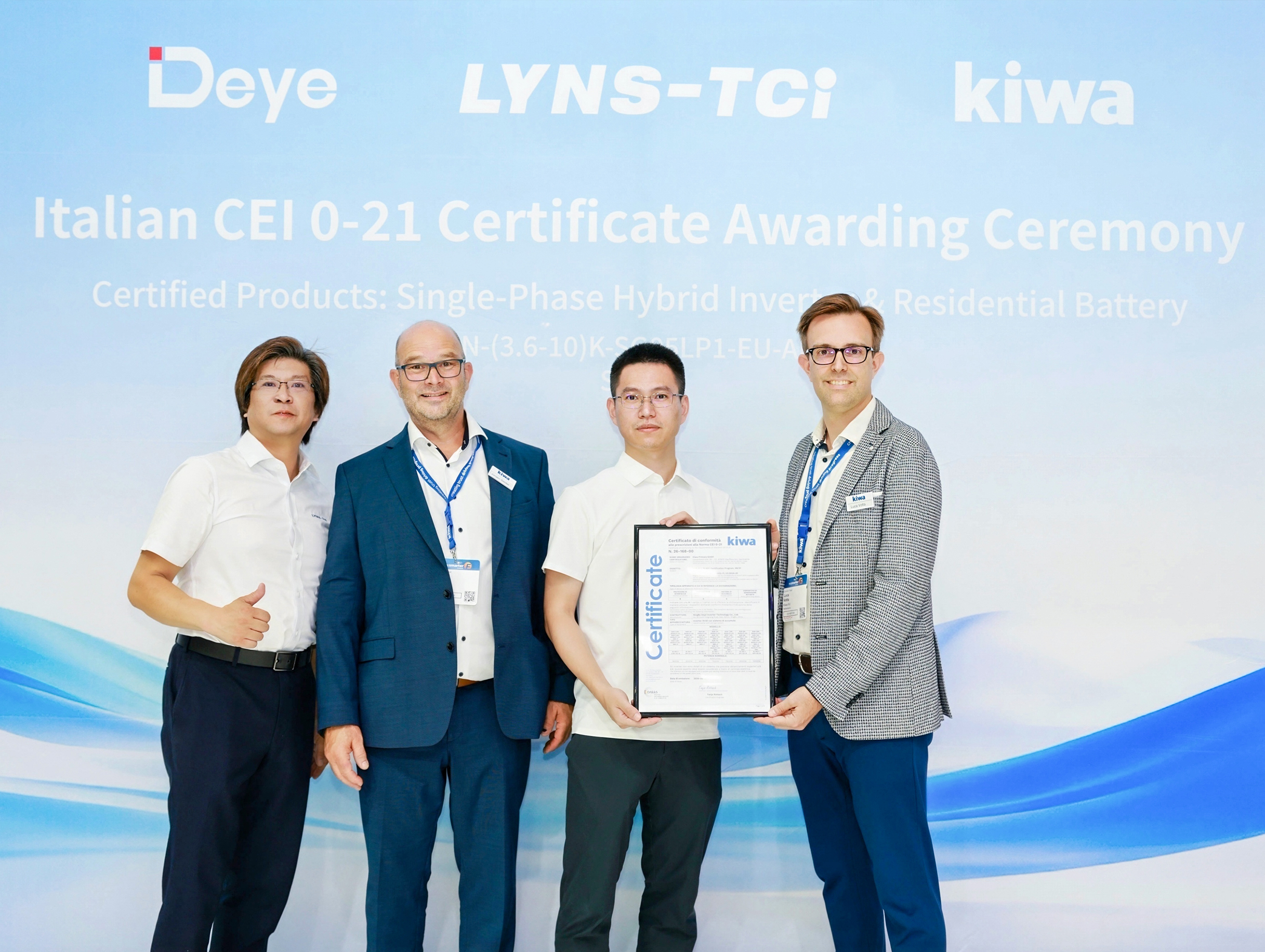 Deye Next-Gen Residential Energy Storage Products Receive Italian CEI 0-21 Certification from Kiwa
At The smarter E Europe 2026, Deye, a leading supplier of inverters and energy storage solutions, of...

Copyright@ 2024.Ningbo Deye Inverter Technology Co.,Ltd. All rights reserved. Solar Inverter Manufacturer
