
 Online Shop
 English
 China - 简体中文
 Global - English
 Brazil - Português
 Netherlands - Dutch
 Italy - Italiano
 Germany - Deutsch
 Spain - Español
 France - Français
 Vietnam - Tiếng Việt
 Poland - Polski
 Australia - English
 Japan - 日本語
Blog

Single-Phase Low-Voltage Hybrid Inverter for High-Power Solar Storage Applications
Modern solar energy systems are no longer judged only by how many kilowatt-hours they generate during sunny hours. Homeowners, small businesses, agricultural users, and light commercial facilities increasingly want energy systems that can store solar power, manage time-of-use tariffs, support backup loads, interact with diesel generators, and expand as energy needs grow. The SUN-12/14/16/18K-SG01LP1-EU-AM3-P single-phase low-voltage hybrid inverter series is designed for exactly this environment. With power classes from 12 kW to 18 kW, three MPPT channels, low-voltage battery compatibility, strong charging and discharging current capability, IP65 protection, and extensive grid and off-grid operating functions, it offers a complete platform for high-performance distributed energy storage.
This product is positioned in the hybrid inverter category, combining PV conversion, battery management, grid interaction, backup power, and monitoring into one integrated energy hub. It is especially notable because it brings high power capacity to single-phase low-voltage systems, a segment where many competing products are limited by lower battery current, fewer MPPT channels, restricted parallel operation, or weaker retrofit capability. The series supports lead-acid and lithium-ion batteries in a 40 V to 60 V range, making it suitable for widely used low-voltage battery architectures while still providing impressive maximum charge and discharge current ratings up to 380 A on the 18 kW model.
Ningbo Deye Inverter Technology Co., Ltd. has developed this series as part of a broad solar PV and energy storage portfolio that includes string inverters, microinverters, off-grid inverters, hybrid inverters, modular commercial and industrial energy storage systems, monitoring accessories, PV optimizers, EV charging products, and integrated PV-BESS-EV charging solutions. The company’s manufacturing scale, R&D capability, global sales footprint, and experience across residential, commercial, industrial, and utility applications give this inverter series a strong technical foundation. For system designers and installers, the result is a product that balances flexibility, electrical robustness, user-friendly control, and long-term serviceability.
SUN-12/14/16/18K-SG01LP1-EU-AM3-P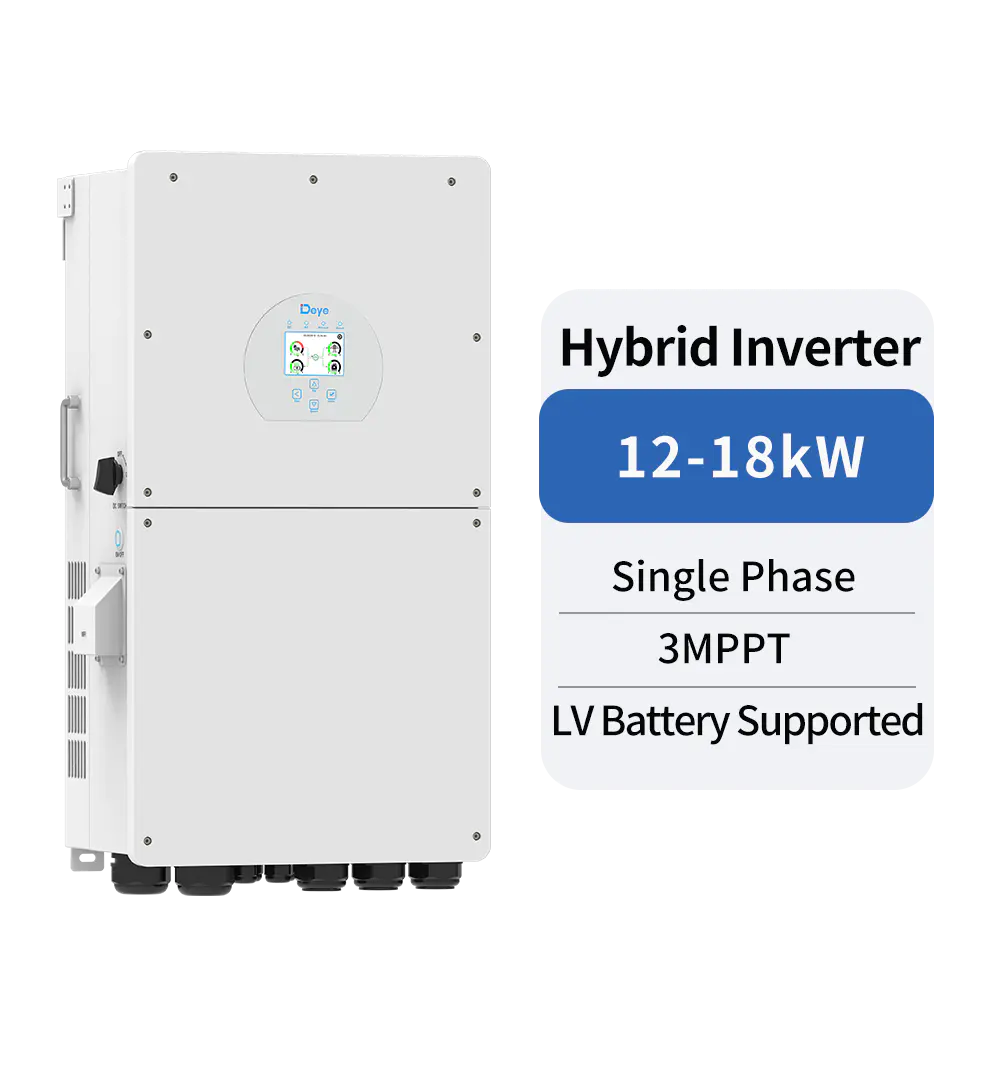
Product Positioning and Core Value
The SUN-12/14/16/18K-SG01LP1-EU-AM3-P series is a single-phase hybrid inverter family for systems requiring high PV capacity, powerful battery charging and discharging, and dependable backup capability. The four model options are SUN-12K-SG01LP1-EU-AM3-P, SUN-14K-SG01LP1-EU-AM3-P, SUN-16K-SG01LP1-EU-AM3-P, and SUN-18K-SG01LP1-EU-AM3-P. The product line provides rated AC input and output active power options of 12 kW, 14 kW, 16 kW, and 18 kW, with a maximum AC input and output apparent power range from 13.2 kVA to 19.8 kVA.
At the heart of the design is the hybrid concept. A conventional grid-tie inverter converts solar DC into AC power for loads and grid export, but it cannot independently store excess energy or power essential circuits during grid outages unless paired with additional equipment. A hybrid inverter performs a more central role. It directs PV energy to loads, batteries, or the grid; charges batteries from solar, grid, or generator sources when configured; discharges batteries for self-consumption or backup; and manages system priorities across multiple operating conditions. This integrated capability reduces system complexity compared with separate PV inverter and battery inverter combinations.
One major advantage of this product is its AC coupling capability for retrofitting existing solar systems. Many buildings already have grid-tied PV systems installed. Replacing those systems can be expensive and unnecessary. With AC coupling support, this hybrid inverter can be added to an existing solar installation to introduce battery storage and backup functions. This makes the series valuable not only for new installations but also for energy upgrades where the customer wants to improve self-consumption, reduce grid dependence, or create resilience during outages.
The inverter also supports storing energy from a diesel generator. In remote areas, farms, islanded facilities, construction sites, and regions with unreliable grids, diesel generators are often used for emergency power. However, generators are inefficient when lightly loaded and expensive to operate continuously. By coordinating generator input with battery storage, the hybrid inverter can help reduce generator runtime, improve fuel efficiency, and use stored energy more intelligently. This function is a competitive differentiator because many residential-grade hybrid inverters do not offer the same practical generator integration for demanding off-grid or weak-grid environments.
Key Technical Specifications
| Item | SUN-12K | SUN-14K | SUN-16K | SUN-18K |
| Rated AC Input/Output Active Power | 12,000 W | 14,000 W | 16,000 W | 18,000 W |
| Max. AC Input/Output Apparent Power | 13,200 VA | 15,400 VA | 17,600 VA | 19,800 VA |
| Battery Voltage Range | 40–60 V | 40–60 V | 40–60 V | 40–60 V |
| Battery Type | Lead-acid or lithium-ion | Lead-acid or lithium-ion | Lead-acid or lithium-ion | Lead-acid or lithium-ion |
| Max. Charging/Discharging Current | 220 A | 250 A | 290 A | 380 A |
| Max. PV Access Power | 24,000 W | 28,000 W | 32,000 W | 36,000 W |
| Max. PV Input Power | 19,200 W | 22,400 W | 25,600 W | 28,800 W |
| MPPT Channels | 3 | 3 | 3 | 3 |
| MPPT Voltage Range | 150–425 V | 150–425 V | 150–425 V | 150–425 V |
| Max. PV Input Voltage | 500 V | 500 V | 500 V | 500 V |
| Max. Efficiency | 97.6% | 97.6% | 97.6% | 97.6% |
| Ingress Protection | IP65 | IP65 | IP65 | IP65 |
| Communication | WiFi, RS485, CAN | WiFi, RS485, CAN | WiFi, RS485, CAN | WiFi, RS485, CAN |
High-Power Low-Voltage Battery Design
Low-voltage battery systems remain popular in residential and small commercial energy storage because they can be cost-effective, widely available, and easier to service in many markets. However, low-voltage architecture creates a design challenge: to deliver high power, the system must handle high current safely and efficiently. The SUN-12/14/16/18K-SG01LP1-EU-AM3-P series addresses this challenge with maximum battery charging and discharging current ratings of 220 A, 250 A, 290 A, and 380 A across the four models.
The 18 kW model’s 380 A current capability is particularly important. In many competing low-voltage hybrid inverters, battery current limitations can restrict real-world power delivery even when the AC rating appears high on paper. A system may have enough battery capacity, but if the inverter cannot move energy quickly enough, large loads may still require grid support or generator operation. This series is engineered to deliver strong battery power flow, allowing the inverter to better support heavy household appliances, pumps, workshop tools, air-conditioning equipment, and other demanding single-phase loads when the battery bank is properly sized.
The battery input supports lead-acid and lithium-ion chemistries. This flexibility is useful because different regions and customer segments have different storage preferences. Lithium-ion batteries offer higher energy density, faster response, longer cycle life, and intelligent BMS communication. Lead-acid batteries may still be selected for budget-sensitive applications, replacements, or sites where established maintenance practices exist. For lithium-ion batteries, the inverter supports self-adaption to the BMS, improving coordination between inverter charging logic and battery protection requirements.
The low-voltage range of 40 V to 60 V also makes the series compatible with many common 48 V battery systems. A 48 V nominal architecture is familiar to installers and battery manufacturers, and it can be scaled by connecting multiple battery modules in parallel when permitted by battery system design. The product supports multiple batteries in parallel, enabling greater storage capacity for customers who need extended backup duration or larger self-consumption reserves.
Three MPPT Channels for More Flexible PV Design
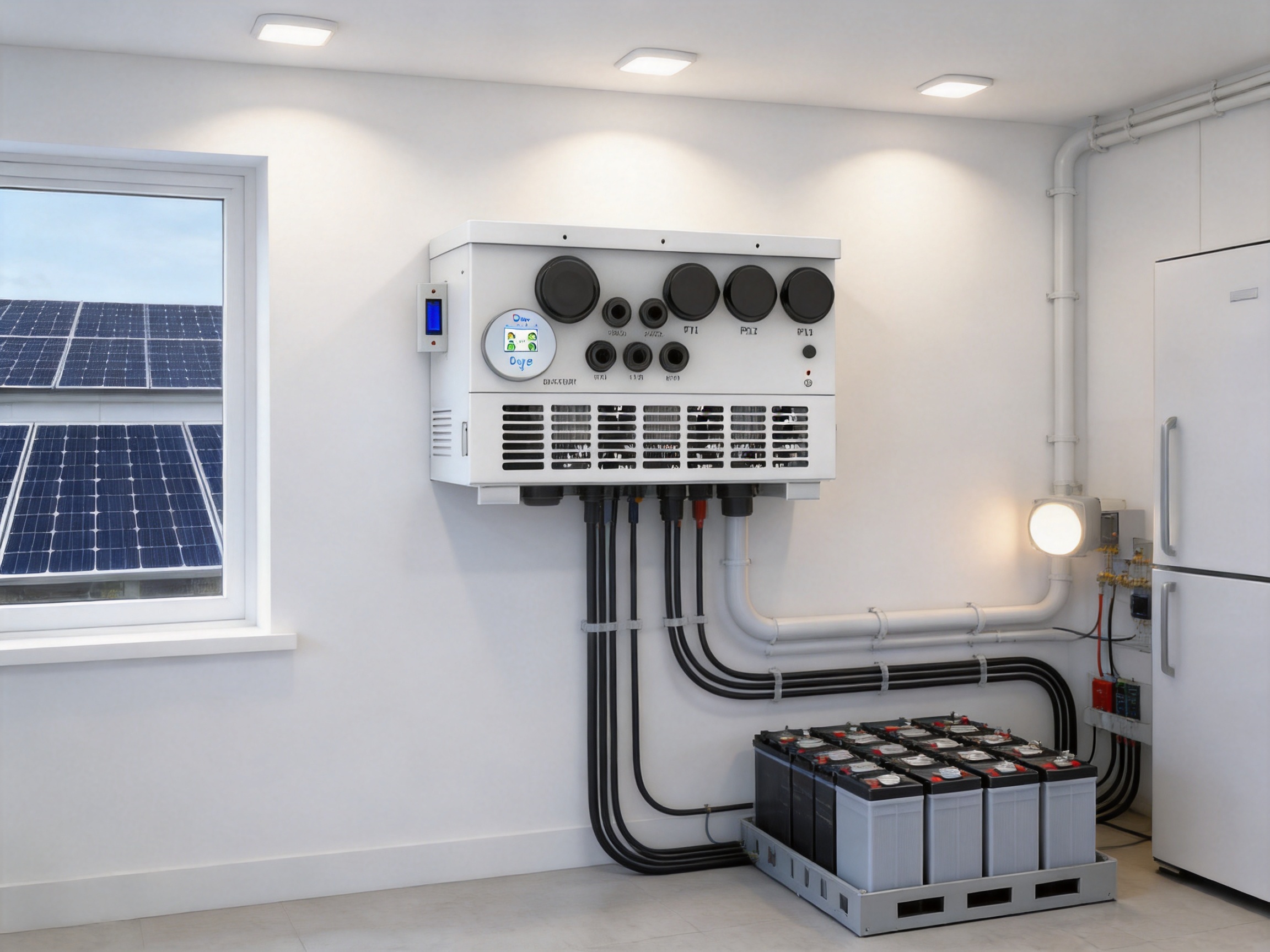
Solar arrays rarely experience perfect uniformity. Roof surfaces may face different directions, tilt angles may vary, nearby trees may create partial shading, and commercial rooftops may include obstructions such as vents, parapets, and HVAC equipment. A hybrid inverter with limited MPPT capability can force installers to compromise array layout or accept production losses. This series provides three MPPT trackers with a string configuration of 3/2+2+2, giving designers more freedom to divide PV strings according to roof geometry and irradiance conditions.
The MPPT voltage range of 150 V to 425 V and rated PV input voltage of 370 V support efficient DC operation for appropriately designed PV strings. The maximum PV input voltage is 500 V, while the startup voltage is 125 V. These values support a balance between installation flexibility and electrical safety. With maximum operating PV input current of 36 A + 36 A + 36 A and maximum input short-circuit current of 54 A + 54 A + 54 A, the inverter is suitable for modern high-current PV modules when strings are configured according to product requirements and local electrical codes.
Another strong feature is the high PV access power capacity. The series supports maximum PV access power from 24 kW on the 12 kW model to 36 kW on the 18 kW model, with maximum PV input power from 19.2 kW to 28.8 kW. This oversizing capability allows the system to harvest more energy in low-light conditions, shoulder seasons, and winter months. In practical solar design, DC oversizing can improve annual energy yield because PV modules rarely operate at nameplate output for long periods. A generous PV access rating gives designers more room to optimize performance without immediately moving to a larger or more complex inverter platform.
MPPT efficiency above 99% further supports energy harvest. The inverter’s tracking algorithm continuously seeks the optimal voltage-current operating point of the PV array, helping maximize solar generation as irradiance and temperature change throughout the day. In competitive terms, three independent MPPT channels and strong current ratings give this product an edge over simpler single-phase hybrid inverters that may provide only one or two MPPTs, especially in installations where multiple roof planes are involved.
Strong AC Performance for Demanding Single-Phase Loads
The series is designed for single-phase systems using 220 V or 230 V nominal voltage with L+N+PE wiring. It supports rated input and output grid frequencies of 50 Hz and 60 Hz, with frequency operating ranges of 45–55 Hz and 55–65 Hz respectively. This broad frequency compatibility supports deployment in many international markets. Rated AC input and output currents range from 54.6/52.2 A on the 12 kW model to 81.9/78.3 A on the 18 kW model, while maximum AC input and output currents reach 90/86.1 A on the 18 kW unit.
For backup and off-grid performance, peak power is rated at two times the inverter’s rated power for 10 seconds. This is highly relevant for loads with starting surges, such as compressors, pumps, motor-driven equipment, refrigerators, and some workshop machinery. Many users discover that an inverter with adequate continuous power may still struggle to start inductive loads. The ability to provide short-term surge capacity improves real-world usability and reduces nuisance shutdowns when properly installed and matched with suitable batteries.
The product also supports maximum continuous AC passthrough from grid to load, with ratings indicated up to 100 A and 200 A depending on model grouping. AC passthrough is important because an energy system must serve building loads even when solar and battery output are not the only sources of power. High passthrough capability reduces bottlenecks and allows the system to operate more naturally as a central power management unit rather than a limited auxiliary device.
Total current harmonic distortion is specified below 3% at nominal power, and DC injection current is below 0.5% In. These values matter for power quality, grid compliance, and the protection of connected equipment. The power factor adjustment range from 0.8 leading to 0.8 lagging enables grid support functions and compliance with various utility requirements. In markets where utilities increasingly require distributed inverters to contribute to grid stability, adjustable power factor is not merely a technical detail; it is part of future-ready grid integration.
Energy Management with Six Time Periods
Electricity tariffs are becoming more dynamic. In many regions, peak evening energy prices are far higher than midday prices. In other places, export compensation is low, encouraging customers to consume stored solar energy rather than send it to the grid. The inverter’s six time periods for battery charging and discharging allow users and installers to build operating schedules that match local tariffs, consumption patterns, and backup requirements.
For example, the system can be configured to charge batteries from solar during the day, discharge during evening peak periods, reserve a portion of capacity for backup, and use grid charging during low-cost overnight tariff windows when permitted. In a weak-grid or generator-assisted installation, time scheduling can also help coordinate when stored energy is used and when the generator should be avoided. Compared with simpler hybrid inverters that provide only basic self-consumption modes, multi-period scheduling delivers more precise control over energy economics.
This function is especially useful for homes with electric vehicles, heat pumps, solar air conditioners, or flexible loads. Although the inverter itself is not an EV charger, it can be part of a larger PV-storage-EV ecosystem by ensuring solar and battery energy are available at the most valuable times. When paired with monitoring and intelligent load strategies, time-based battery control helps transform a solar system from a passive generator into an active energy asset.
Parallel Operation and System Scalability
Scalability is one of the series’ strongest competitive advantages. The inverter supports up to 16 units in parallel for on-grid and off-grid operation. This capability is significant because it allows installers to build systems that exceed the capacity of a single inverter while maintaining a common platform. A small business, farm, estate, or multi-building property can begin with one unit and later expand as consumption grows, as battery prices fall, or as additional PV capacity is installed.
Parallel operation also supports redundancy and modularity. Instead of relying on one large central device, multiple hybrid inverters can share loads when the system is correctly designed. This approach can simplify logistics, stocking, installation training, and service practices for installers. A contractor familiar with one inverter family can deploy it across a broad range of project sizes, reducing engineering complexity and inventory fragmentation.
The support for multiple batteries in parallel further enhances expansion potential. Energy storage needs vary widely. One customer may require only enough storage to shift solar energy into the evening, while another may need several days of autonomy for unreliable-grid conditions. By supporting parallel battery expansion, the inverter platform gives users the possibility of phased investment. This is valuable in markets where energy needs evolve quickly, or where customers prefer to start with a practical entry system and expand after observing real performance.
Retrofit Capability for Existing Solar Assets
Many solar PV installations were built before battery storage became mainstream. These systems may still be producing well, but owners now want backup protection, greater self-consumption, or tariff optimization. Removing a working grid-tie inverter is often wasteful. The AC coupling function of the SUN-12/14/16/18K-SG01LP1-EU-AM3-P series enables retrofitting so that existing solar generation can become part of a storage-enabled energy system.
In an AC-coupled arrangement, existing PV inverter output can be coordinated with the hybrid inverter, battery, grid, and loads. This approach can reduce upgrade cost and installation disruption. It can also preserve warranties or layouts associated with the original PV system. For installers, retrofit capability opens a large market: customers who already believe in solar and now want to improve resilience and energy independence.
Competitively, retrofit friendliness is a major differentiator. Some hybrid inverters are designed mainly for new DC-coupled systems, limiting their appeal for existing PV owners. Others require additional controllers or complicated workarounds. A hybrid inverter with direct AC coupling support simplifies the conversation: the customer can keep much of what already works while adding storage intelligence and backup capability.
Protection, Durability, and Safety Engineering
Energy storage systems must be safe under normal operation, fault conditions, and environmental stress. This inverter integrates a wide range of protection functions, including DC reverse polarity protection, AC output overcurrent protection, thermal protection, AC output overvoltage protection, AC output short-circuit protection, DC component monitoring, anti-islanding protection, a DC switch, insulation impedance detection, and residual current detection. Arc fault circuit interrupter functionality is optional, supporting enhanced PV safety where required or preferred.
The surge protection level is Type II for both DC and AC sides, helping protect the inverter and connected system against transient overvoltage events. While external surge protection and grounding design must still follow local regulations and site conditions, integrated Type II protection contributes to system resilience. The overvoltage category is OVC II on the DC side and OVC III on the AC side, aligning the product with expected electrical installation environments.
The inverter has an IP65 ingress protection rating, making it suitable for indoor and outdoor installation environments when installed according to the manual. IP65 protection helps guard against dust ingress and water jets, an important consideration for garages, equipment rooms, sheltered outdoor walls, farm buildings, and commercial sites. The permissible ambient humidity range is 0% to 100%, and the operating temperature range is -40°C to +60°C, with derating above 45°C. This wide environmental range gives system designers confidence in diverse climates, from cold winters to hot summers.
Thermal management uses intelligent air cooling. Compared with purely passive cooling, intelligent forced cooling can help sustain performance under higher loads and elevated ambient temperatures. Compared with less optimized cooling designs, intelligent fan control can reduce unnecessary noise and energy consumption while protecting critical components. The specified noise level is below 55 dB, suitable for many residential and light commercial settings when installation location is chosen responsibly.
User Interface, Monitoring, and Communications
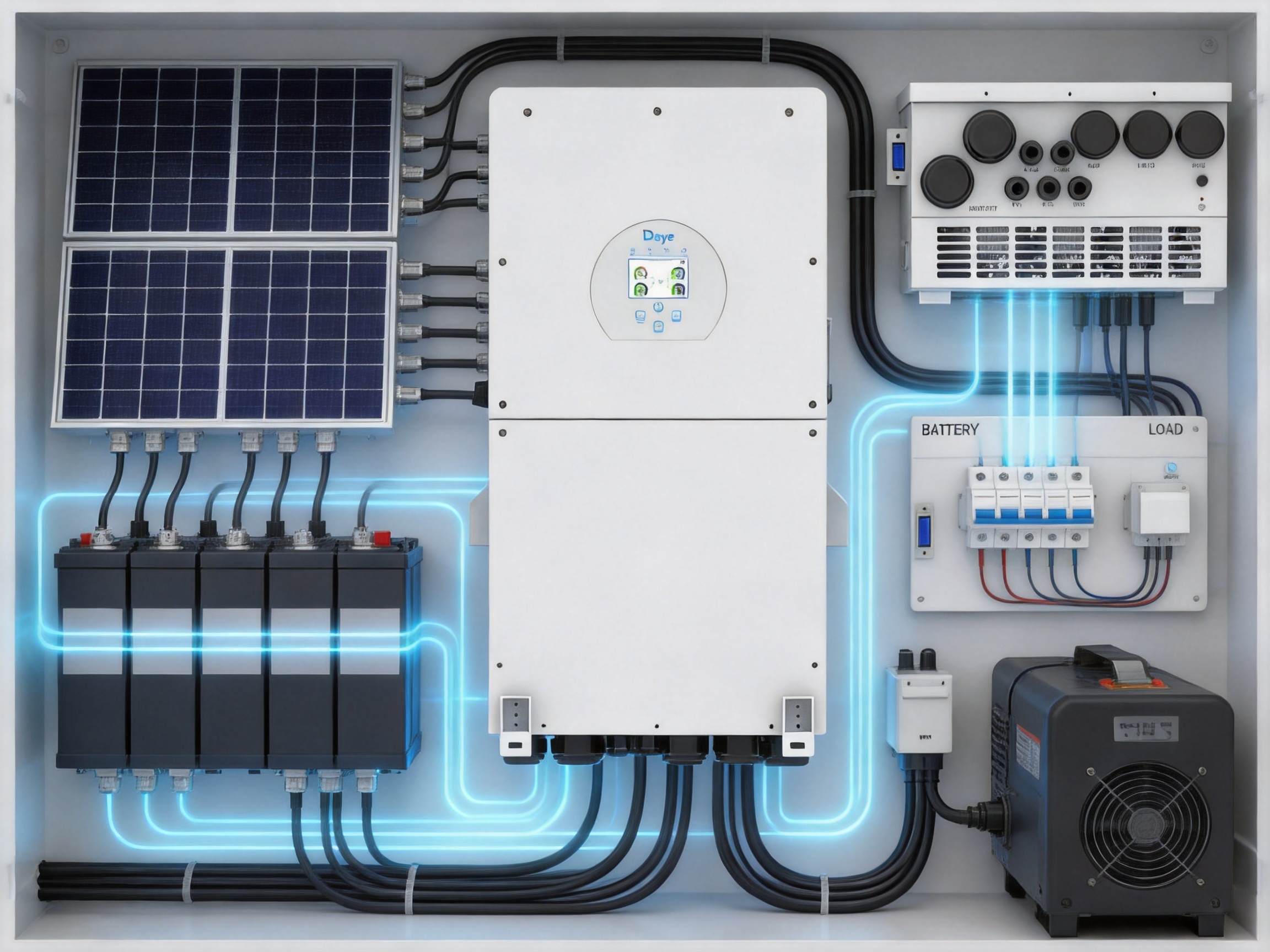
The inverter includes a colorful touch LCD and LCD/LED display functionality, making local operation more intuitive for installers and users. A clear interface reduces commissioning errors and helps owners understand operating status, battery behavior, PV generation, grid interaction, and alarms. In a hybrid system, transparency is especially important because energy may be flowing among PV strings, batteries, loads, the grid, and generators at different times.
Communication interfaces include WiFi, RS485, and CAN. WiFi supports convenient cloud-based monitoring and remote visibility. RS485 is widely used for industrial and energy equipment communication, while CAN is important for communication with compatible lithium battery BMS platforms. Together, these interfaces allow the inverter to participate in a broader energy management ecosystem rather than functioning as an isolated power device.
Deye has developed an energy IoT ecosystem anchored by the Deye Cloud App, along with advanced energy management solutions. In practical terms, this means users and service teams can obtain performance data, identify abnormal behavior, and optimize system settings more efficiently. For installers managing many customer sites, remote monitoring can reduce service visits, shorten troubleshooting time, and improve customer satisfaction.
Monitoring is also important for long-term return on investment. Solar-plus-storage systems produce value over many years, but that value depends on correct operation. If a battery does not charge as expected, a PV string underperforms, or tariff settings are not optimized, the customer may lose savings without noticing immediately. Effective monitoring helps convert technical capability into measurable financial and operational benefits.
Efficiency and Energy Yield
The series offers maximum efficiency of 97.6%, Euro efficiency of 96.5%, and MPPT efficiency above 99%. These figures indicate strong conversion performance across typical operating conditions. Efficiency is not just a laboratory metric; it affects daily energy yield, heat generation, component stress, and long-term system economics. Higher efficiency means more PV energy reaches loads, batteries, or the grid rather than being lost as heat.
Euro efficiency is especially useful because it reflects weighted performance under varying load levels, which is closer to real-world operation than a single peak value. Solar inverters rarely operate at full output all day. Morning, evening, cloud cover, seasonal shifts, and battery state of charge all produce changing load points. A strong Euro efficiency rating suggests the inverter maintains good conversion performance across a range of operating levels.
The inverter topology is non-isolated on the solar side and isolated on the battery side. This architecture balances efficiency and safety requirements. Non-isolated PV conversion can support high efficiency, while battery-side isolation contributes to electrical separation where appropriate for the energy storage architecture. As always, final system safety depends on correct design, wiring, protection devices, grounding, and compliance with applicable standards.
Advantages Over Competing Hybrid Inverters
The first major advantage is the combination of single-phase output and high power. Many single-phase hybrid inverters serve lower residential capacities, often in the 3 kW to 10 kW range. This series reaches 18 kW, addressing larger homes, villas, farms, workshops, and small commercial properties that still use single-phase service. Users with heavier loads do not need to compromise as quickly or split their system into unrelated product families.
The second advantage is high battery current capability in a low-voltage platform. Low-voltage systems are common, but not all inverters can support large charge and discharge currents. With ratings up to 380 A, this series is more suitable for applications requiring high instantaneous battery power. This capability can make a real difference in backup mode, peak shaving, and generator reduction.
The third advantage is three MPPT channels. Competitors with fewer trackers may perform well on simple roofs but struggle when solar arrays face different orientations or shading conditions. Three trackers give installers more design options, help improve energy harvest, and reduce the need for additional power electronics in many layouts.
The fourth advantage is AC coupling for retrofit projects. Existing solar owners represent a large and growing market. A hybrid inverter that can retrofit storage into existing systems gives customers a practical upgrade path. This reduces waste and expands the value of earlier solar investments.
The fifth advantage is parallel scalability up to 16 units. Many products are technically adequate as single devices but become difficult to scale. Parallel operation enables larger residential and commercial systems, supports phased expansion, and gives professional installers a consistent platform for multiple project sizes.
The sixth advantage is generator energy storage support. In regions with unstable grids or off-grid conditions, generator integration can be essential. The ability to store energy from a diesel generator helps reduce fuel consumption and improve operational flexibility.
The seventh advantage is a broad protection package and IP65 housing. Safety, durability, and environmental tolerance matter as much as headline power ratings. Integrated protections, wide operating temperature tolerance, and outdoor-ready ingress protection help reduce risk and improve reliability.
Manufacturing Strength and Company Capability
Ningbo Deye Inverter Technology Co., Ltd. benefits from the broader industrial foundation of Ningbo Deye Technology Co., Ltd., founded in 2000. The company has grown into a comprehensive technology manufacturing enterprise integrating research and development, design, production, sales, and service. Its listing on the Shanghai Stock Exchange in April 2021 marked a new stage of accelerated growth and strengthened its ability to invest in production capacity, product innovation, quality systems, and global market development.
The company’s inverter and ESS businesses have established strong R&D capabilities and scale advantages. Its product range covers 1 kW to 136 kW string inverters, 3 kW to 80 kW energy storage inverters, and 300 W to 2.2 kW microinverters. This broad product base is strategically important. A manufacturer that works across residential, commercial, industrial, and utility-scale applications develops deeper knowledge of grid standards, thermal design, power electronics, firmware control, safety testing, and field service requirements.
Advanced manufacturing processes in inverter production require strict control of component sourcing, PCB assembly, power module mounting, insulation design, thermal interface application, firmware loading, electrical testing, burn-in procedures, enclosure sealing, and final inspection. For a hybrid inverter, manufacturing complexity is higher than for a basic grid-tie product because the unit must manage PV input, battery power conversion, AC input and output, protection circuits, communications, and user interfaces. Deye’s scale and integrated R&D-production structure support consistent execution across these processes.
Quality in a hybrid inverter begins with design validation. Engineers must evaluate operating temperature, humidity, surge events, grid disturbances, battery communication scenarios, overload conditions, and long-term component aging. The product’s compliance with standards such as IEC 61727, IEC 62116, AS 4777.2, NRS 097, IEC/EN 61000-6-1/2/3/4, IEC/EN 62109-1, and IEC/EN 62109-2 demonstrates attention to grid interaction, anti-islanding, electromagnetic compatibility, and safety requirements. Certification-oriented design is a sign of mature manufacturing because it requires repeatable product performance, documented processes, and disciplined engineering control.
Another strength is the company’s complete solar PV and energy storage ecosystem. Beyond hybrid inverters, Deye offers residential all-in-one ESS solutions, commercial and industrial battery cabinets, modular ESS solutions, PV-BESS-EV charging integration, and utility-scale liquid-cooled ESS. This ecosystem approach helps the company understand how inverters operate as part of complete systems rather than isolated devices. Knowledge from battery cabinets, monitoring platforms, microinverters, and string inverters can feed back into hybrid inverter development.
The company’s products are sold in more than 140 countries and regions worldwide. Global deployment creates a broad base of operating experience across climates, grid codes, installation practices, and customer expectations. This field feedback is valuable for firmware refinement, hardware updates, documentation improvement, and service training. Manufacturers with limited geographic exposure may design products around narrow assumptions; a global supplier must build for diversity and adaptability.
Installation and System Design Considerations
Although the inverter is flexible, system performance depends on proper design. Installers should evaluate load profiles, battery capacity, battery current capability, PV string voltage, PV string current, grid connection limits, backup circuit requirements, generator compatibility, cable sizing, overcurrent protection, grounding, ventilation, and local regulations. The high current available on the battery side makes cable and protection design especially important. Low-voltage, high-current systems require careful attention to conductor size, connection torque, fuse or breaker selection, and voltage drop.
Battery selection should consider not only nominal capacity but also continuous discharge power, peak discharge current, BMS compatibility, temperature operating range, and parallel expansion rules. A high-power inverter cannot deliver its full potential if the battery bank cannot safely support the required current. For lithium-ion systems, CAN communication and BMS coordination should be verified with compatible battery models. For lead-acid systems, charging parameters must be configured according to battery manufacturer recommendations.
PV design should respect the 500 V maximum PV input voltage, 125 V startup voltage, and 150–425 V MPPT operating range. Designers should account for cold-temperature open-circuit voltage rise and hot-temperature voltage reduction. Modern high-current modules should be matched carefully to the inverter’s maximum operating and short-circuit current limits. The three MPPT architecture provides flexibility, but each tracker must be configured within specification.
The installation environment should allow adequate airflow for intelligent air cooling. Even though the enclosure is rated IP65, installers should avoid locations with unnecessary heat exposure, corrosive atmosphere, mechanical damage risk, or poor access for service. Inverter placement should also consider acoustic comfort, display visibility, cable routing, and proximity to batteries and distribution boards.
Applications for Residential, Agricultural, and Light Commercial Users
For large residential properties, the inverter can support solar self-consumption, backup power, and tariff management. Homes with electric heating, pool pumps, water pumps, home workshops, or multiple air-conditioning units may require more power than standard low-capacity hybrid inverters can provide. The 12 kW to 18 kW range gives designers room to serve high-demand households without moving immediately to three-phase equipment where single-phase supply remains the practical standard.
For agricultural users, the product’s high surge capability, generator support, and robust environmental rating are particularly valuable. Farms often operate pumps, refrigeration, ventilation, lighting, and machinery in areas where grid reliability may be poor. Solar-plus-storage can reduce diesel consumption and improve power continuity for critical operations. The ability to store energy from a diesel generator adds another layer of resilience.
For small commercial facilities, the inverter can help manage daytime solar generation and evening loads. Shops, offices, clinics, guesthouses, and workshops may benefit from peak shaving, backup power, and improved self-consumption. Parallel operation allows larger systems to be designed from multiple units, supporting growth as business needs expand.
For retrofit customers, the inverter provides a pathway to modernize an existing PV system. Owners who installed solar years ago may now face lower export tariffs, higher evening electricity prices, or more frequent grid interruptions. Adding storage through AC coupling can improve the usefulness of existing PV assets and extend the economic value of the original investment.
Long-Term Ownership Value
The purchase price of an inverter is only one part of ownership value. Long-term value depends on energy yield, reliability, installation flexibility, serviceability, monitoring, compatibility, and expansion potential. This series addresses those factors with high efficiency, three MPPTs, low-voltage battery compatibility, extensive protection functions, IP65 construction, communication interfaces, and scalable parallel operation.
The warranty period is listed as 5 years or 10 years depending on the final installation site and applicable warranty policy. This indicates that users should verify warranty terms for their region and project type. A clear warranty framework, combined with global service presence, helps reduce risk for installers and customers.
Because the company operates across many solar and energy storage product categories, customers also benefit from a wider ecosystem. Inverter selection is not only about one device; it is about compatibility with batteries, monitoring platforms, accessories, future expansion, and service support. A manufacturer with broad ESS and inverter experience can provide more coherent solutions for evolving energy needs.
Q&A Section
Q1: What type of product is the SUN-12/14/16/18K-SG01LP1-EU-AM3-P series?
It is a single-phase low-voltage hybrid inverter series for solar PV and battery energy storage systems. It manages PV input, battery charging and discharging, grid interaction, backup loads, and energy scheduling in one integrated platform.
Q2: What power ratings are available?
The series includes 12 kW, 14 kW, 16 kW, and 18 kW models, allowing installers to select the appropriate capacity for large residential, agricultural, and light commercial applications.
Q3: Why is the low-voltage battery design important?
The inverter supports a 40 V to 60 V battery voltage range, making it suitable for common 48 V battery systems. It also provides high charging and discharging current, up to 380 A on the 18 kW model, which helps support demanding loads and high-power backup operation.
Q4: Does the inverter support lithium batteries?
Yes. It supports lead-acid and lithium-ion batteries. For lithium-ion batteries, it can self-adapt to the BMS when used with compatible battery systems, improving coordination between the inverter and battery protection logic.
Q5: What is the benefit of having three MPPT channels?
Three MPPT channels allow PV strings to be arranged across different roof orientations, tilt angles, or shading conditions. This improves design flexibility and can increase energy harvest compared with inverters that have fewer MPPT trackers.
Q6: Can this inverter be used to upgrade an existing solar system?
Yes. The series supports AC coupling, which makes it suitable for retrofitting battery storage and backup capability into existing grid-tied solar systems without necessarily replacing the original PV inverter.
Q7: Is the inverter suitable for off-grid use?
Yes. It supports on-grid and off-grid operation, peak power of two times rated output for 10 seconds, diesel generator energy storage support, and parallel operation. Proper system design, battery sizing, and load management are essential for off-grid reliability.
Q8: How many units can operate in parallel?
Up to 16 units can operate in parallel for on-grid and off-grid applications, allowing the system to scale for larger homes, farms, workshops, and small commercial properties.
Q9: What protections are integrated into the inverter?
Integrated protections include DC reverse polarity protection, AC output overcurrent protection, thermal protection, AC overvoltage protection, short-circuit protection, DC component monitoring, anti-islanding protection, DC switch, insulation impedance detection, and residual current detection. Arc fault circuit interrupter protection is optional.
Q10: What communication options are available?
The inverter supports WiFi, RS485, and CAN communication. These interfaces enable monitoring, integration with compatible batteries, and participation in broader energy management systems.
Q11: How does this inverter compare with typical competitors?
Its competitive strengths include high single-phase power up to 18 kW, high low-voltage battery current up to 380 A, three MPPT channels, AC coupling retrofit capability, generator energy storage support, IP65 protection, and parallel scalability up to 16 units.
Q12: What company strengths support the product?
Ningbo Deye Inverter Technology Co., Ltd. benefits from strong R&D capability, large-scale manufacturing, a broad inverter and ESS portfolio, global market experience in more than 140 countries and regions, and an integrated ecosystem covering residential, commercial, industrial, and utility energy solutions.
Conclusion
The SUN-12/14/16/18K-SG01LP1-EU-AM3-P series is a high-capability hybrid inverter platform for users who need more than ordinary solar conversion. It combines high single-phase output, low-voltage battery compatibility, powerful charge and discharge current, three MPPT channels, AC coupling, generator support, advanced scheduling, IP65 protection, and scalable parallel operation. These features make it suitable for new solar-plus-storage systems, retrofit projects, backup power applications, weak-grid sites, and larger residential or light commercial installations.
Its advantages over many competing hybrid inverters are practical rather than merely theoretical. High battery current helps serve real loads. Three MPPTs simplify complex PV layouts. AC coupling protects the value of existing solar systems. Generator storage support reduces fuel dependence. Parallel scalability gives installers a growth path. Monitoring and communication interfaces support long-term service and optimization.
Behind the product is a manufacturer with broad power electronics experience, global reach, and a complete solar and energy storage ecosystem. Ningbo Deye Inverter Technology Co., Ltd. combines R&D, design, production, sales, and service capabilities with an extensive portfolio of inverters, ESS products, monitoring systems, and integrated energy solutions. For customers seeking a robust, flexible, and future-ready single-phase hybrid inverter, this series provides a compelling solution for modern energy independence and intelligent power management.
References
1. Product datasheet for SUN-12/14/16/18K-SG01LP1-EU-AM3-P single-phase hybrid inverter series.
2. Product manual for SUN-12/16K-SG01LP1-EU-AM3-P hybrid inverter installation and operation.
3. IEC 61727: Photovoltaic systems: characteristics of the utility interface.
4. IEC 62116: Utility-interconnected photovoltaic inverters: test procedure of islanding prevention measures.
5. IEC/EN 62109-1 and IEC/EN 62109-2: Safety of power converters for use in photovoltaic power systems.
6. IEC/EN 61000-6 series: Electromagnetic compatibility standards for immunity and emissions.
7. AS 4777.2: Grid connection of energy systems via inverters.
8. NRS 097: Grid interconnection requirements for embedded generation systems.
Product: SUN-12/14/16/18K-SG01LP1-EU-AM3-P
PREV:High-Efficiency Three-Phase String Inverter for 3–15 kW Solar Applications
NEXT:High-Efficiency Low-Voltage Three-Phase String Inverter for Commercial Solar PV Systems
Share
Product recommendations
news recommendations
-
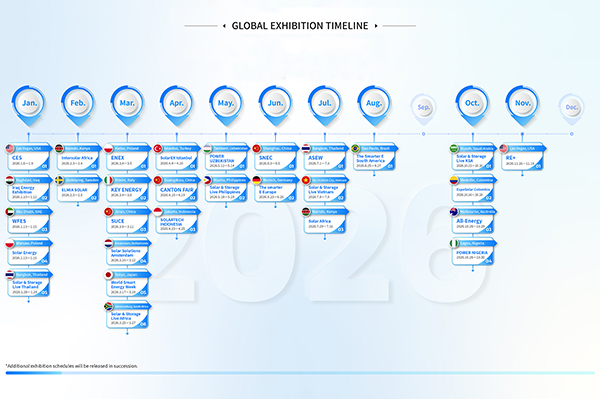 GLOBAL EXHIBITION TIMELINE
*Click to view larger image
-
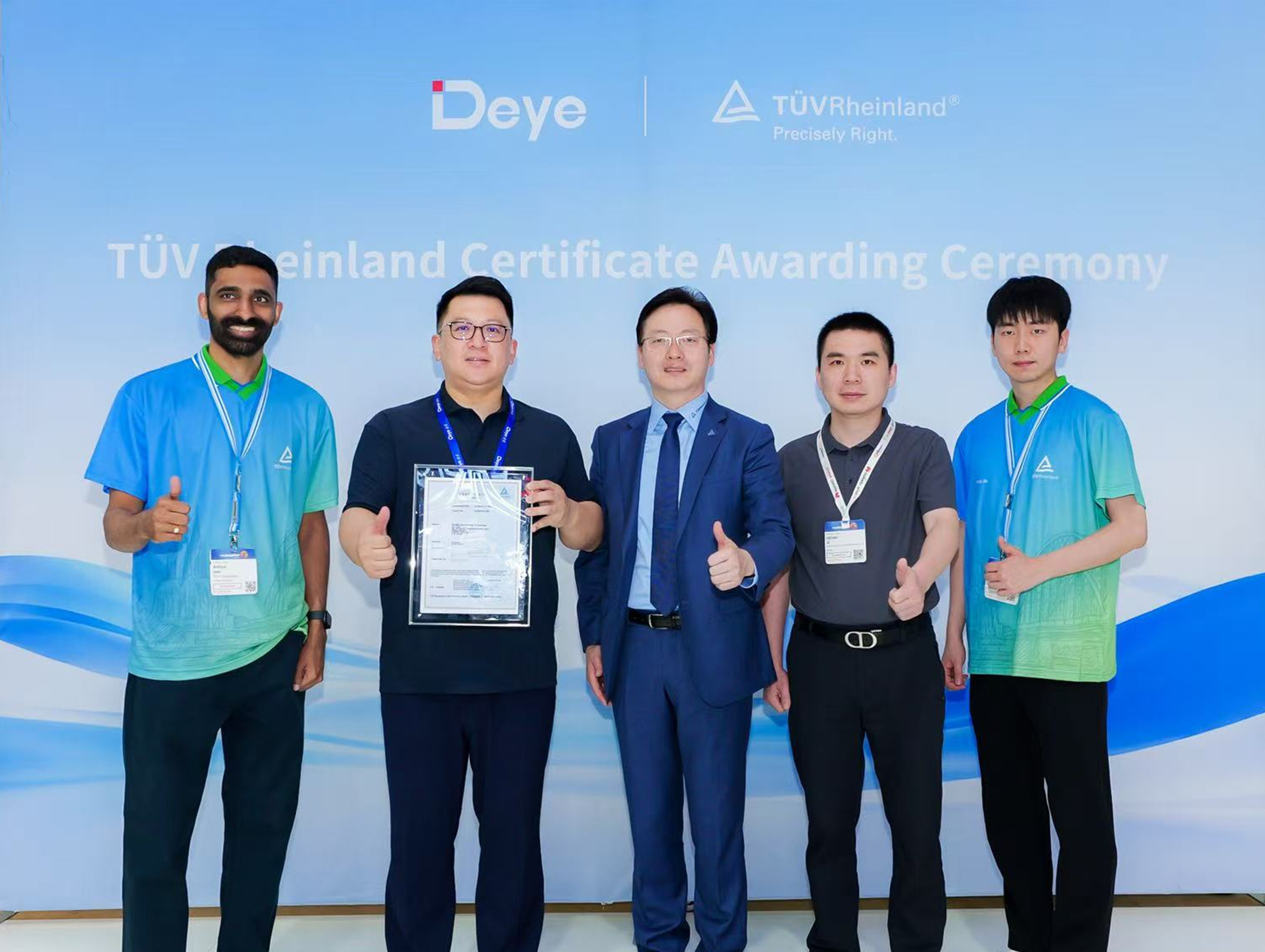 Deye Secures Multiple TÜV Rheinland Certifications at The smarter E Europe
On June 23, the opening day of The smarter E Europe 2026, Deye was officially awarded several presti...
-
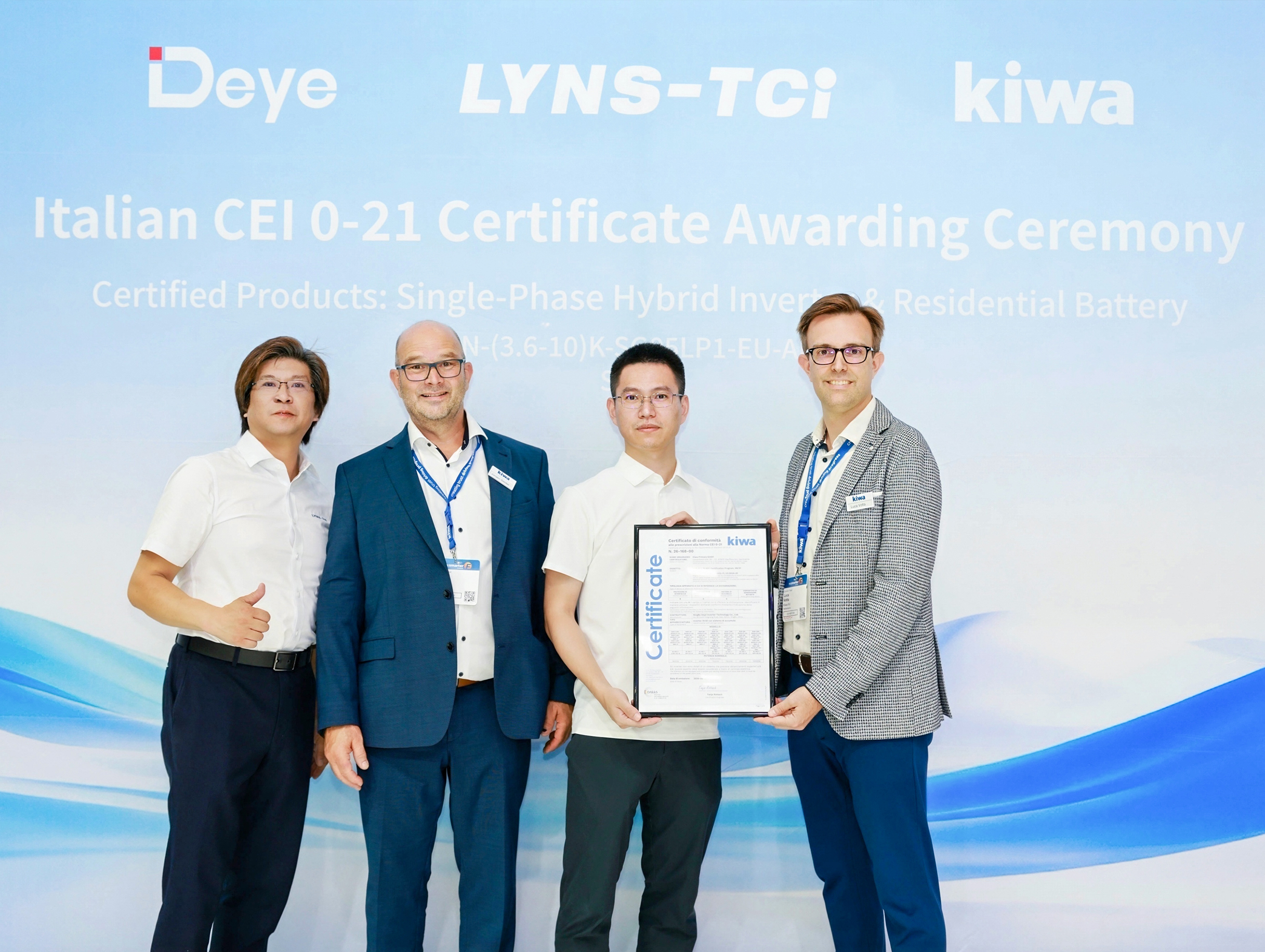 Deye Next-Gen Residential Energy Storage Products Receive Italian CEI 0-21 Certification from Kiwa
At The smarter E Europe 2026, Deye, a leading supplier of inverters and energy storage solutions, of...

Copyright@ 2024.Ningbo Deye Inverter Technology Co.,Ltd. All rights reserved. Solar Inverter Manufacturer
