
 Online Shop
 English
 China - 简体中文
 Global - English
 Brazil - Português
 Netherlands - Dutch
 Italy - Italiano
 Germany - Deutsch
 Spain - Español
 France - Français
 Vietnam - Tiếng Việt
 Poland - Polski
 Australia - English
 Japan - 日本語
Blog

Three Phase Low Voltage Hybrid Inverter for Resilient Solar Energy Storage
The transition from simple photovoltaic generation to intelligent energy management is changing the way homes, small businesses, farms, and light commercial facilities use solar power. A modern solar system is no longer judged only by how much electricity it can produce at noon on a clear day. It is also judged by how safely it can store energy, how smoothly it can support loads during grid instability, how flexibly it can be expanded, and how intelligently it can coordinate photovoltaic panels, batteries, diesel generators, grid supply, and time-of-use electricity pricing. The SUN-3/4/5/6/8K-SG06LP3-EU-BM2 three phase low voltage hybrid inverter series has been designed for precisely this new energy environment.
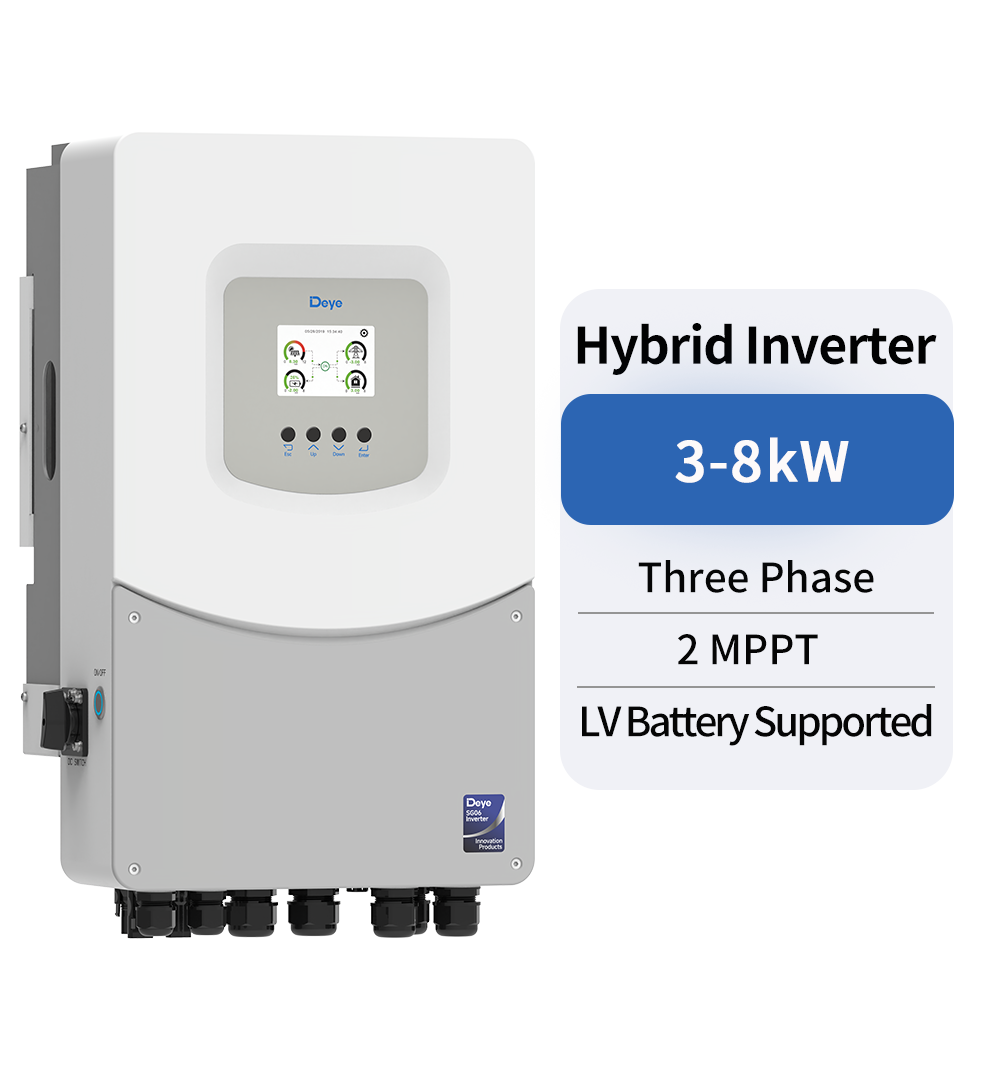
This product series covers 3 kW, 4 kW, 5 kW, 6 kW, and 8 kW power classes, giving installers and end users a practical range of choices for residential and small commercial three phase projects. It supports a 48 V low voltage battery system, two MPPT trackers, AC coupling for retrofitting existing solar systems, up to ten units in parallel for on-grid and off-grid operation, and 100% unbalanced output capability. These characteristics make it a strong solution for users who need a reliable hybrid inverter that can combine solar generation, battery storage, backup power, and intelligent load management in one integrated platform.
Unlike conventional grid-tie inverters that focus mainly on converting PV power into AC power for immediate use or export, this hybrid inverter series is built for energy flexibility. It can charge and discharge batteries according to user-defined time periods, store energy from a diesel generator, support multiple batteries in parallel, and maintain power delivery when the grid is unavailable. For locations with unreliable grid supply, increasing electricity tariffs, or growing backup power requirements, such hybrid functionality offers a clear operational advantage.
Behind the product is Ningbo Deye Inverter Technology Co., Ltd., a manufacturer with extensive experience in solar inverters, energy storage systems, microinverters, string inverters, off-grid inverters, commercial and industrial ESS solutions, and energy monitoring platforms. Founded in 2000, the wider Deye technology group has developed from a comprehensive technology manufacturing enterprise into a publicly listed company with global market coverage. Its inverter and ESS businesses are supported by research and development capability, industrialized manufacturing systems, and experience serving customers in more than 140 countries and regions. This foundation matters because hybrid inverters must perform reliably under a wide range of electrical, environmental, and regulatory conditions.
Product Positioning and Core Concept
The SUN-3/4/5/6/8K-SG06LP3-EU-BM2 series is a three phase hybrid inverter designed for low voltage battery systems. Its power range from 3 kW to 8 kW makes it especially suitable for three phase residential buildings, villas, small shops, workshops, farms, offices, and distributed energy projects that require storage and backup capability without moving into oversized commercial equipment. The series is categorized as a three phase low voltage hybrid inverter, combining PV string input, battery input, AC input and output, grid interaction, and backup load support.
The term “hybrid” is important. A hybrid inverter is not merely a PV inverter with an added battery terminal. It is the control center of a distributed energy system. It must decide when solar power should serve local loads, when excess solar should charge batteries, when batteries should discharge, when the grid should supply loads, when energy should be exported, and how the system should behave during grid failure. This requires hardware strength, software intelligence, protection functions, communication interfaces, and stable thermal design.
The product’s low voltage battery architecture is one of its defining characteristics. It operates with a battery voltage range of 40 V to 60 V and is compatible with lead-acid or lithium-ion batteries. In many residential and small commercial installations, 48 V battery systems are familiar, widely available, serviceable, and comparatively safe for installers. The product also uses a transformer isolation design on the battery side, while the solar side is non-isolated. This topology reflects an engineering balance between battery safety, system efficiency, and compact cabinet design.
The inverter supports two MPPT trackers with one string per tracker. The maximum PV input voltage is 800 V, start-up voltage is 160 V, and the MPPT voltage range is 200 V to 650 V. This allows flexible PV string design while giving the inverter sufficient voltage headroom for real-world installation conditions. Maximum PV access power ranges from 6,000 W for the 3 kW model to 16,000 W for the 8 kW model, while maximum PV input power ranges from 4,800 W to 12,800 W. In practice, this means installers can design PV arrays that match the energy consumption profile and storage requirements of the site, rather than being restricted to a minimal panel configuration.
The inverter’s AC input and output ratings align with European-style three phase systems, supporting 220/380 V and 230/400 V three phase plus neutral and protective earth configurations. Rated grid frequency options include 50 Hz and 60 Hz ranges. Compliance with multiple grid regulations, including IEC 61727, IEC 62116, EN 50549, G99, VDE-AR-N 4105, and other regional standards, makes the product suitable for diverse markets where certification and grid compatibility are critical purchasing considerations.
Key Technical Specifications
The following table summarizes the major parameters of the series. Actual model selection should always be confirmed according to load demand, battery capacity, PV array design, local grid regulations, installation environment, and professional engineering requirements.
| Parameter | 3 kW Model | 4 kW Model | 5 kW Model | 6 kW Model | 8 kW Model |
| Model | SUN-3K-SG06LP3-EU-BM2 | SUN-4K-SG06LP3-EU-BM2 | SUN-5K-SG06LP3-EU-BM2 | SUN-6K-SG06LP3-EU-BM2 | SUN-8K-SG06LP3-EU-BM2 |
| Battery Type | Lead-acid or lithium-ion | Lead-acid or lithium-ion | Lead-acid or lithium-ion | Lead-acid or lithium-ion | Lead-acid or lithium-ion |
| Battery Voltage Range | 40-60 V | 40-60 V | 40-60 V | 40-60 V | 40-60 V |
| Maximum Charging and Discharging Current | 70 A | 95 A | 120 A | 135 A | 190 A |
| Maximum PV Access Power | 6,000 W | 8,000 W | 10,000 W | 12,000 W | 16,000 W |
| Maximum PV Input Power | 4,800 W | 6,400 W | 8,000 W | 9,600 W | 12,800 W |
| MPPT Configuration | 2 trackers, 1+1 strings | 2 trackers, 1+1 strings | 2 trackers, 1+1 strings | 2 trackers, 1+1 strings | 2 trackers, 1+1 strings |
| Rated AC Input and Output Active Power | 3,000 W | 4,000 W | 5,000 W | 6,000 W | 8,000 W |
| Maximum AC Apparent Power | 3,300 VA | 4,400 VA | 5,500 VA | 6,600 VA | 8,800 VA |
| Maximum Efficiency | 97.6% | 97.6% | 97.6% | 97.6% | 97.6% |
| Protection Rating | IP65 | IP65 | IP65 | IP65 | IP65 |
Low Voltage Battery Support and Practical Safety
One of the most important advantages of this series is its support for 48 V low voltage battery systems. In the energy storage market, both high voltage and low voltage battery architectures are common. High voltage systems can be efficient for certain applications, but they may require stricter handling procedures, specialized battery modules, and additional safety considerations. Low voltage battery systems, particularly in the 40 V to 60 V operating range, are well understood by many installers and are often easier to integrate in residential and small commercial applications.
The inverter’s compatibility with both lead-acid and lithium-ion batteries further increases system flexibility. Some customers may already own lead-acid battery banks and want a cost-effective upgrade path. Others may prefer lithium-ion batteries for higher cycle life, better energy density, and advanced battery management. The self-adaptive charging strategy for lithium-ion batteries through BMS communication helps the inverter coordinate charging and discharging according to battery requirements. This is important because lithium-ion batteries need precise management of current, voltage, temperature, and state of charge to ensure safe and long-lasting performance.
The maximum charging and discharging current reaches up to 190 A in the 8 kW model. High current capability is valuable because battery storage performance is not only about total battery capacity. It is also about how quickly energy can move into or out of the battery. A system with strong charging and discharging current can better capture surplus PV energy during high generation periods and better support loads during peak demand or outages. For users who experience short but intense load events, the inverter’s current handling capability can translate directly into improved user experience.
The transformer isolation design on the battery side is another differentiator. In an inverter, isolation can help separate battery-side electrical behavior from other parts of the system. While the solar side uses a non-isolated topology for efficiency and compactness, the isolated battery side provides a reassuring architecture for low voltage battery operation. This balance is particularly relevant in mixed-energy systems where PV strings, batteries, AC loads, grid supply, and backup loads must all interact safely.
Compared with many basic hybrid inverters that are limited to narrow battery compatibility lists or lower battery current, this series offers broader practical adaptability. For installers, this can reduce project constraints. For distributors, it can simplify inventory planning because one inverter family can serve multiple battery strategies. For end users, it can protect long-term system value by giving more room for future battery expansion or replacement.
Three Phase Output with 100% Unbalanced Capability
Three phase buildings rarely consume power evenly across all phases. A home may have an air conditioner on one phase, kitchen appliances on another, and lighting or sockets distributed unevenly. A small workshop may start a motor on one phase while office loads run on another. In many real installations, phase imbalance is not an exception; it is normal. This is why 100% unbalanced output is a major practical advantage of the SUN-3/4/5/6/8K-SG06LP3-EU-BM2 series.
The product supports 100% unbalanced output, with maximum output up to 50% of rated power for each phase. This enables the inverter to handle uneven load distribution more effectively than many three phase inverters that require more balanced loading or provide limited single-phase support under backup conditions. In an outage, users care less about perfect phase symmetry and more about whether important appliances continue operating. The inverter’s unbalanced output capability gives system designers greater freedom to support essential loads without forcing costly rewiring or excessive phase-balancing work.
For example, in a three phase residential property, a refrigerator, router, lighting circuit, water pump, and security system may not be evenly distributed. If the inverter cannot tolerate imbalance, it may restrict backup operation even though total load demand is within rated capacity. With strong unbalanced output handling, the energy storage system becomes more practical and resilient. This is a clear advantage over conventional three phase hybrid inverters that look strong on paper but struggle with uneven real-world load profiles.
The off-grid peak power rating is also important. The product can provide peak power equal to two times rated power for 10 seconds in off-grid operation. Many electrical appliances require a higher starting current than their normal running current. Pumps, compressors, refrigerators, and some tools can create short surge demands. A hybrid inverter with weak surge capability may trip or shut down during these moments. By supporting short-duration peak power, this series is better suited for backup applications where dynamic loads are present.
Two MPPT Trackers for Flexible PV Design
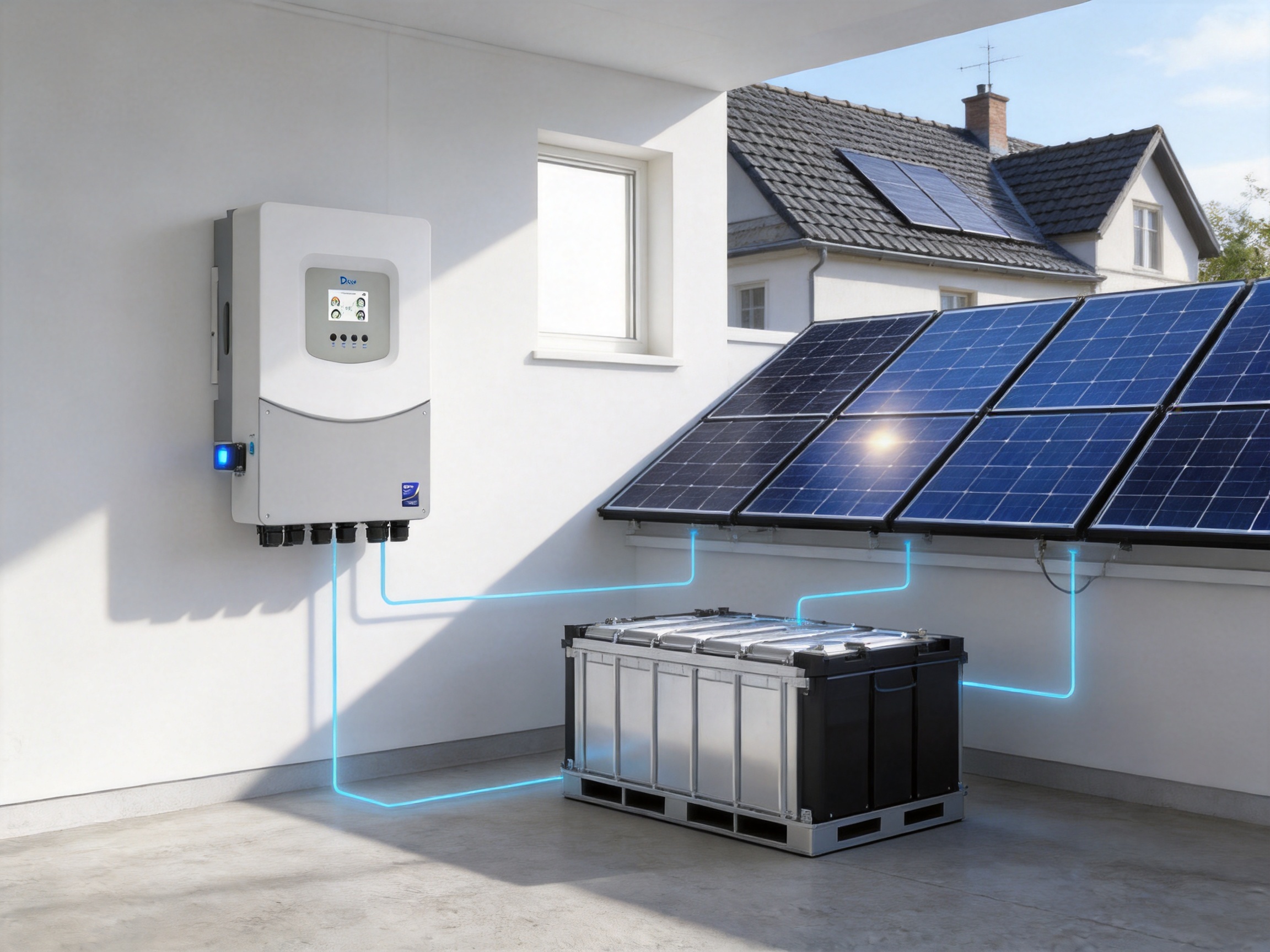
Solar roofs are rarely perfect. Panels may face different directions, receive different shading conditions, or be installed on roof sections with different tilt angles. A single MPPT inverter can force multiple strings to operate under one optimization point, reducing energy harvest when conditions differ. The SUN-3/4/5/6/8K-SG06LP3-EU-BM2 series includes two MPPT trackers, each supporting one string, with maximum operating PV input current of 20 A plus 20 A and maximum input short-circuit current of 30 A plus 30 A.
Two MPPT channels give installers more design freedom. One string can face east and another west, or one can be placed on a main roof while another is placed on a garage or auxiliary roof. This helps increase daily solar utilization, not just midday peak output. In battery-based systems, a broader generation curve is especially useful because energy can be collected during more hours of the day and stored for evening or night use.
The maximum PV input voltage of 800 V allows practical string lengths while the start-up voltage of 160 V helps the inverter begin operation when solar conditions become sufficient. The MPPT voltage range of 200 V to 650 V is suitable for common PV module arrangements. Rated PV input voltage is 550 V, and MPPT efficiency is greater than 99%. This high tracking efficiency helps ensure that PV modules are operated near their best power point across changing irradiance and temperature conditions.
Another advantage is the product’s PV oversizing allowance, reflected in the difference between rated AC power and maximum PV access power. For the 8 kW model, maximum PV access power is 16,000 W while maximum PV input power is 12,800 W. Responsible PV oversizing can improve annual energy yield, especially in regions where panels rarely operate at nameplate output due to heat, orientation, cloud cover, or seasonal variation. It also supports faster battery charging when sunlight is strong and loads are moderate.
Compared with entry-level hybrid inverters that offer only limited PV input current or a narrower MPPT range, this product series provides a more installation-friendly PV interface. The stronger input current rating is also increasingly relevant because modern high-power PV modules often have higher operating current than older modules. Inverters that cannot accept higher module currents may limit module selection or require less efficient string designs. This series is better aligned with contemporary PV module trends.
Parallel Operation for Scalable Energy Systems
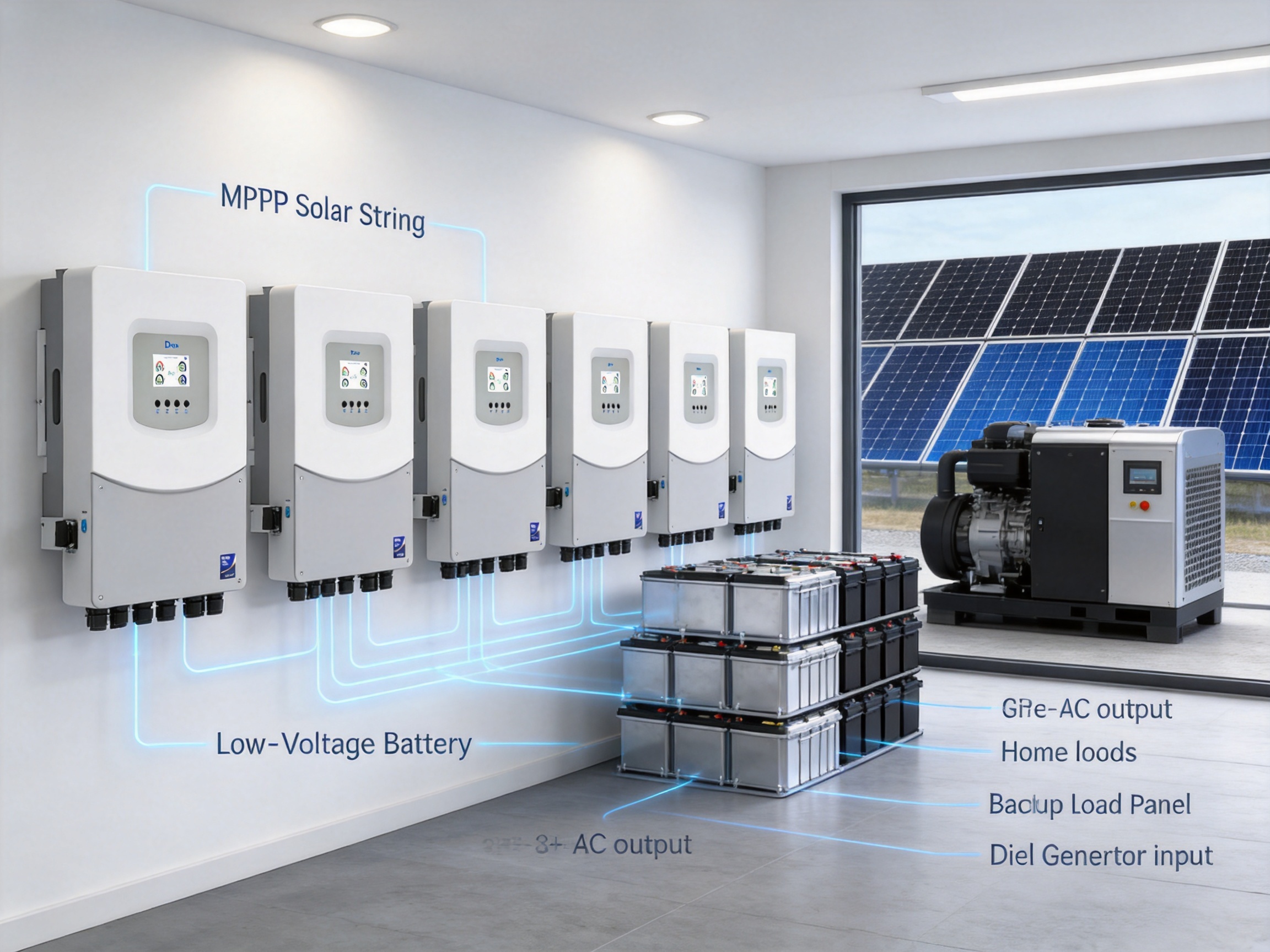
Energy needs change. A household may add an electric vehicle charger, heat pump, additional air conditioning, or more appliances. A small business may expand refrigeration, machinery, lighting, or office equipment. A farm may add pumps or automated systems. A hybrid inverter that cannot scale may become a bottleneck. The SUN-3/4/5/6/8K-SG06LP3-EU-BM2 series addresses this issue by supporting up to ten units in parallel for both on-grid and off-grid operation.
Parallel capability is a powerful advantage over many single-unit hybrid inverters. It allows energy systems to start at a practical size and expand later. Instead of replacing the entire inverter platform when demand increases, users can add more inverter units under a coordinated system design. This can reduce long-term upgrade costs and give installers a modular path for larger projects.
Parallel operation is especially valuable in backup and off-grid scenarios. When multiple units operate together, total system capacity can increase, and redundancy can improve system resilience. In a commercial or agricultural setting, this modular approach may be more attractive than relying on one oversized inverter. It also supports multiple batteries in parallel, allowing energy capacity to grow alongside power capacity.
For distributors and engineering companies, a parallel-capable product range simplifies project planning. The same inverter family can support smaller residential projects, larger villas, and light commercial installations. The ability to use up to ten units gives the system a much wider application envelope than a fixed single-inverter solution. In competitive markets, this scalability is a significant advantage because customers increasingly want future-proof energy systems rather than one-time, fixed-capacity installations.
AC Coupling for Retrofitting Existing Solar Systems
Many buildings already have grid-tie solar systems installed. Owners of these systems may now want battery storage for backup power, self-consumption, or time-of-use savings, but replacing the entire PV system can be expensive and wasteful. The SUN-3/4/5/6/8K-SG06LP3-EU-BM2 series supports AC coupling, enabling it to retrofit existing solar systems.
AC coupling allows an existing grid-tie inverter to continue operating while the hybrid inverter manages batteries and backup functions. This is a major advantage for the growing retrofit market. Instead of forcing users to remove functioning equipment, installers can add energy storage capability around the existing AC infrastructure. This can shorten installation time, reduce project cost, and preserve the value of earlier solar investment.
In retrofit applications, the hybrid inverter becomes the energy management hub. It can coordinate the use of PV generation, battery charging, battery discharging, grid import, and backup supply. For households that originally installed solar mainly to reduce grid bills, adding storage through AC coupling can transform the system into a resilience asset. During daytime, solar generation can serve loads and charge batteries. During the evening, stored energy can offset grid purchases. During outages, the inverter can support essential loads, depending on system design and battery capacity.
Compared with competitors that lack AC-coupling capability or require more complicated retrofit schemes, this product offers a more practical path for existing solar owners. As the installed base of grid-tie PV systems continues to grow worldwide, retrofit-friendly hybrid inverters will become increasingly important. This series is well positioned for that trend.
Six Time Periods for Intelligent Energy Scheduling
Electricity pricing is becoming more dynamic in many regions. Time-of-use tariffs encourage users to consume less grid power during peak periods and more during off-peak periods. A battery system can create meaningful savings only if the inverter can schedule charging and discharging intelligently. The SUN-3/4/5/6/8K-SG06LP3-EU-BM2 series supports six time periods for battery charging and discharging.
This scheduling capability allows users to define energy behavior according to local tariff structures and personal consumption habits. For example, the inverter can charge batteries from solar during the day, discharge during evening peak pricing, reserve capacity for nighttime backup, or use low-cost grid energy at off-peak hours where permitted. The six-period structure provides more nuanced control than simple day-night or manual operating modes.
Energy scheduling also benefits users in weak-grid areas. A user may choose to keep battery capacity available during hours when outages are most common. In agricultural or commercial applications, batteries can be charged before known high-load periods. In homes, the system can prioritize evening self-consumption when family demand is high and solar production has declined.
Competitor products with fewer scheduling options may still offer battery operation, but they often provide less economic optimization. The difference becomes significant over time. A hybrid inverter with refined scheduling can improve payback by aligning energy use with tariffs and user needs. It can also improve battery life by avoiding unnecessary cycling when energy savings are low or backup reserve is more important.
Diesel Generator Energy Storage Support
In many regions, diesel generators remain an important backup energy source. They are common in rural properties, farms, telecom sites, small businesses, and locations where grid outages are frequent. However, generators are often inefficient when running at low loads, noisy during extended operation, and costly to fuel and maintain. A hybrid inverter that can store energy from a diesel generator can improve the entire backup power strategy.
The SUN-3/4/5/6/8K-SG06LP3-EU-BM2 series supports storing energy from a diesel generator. This allows the generator to operate more efficiently by charging batteries when it runs, rather than simply following variable load demand. Once batteries are charged, the generator can be turned off while the inverter supplies loads from stored energy. This can reduce fuel consumption, operating hours, noise, and maintenance requirements.
This feature is a practical advantage over basic solar inverters and many hybrid inverters that do not integrate generator charging effectively. In off-grid or weak-grid environments, the best energy system often combines solar, batteries, and a generator. Solar provides low-cost daily energy, batteries provide short-term storage and silent backup, and the generator provides long-duration security during extended bad weather or high demand. The inverter’s ability to manage generator energy storage makes it suitable for these hybrid power architectures.
For commercial users, reducing generator runtime can have direct financial benefits. Fuel logistics, maintenance intervals, and downtime risk all matter. For residential users, quieter operation and fewer generator starts improve comfort. For remote installations, generator integration can be the difference between a fragile backup system and a genuinely resilient power solution.
Efficiency, Protection, and Environmental Durability
Efficiency affects both energy yield and thermal stress. The series offers maximum efficiency of 97.6%, Euro efficiency of 97.0%, and MPPT efficiency greater than 99%. These values indicate a design focused on minimizing conversion losses across typical operating conditions. High efficiency is especially important in hybrid systems because energy may pass through multiple conversion stages: from PV to loads, PV to battery, battery to AC loads, or grid to battery depending on operating mode.
Protection functions are equally important. The inverter integrates DC reverse polarity protection, AC output overcurrent protection, thermal protection, AC output overvoltage protection, AC output short-circuit protection, DC component monitoring, anti-islanding protection, DC switch, insulation impedance detection, and residual current detection. Arc fault circuit interrupter functionality is optional. Surge protection is rated Type II on both DC and AC sides.
These protections help safeguard equipment, installers, and users. For example, DC reverse polarity protection addresses installation wiring mistakes. Anti-islanding protection is critical for grid-connected safety, ensuring the inverter does not energize grid lines when utility power is down. Residual current detection and insulation monitoring support electrical safety in PV systems where insulation faults can occur due to aging cables, moisture, or mechanical damage.
The inverter has an IP65 ingress protection rating, making it suitable for demanding installation environments when installed according to guidelines. Operating temperature range is -40°C to +60°C, with derating above 45°C. Permissible ambient humidity is 0-100%, permissible altitude is 3,000 m, and noise level is no more than 45 dB. Intelligent air cooling helps manage temperature while maintaining a compact cabinet size of 334 mm by 545 mm by 220 mm, excluding connectors and brackets.
In competitive comparison, many lower-cost inverters may advertise attractive power ratings but provide weaker environmental specifications, fewer integrated protections, limited surge protection, or less robust thermal management. The true value of a hybrid inverter appears after years of operation, not just at commissioning. A protected, certified, thermally managed inverter is more likely to deliver stable service across hot summers, cold winters, humid conditions, and fluctuating grid environments.
Communication, Monitoring, and User Interaction
The inverter includes an LCD display and supports WIFI, RS485, and CAN communication interfaces. These communication options are essential in modern energy systems. CAN communication is commonly used for coordination with lithium battery management systems, helping the inverter receive battery status data and adapt charging behavior. RS485 can support system communication and integration needs. WIFI enables remote monitoring when connected to a suitable platform.
Energy monitoring is no longer an optional luxury. Users want to see solar production, battery state of charge, grid import and export, load consumption, and operating modes. Installers also need diagnostic information to reduce service visits and resolve configuration issues efficiently. A hybrid inverter with strong communication interfaces gives both users and professionals better visibility into system performance.
Ningbo Deye Inverter Technology Co., Ltd. has developed an energy IoT ecosystem anchored by the Deye Cloud App, along with related energy management solutions. This broader ecosystem strengthens the product’s value because hardware and monitoring software must work together. In an energy storage project, the inverter is the physical power conversion device, while the monitoring platform is the operational window. Together, they allow smarter decisions, easier maintenance, and better long-term system optimization.
Compared with products that offer limited local displays or closed communication options, this series gives integrators a more flexible communication foundation. For battery compatibility, system commissioning, firmware management, troubleshooting, and user education, communication capability can significantly influence overall project success.
Advanced Manufacturing Strength Behind the Product
A hybrid inverter is a complex power electronics product. Its reliability depends not only on circuit design but also on component selection, manufacturing process control, assembly quality, firmware validation, thermal design verification, and final testing. The manufacturing strength behind the SUN-3/4/5/6/8K-SG06LP3-EU-BM2 series is therefore a key part of its competitive advantage.
Ningbo Deye Inverter Technology Co., Ltd. operates within a larger technology manufacturing organization founded in 2000 and listed on the Shanghai Stock Exchange in 2021. This background reflects long-term industrial development rather than short-term market entry. The company’s product lines cover string inverters from 1 kW to 136 kW, energy storage inverters from 3 kW to 80 kW, microinverters from 300 W to 2.2 kW, off-grid inverters, modular commercial and industrial ESS, micro hybrid ESS, EV charging solutions, PV optimizers, accessories, and monitoring systems. Such breadth gives the company practical knowledge across different power conversion architectures and application environments.
Manufacturing advanced hybrid inverters requires precision in multiple areas. Printed circuit boards must be assembled with consistent soldering quality and careful inspection. Power semiconductor modules must be correctly mounted to heat sinks to ensure thermal transfer. Magnetic components, relays, connectors, sensors, capacitors, and control boards must be selected and integrated according to electrical stress, temperature, and lifetime requirements. Firmware must coordinate conversion stages, battery communication, grid synchronization, protection logic, user settings, and parallel operation.
In a modern inverter manufacturing process, quality control typically includes incoming material inspection, automated or semi-automated board assembly, optical inspection, in-circuit testing, functional testing, aging or burn-in procedures, safety tests, calibration, packaging inspection, and traceability management. For a product intended for global markets, regulatory and grid-code testing are also essential. The listed grid regulations and safety standards indicate that the inverter family has been developed with international compliance in mind.
The company’s scale advantages matter because solar and storage markets demand both innovation and consistency. A small manufacturer may be able to assemble limited batches, but sustaining quality across global shipments requires supply chain management, standardized production workflows, engineering feedback loops, and after-sales service capability. Deye’s global presence in more than 140 countries and regions gives it exposure to diverse installation conditions, from hot and humid climates to cold regions and weak-grid areas. Feedback from these markets can inform product improvement and manufacturing refinement.
Another important manufacturing strength is the ability to offer complete solutions rather than isolated hardware. The company provides residential all-in-one ESS solutions, commercial and industrial battery cabinets, modular ESS solutions, PV-BESS-EV charging integrated solutions, and utility-scale liquid-cooled ESS. This system-level experience supports inverter design because engineers understand how inverters behave when paired with batteries, monitoring platforms, EV chargers, generators, and real loads. Competitors focused narrowly on one product category may lack this broader system perspective.
Advantages Over Conventional Competitor Solutions
The market for hybrid inverters is crowded, and many products share similar headline claims. However, the real comparison is found in the details: battery voltage architecture, current capability, unbalanced output, PV input flexibility, retrofit support, generator integration, parallel scalability, protection functions, certifications, and manufacturing support. The SUN-3/4/5/6/8K-SG06LP3-EU-BM2 series stands out in several practical ways.
First, the 48 V low voltage battery design gives customers a familiar and flexible storage platform. Some competitor products use high voltage batteries that may limit battery choices or increase installation complexity. High voltage batteries can be appropriate in certain cases, but low voltage compatibility remains attractive for many residential and small commercial projects because of availability, serviceability, and user confidence.
Second, the maximum charging and discharging current of up to 190 A in the 8 kW model gives the system strong energy throughput. Some competing low voltage hybrid inverters are limited by lower battery current, which can restrict backup performance or slow battery charging. High current capability helps the inverter better support dynamic loads and capture surplus PV generation.
Third, 100% unbalanced output is a major differentiator in three phase applications. Many three phase inverters are strongest when loads are balanced, but real buildings often are not. Supporting significant phase imbalance makes the inverter easier to apply in existing homes and small businesses. It reduces the need for extensive rewiring and improves backup practicality.
Fourth, up to ten units can be paralleled. This makes the product family scalable beyond the single-inverter rating. Competitors without parallel capability force customers into replacement or redesign when energy needs grow. A parallel architecture supports expansion, redundancy, and larger installations while preserving system familiarity.
Fifth, AC coupling allows retrofitting of existing solar systems. This is increasingly important because many early PV adopters now want batteries. Inverters without strong retrofit support may be excluded from these opportunities. The ability to add storage to an existing PV installation is a strong commercial and technical advantage.
Sixth, diesel generator energy storage support strengthens off-grid and weak-grid applications. Some hybrid inverters focus almost entirely on solar and grid interaction, but many real users still require generators. By allowing generator energy to charge batteries, the system can reduce generator runtime and improve energy resilience.
Seventh, six charging and discharging time periods provide refined energy management. This is useful in markets with time-of-use pricing, demand management needs, or backup reserve planning. Competitors with simpler scheduling may not deliver the same economic optimization.
Eighth, the protection package is comprehensive. Integrated electrical protections, Type II surge protection on DC and AC sides, IP65 enclosure rating, wide temperature range, and compliance with multiple standards create a more robust product profile. Inverter failures are costly not only because of equipment replacement but also because of lost energy, service visits, and customer dissatisfaction. Protection and durability are therefore central to long-term value.
Applications in Residential, Commercial, Agricultural, and Weak-Grid Scenarios
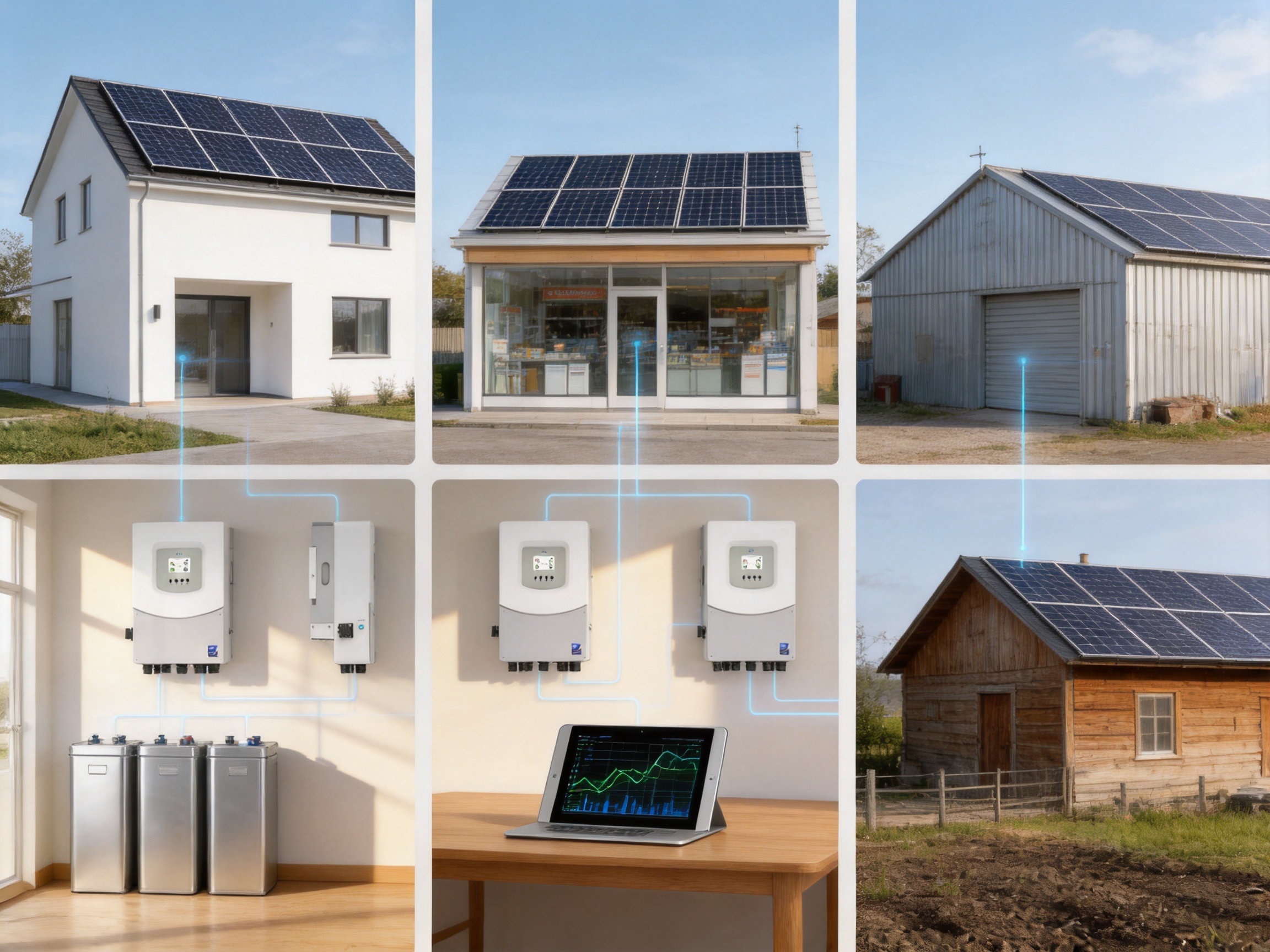
In residential three phase applications, the inverter can support solar self-consumption, backup power, and tariff optimization. A homeowner can use PV energy during the day, store surplus energy in a battery, and discharge it during evening peak demand. During outages, essential circuits can continue operating according to system design. The low noise level of no more than 45 dB and compact wall-mounted form factor support residential installation requirements.
In small commercial buildings, the inverter can reduce grid consumption during expensive tariff periods and provide backup for critical loads such as point-of-sale systems, refrigeration, communications equipment, lighting, and security systems. The ability to handle unbalanced loads is particularly useful because commercial circuits are often uneven. Parallel operation allows growth as business demand increases.
In agricultural settings, the inverter can support pumps, lighting, ventilation, monitoring systems, cold storage, and remote buildings. Diesel generator charging support is especially valuable where farms use generators during outages or in areas with weak grid infrastructure. Solar generation combined with storage can reduce fuel consumption and improve operating independence.
In retrofit solar projects, the AC-coupling capability provides a path to add battery storage without removing existing grid-tie equipment. This can appeal to customers who installed PV years ago and now want resilience or better self-consumption. The inverter can act as an energy storage upgrade platform, extending the usefulness of the original PV investment.
In weak-grid regions, voltage fluctuation, frequency instability, and outages can make ordinary grid-tie solar insufficient. A hybrid inverter with battery support and off-grid capability can provide a more stable user experience. The product’s support for grid frequency ranges of 50/45-55 Hz and 60/55-65 Hz, along with multiple grid regulations, reflects broad adaptability. Proper engineering and local compliance remain necessary, but the technical foundation is strong.
Installation and System Design Considerations
Although the inverter offers wide functionality, successful deployment depends on professional system design. Installers should match model size to load demand, PV array configuration, battery capacity, backup requirements, and local regulations. The maximum continuous AC passthrough from grid to load is 45 A, which should be considered when designing backup circuits and load distribution.
Battery sizing is especially important. A powerful inverter cannot provide long backup duration without adequate battery capacity. Users should identify critical loads, expected outage duration, and acceptable depth of discharge. Lithium-ion battery systems should communicate properly through supported BMS protocols where applicable. Lead-acid systems require careful attention to charging parameters, ventilation, maintenance, and cycle limitations.
PV string design should respect maximum input voltage, MPPT voltage range, maximum operating current, and short-circuit current limits. Temperature effects must be considered because PV module voltage rises in cold conditions. The 800 V maximum PV input voltage gives useful design flexibility, but safe string calculation remains essential.
For parallel systems, communication wiring, configuration settings, battery bus design, protection devices, and load distribution must be planned carefully. Parallel operation is a powerful feature, but it requires disciplined engineering. Installers should follow official manuals, local electrical codes, and applicable safety practices.
For AC-coupled retrofit systems, compatibility with existing inverters, metering, grid rules, and backup circuit arrangements should be reviewed before installation. The goal is not simply to connect equipment, but to create a coordinated energy system that behaves predictably under grid-connected and off-grid conditions.
Long-Term Value and Total Cost of Ownership
The purchase price of an inverter is only one part of system cost. Long-term value includes energy yield, battery utilization, backup reliability, installation flexibility, serviceability, monitoring, expansion potential, and equipment lifetime. The SUN-3/4/5/6/8K-SG06LP3-EU-BM2 series is designed to create value across these categories.
High efficiency reduces wasted energy. MPPT performance improves PV harvest. Time scheduling improves tariff optimization. AC coupling protects existing solar investment. Parallel capability reduces the risk of future under-sizing. Generator charging can reduce fuel costs. Unbalanced output can reduce rewiring requirements. Low voltage battery support can increase battery choice. These advantages combine to affect the total cost of ownership over years of operation.
The warranty period is listed as 5 years or 10 years depending on the final installation site and warranty policy. This reminds users to verify warranty terms for their region and project type. A strong manufacturer with global service experience can be a meaningful advantage when technical support, documentation, spare parts, or warranty service are needed.
In a competitive market, the best inverter is not always the one with the highest single specification. It is the one that best matches real installation needs and continues to perform safely over time. This series offers a balanced combination of low voltage storage, three phase operation, flexible PV input, backup capability, scalability, communication, and manufacturing backing.
Q&A Section
What type of product is the SUN-3/4/5/6/8K-SG06LP3-EU-BM2 series?
It is a three phase low voltage hybrid inverter series designed for solar PV systems with battery storage. It can manage PV power, battery charging and discharging, grid interaction, backup loads, AC-coupled retrofit systems, and generator-based charging under suitable system configurations.
Which power ratings are available?
The series includes 3 kW, 4 kW, 5 kW, 6 kW, and 8 kW models. This range allows installers to choose an inverter size suitable for different residential, small commercial, agricultural, or light industrial applications.
What battery voltage does the inverter support?
The inverter supports low voltage batteries in the 40 V to 60 V range, commonly associated with 48 V battery systems. It can work with lead-acid or lithium-ion batteries, and lithium-ion charging strategy can adapt to BMS communication.
Why is low voltage battery support important?
Low voltage battery systems are familiar to many installers, widely available, and practical for residential and small commercial projects. They can simplify system serviceability and give users more flexibility in battery selection compared with some tightly restricted high voltage systems.
What is the maximum charging and discharging current?
The maximum charging and discharging current depends on the model. It is 70 A for the 3 kW model, 95 A for the 4 kW model, 120 A for the 5 kW model, 135 A for the 6 kW model, and 190 A for the 8 kW model.
Can the inverter support unbalanced three phase loads?
Yes. The series supports 100% unbalanced output, with maximum output up to 50% of rated power for each phase. This is very useful because many real buildings do not distribute loads evenly across three phases.
Can the inverter be used in off-grid operation?
Yes. The inverter supports on-grid and off-grid operation, and up to ten units can be connected in parallel under suitable system design. In off-grid mode, it can provide peak power equal to two times rated power for 10 seconds.
Does the inverter support existing solar system retrofits?
Yes. The product supports AC coupling, which allows it to retrofit existing solar systems. This is valuable for customers who already have grid-tie PV systems and want to add battery storage or backup capability.
How many MPPT trackers does the inverter have?
The inverter has two MPPT trackers, with one string per tracker. This supports more flexible PV array design, especially where panels face different directions or are installed on roof sections with different shading conditions.
What is the maximum PV input voltage?
The maximum PV input voltage is 800 V. The start-up voltage is 160 V, and the MPPT voltage range is 200 V to 650 V.
Can the inverter store energy from a diesel generator?
Yes. The inverter supports storing energy from a diesel generator. This can reduce generator runtime, improve fuel efficiency, and strengthen backup power strategies in weak-grid or off-grid locations.
What communication interfaces are available?
The inverter supports WIFI, RS485, and CAN communication. These interfaces help with monitoring, battery communication, system integration, and operation management.
What protection functions are integrated?
Integrated protections include DC reverse polarity protection, AC output overcurrent protection, thermal protection, AC output overvoltage protection, AC output short-circuit protection, DC component monitoring, anti-islanding protection, DC switch, insulation impedance detection, and residual current detection. Arc fault circuit interrupter functionality is optional.
What is the enclosure protection rating?
The inverter has an IP65 ingress protection rating, making it suitable for many demanding indoor or outdoor installation environments when installed correctly according to professional requirements.
What makes this inverter series competitive?
Its main competitive advantages include 48 V low voltage battery support, high battery charging and discharging current, 100% unbalanced three phase output, two MPPT trackers, AC coupling, diesel generator energy storage support, six time periods for energy scheduling, parallel operation of up to ten units, comprehensive protection functions, and manufacturing support from an experienced global inverter company.
References
Product datasheet for SUN-3/4/5/6/8K-SG06LP3-EU-BM2 Three Phase Hybrid Inverter, 3-8 kW, 2 MPPT, Low Voltage Battery Supported.
IEC 61727, Photovoltaic systems: characteristics of the utility interface.
IEC 62116, Utility-interconnected photovoltaic inverters: test procedure of islanding prevention measures.
IEC/EN 62109-1, Safety of power converters for use in photovoltaic power systems: general requirements.
IEC/EN 62109-2, Safety of power converters for use in photovoltaic power systems: particular requirements for inverters.
EN 50549, Requirements for generating plants to be connected in parallel with distribution networks.
VDE-AR-N 4105, Generators connected to the low-voltage distribution network technical requirements.
General technical literature on hybrid inverter design, battery energy storage integration, photovoltaic MPPT control, and distributed energy resource management.
Product: SUN-3/4/5/6/8K-SG06LP3-EU-BM2
PREV:15–18 kW Split Phase Hybrid Inverter for Resilient Solar and Storage Systems
NEXT:High-Efficiency Module-Level PV Optimizer for Safer, Smarter Solar Arrays
Share
Product recommendations
news recommendations
-
 GLOBAL EXHIBITION TIMELINE
*Click to view larger image
-
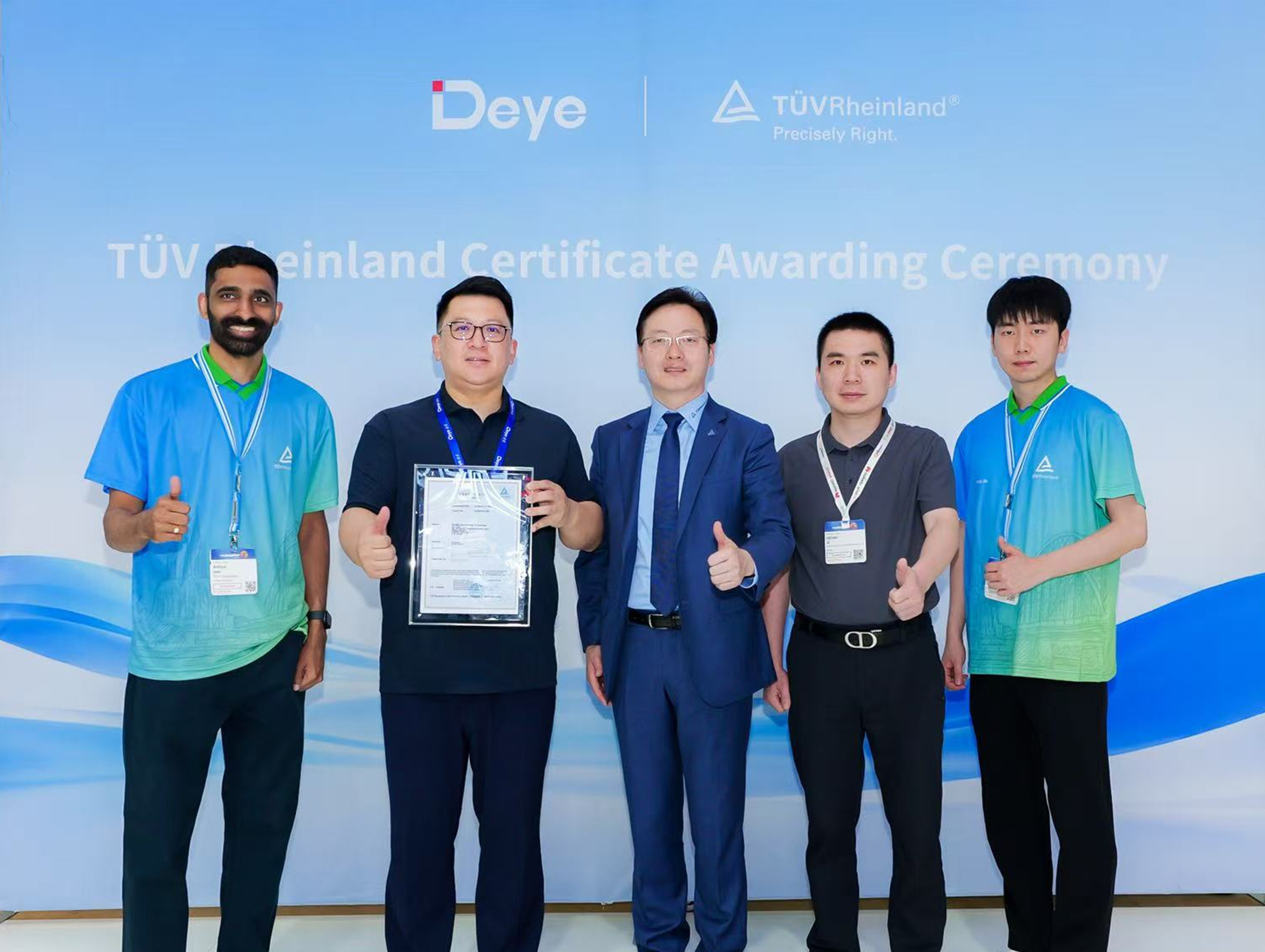 Deye Secures Multiple TÜV Rheinland Certifications at The smarter E Europe
On June 23, the opening day of The smarter E Europe 2026, Deye was officially awarded several presti...
-
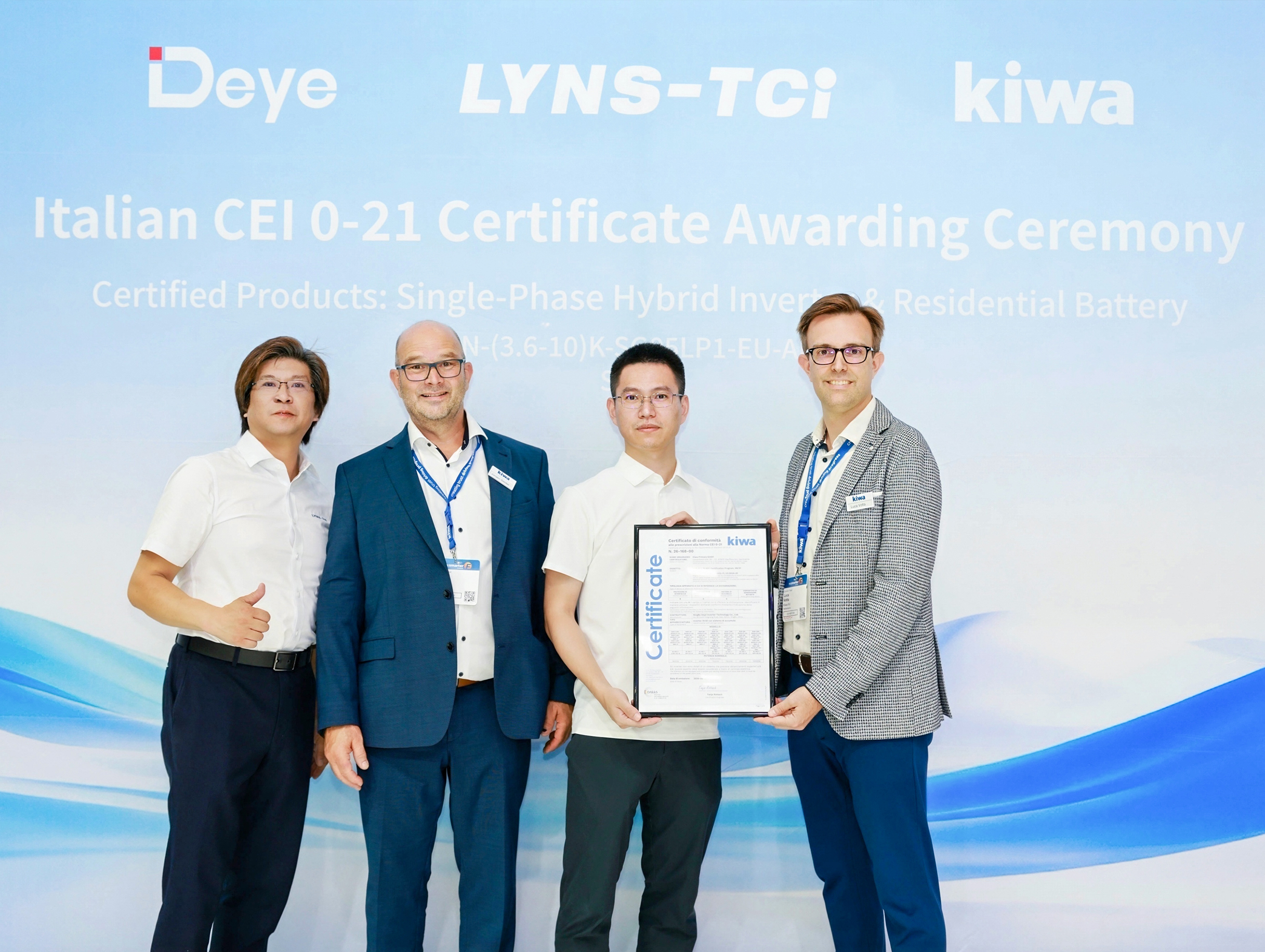 Deye Next-Gen Residential Energy Storage Products Receive Italian CEI 0-21 Certification from Kiwa
At The smarter E Europe 2026, Deye, a leading supplier of inverters and energy storage solutions, of...

Copyright@ 2024.Ningbo Deye Inverter Technology Co.,Ltd. All rights reserved. Solar Inverter Manufacturer
