
 Online Shop
 English
 China - 简体中文
 Global - English
 Brazil - Português
 Netherlands - Dutch
 Italy - Italiano
 Germany - Deutsch
 Spain - Español
 France - Français
 Vietnam - Tiếng Việt
 Poland - Polski
 Australia - English
 Japan - 日本語
Blog

Wireless Energy Management for Smarter Solar Power Utilization
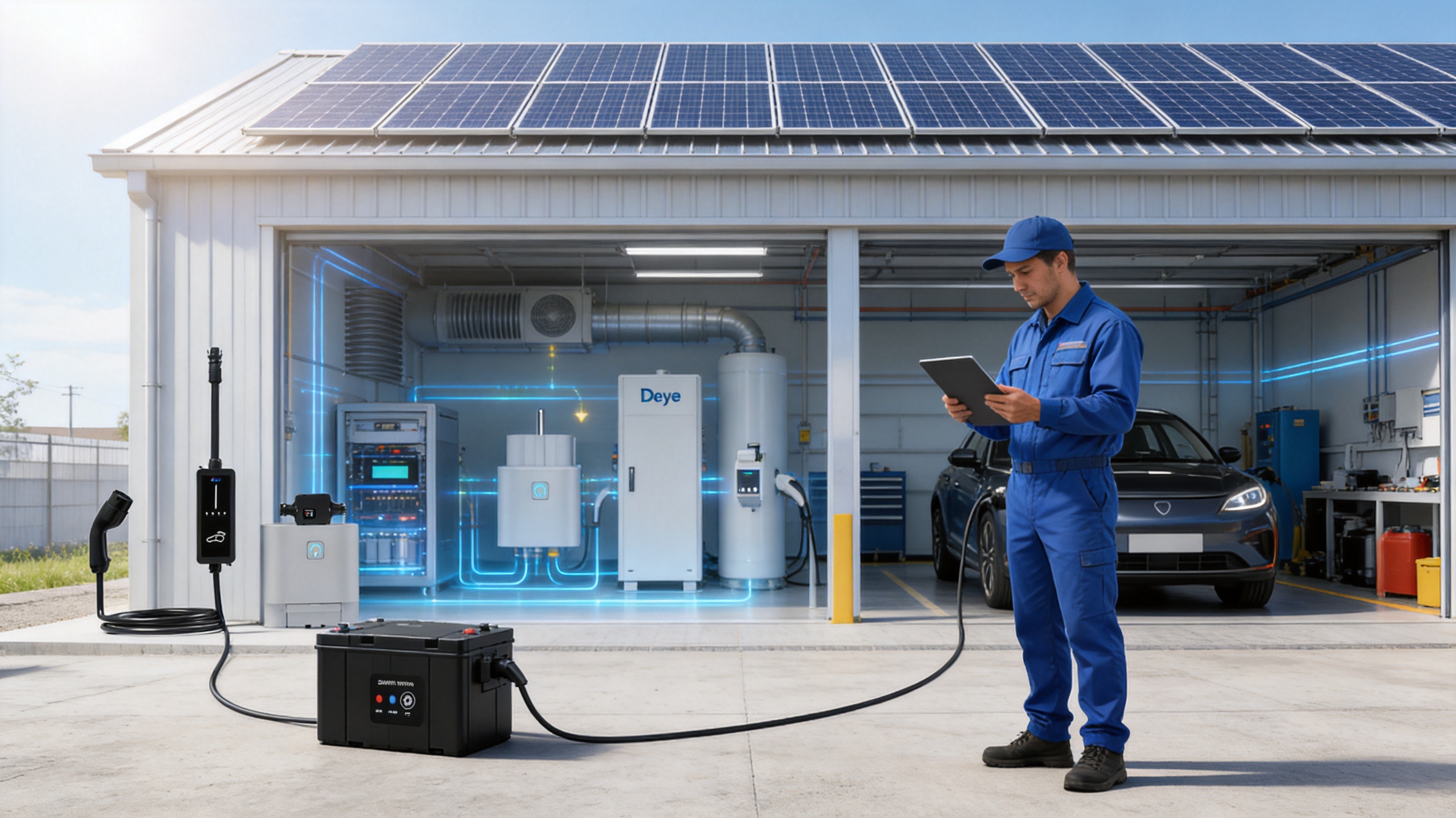
Modern solar energy systems are no longer judged only by how much electricity they can generate. Homeowners, businesses, and energy professionals increasingly want systems that can measure power accurately, coordinate batteries and appliances, reduce grid purchases, and make intelligent decisions when solar production changes. A wireless energy management system provides the control layer required to achieve these objectives.
The Wireless Energy Management System developed by Ningbo Deye Inverter Technology Co., Ltd. is designed to connect solar inverters, energy storage systems, smart loads, electric vehicle chargers, plugs, switches, and measuring devices through a low-latency LoRa communication network. It supports all Deye hybrid inverters and enables users to coordinate energy generation, storage, consumption, and charging through a unified management strategy.
Rather than treating every appliance as an independent electrical load, the system helps identify which loads are essential and which can be controlled according to solar availability, battery state of charge, time schedules, or grid conditions. This approach can increase self-consumption, reduce unnecessary grid imports, and support more economical use of stored energy.
The solution is composed of several complementary devices. The SUN-SMART-CT01 measures electrical conditions and sends data through LoRa or RS485. The SUN-SMART-TX01 provides wireless communication between compatible equipment. The SUN-SMART-SWITCH01P3 controls higher-power loads in single-phase or three-phase installations. The SUN-SMART-PLUG01-F manages individual plug-connected appliances. The system can also coordinate compatible Deye EV chargers, including the SUN-EVSE11K01-EU-AC and SUN-EVSE22K01-EU-AC models.
This modular structure distinguishes the system from simple smart plugs or basic monitoring meters. It is intended to operate as part of a broader solar and storage installation, allowing energy decisions to be made according to measured electrical data rather than fixed assumptions.
Why Energy Management Matters in Solar Installations
A photovoltaic system may generate substantial energy during the middle of the day while household or commercial demand remains low. Without intelligent control, surplus solar power may be exported to the grid, curtailed, or used inefficiently. At other times, the building may import electricity even though a battery contains stored solar energy or a controllable load could have been shifted to a more favorable period.
Energy management addresses this mismatch between generation and demand. It monitors voltage, current, active power, reactive power, frequency, power factor, and energy. It can then use this information to support decisions such as whether a battery should charge, whether an appliance should be switched on, or whether an EV should begin charging.
For a residential user, the system can help prioritize essential loads such as refrigeration, lighting, communications equipment, and security devices. Non-essential loads, including water heating, pool equipment, selected air-conditioning loads, or other flexible appliances, may be scheduled to operate when solar production is abundant.
For a commercial user, wireless load management can help reduce demand during expensive periods, use renewable energy more effectively, and organize charging activities without requiring every device to be hardwired back to a central controller. This can be especially useful when equipment is distributed across a building, a workshop, a warehouse, or a small industrial site.
The system also supports charging strategies based on time and state of charge. This allows the user or installer to define how energy should be used under different operating conditions. For example, a battery may be reserved for evening consumption, while an EV charger operates during a period of high solar output. Alternatively, the system may prioritize battery charging before flexible loads are activated.
Core Advantages of the Wireless Architecture
LoRa Communication for Extended Site Coverage
The communication backbone uses LoRa technology, which is well suited to low-power control and monitoring applications over relatively long distances. The listed communication distance is approximately 200 meters in barrier-free conditions. Actual performance depends on building materials, equipment placement, electromagnetic conditions, antenna orientation, and site layout, but the range provides useful flexibility for many residential and light commercial installations.
Compared with a short-range connection designed for a single room, LoRa can support communication between devices located in different areas of a property. A meter installed near the main distribution board may communicate with a smart switch in a utility area, a smart plug in an outbuilding, or an EV charger positioned at a parking location.
The wireless design can reduce the amount of communication cabling required during installation. This can be valuable in existing buildings where new cables would require wall openings, conduit work, ceiling access, or extended shutdowns. It can also simplify later expansion because additional compatible devices can be introduced without redesigning the entire communication network.
The use of a built-in antenna in the transmitter, switch, plug, and other wireless devices contributes to a compact and practical installation. The SUN-SMART-TX01 uses a built-in antenna with a listed gain of 0.56 dBi. The SUN-SMART-SWITCH01P3 lists an internal antenna with a gain of 1.58 dBi at 868 MHz, while the SUN-SMART-PLUG01-F lists an internal antenna with a gain of 0.3.23 dBi at 868 MHz as provided in the product information.
Low Latency and Responsive Control
Energy control decisions are more useful when they occur quickly. High communication delays can result in missed solar production, unnecessary battery cycling, or slow responses to changing loads. The Wireless Energy Management System is designed for low-latency operation, helping control commands and energy measurements move through the system without the delays associated with manual operation.
Low latency is particularly valuable when a load is switched according to excess solar power. Solar production can change rapidly when clouds pass over a photovoltaic array. A responsive control system can help avoid repeatedly importing electricity from the grid or activating a load after the available surplus has already disappeared.
Low-latency operation also benefits EV charging. Charging power can be adjusted or scheduled in relation to solar generation, battery state of charge, and household demand. This can make charging more closely aligned with the energy strategy selected by the system owner.
Offline Operation
One of the notable advantages of the system is its support for offline operation. Energy management should remain useful even when an external cloud connection is temporarily unavailable. Local communication allows compatible devices to exchange information and support control functions within the installation.
Offline operation can improve resilience in locations with unreliable internet service or in applications where users prefer local control. It can also help maintain essential energy strategies during network interruptions. While remote monitoring and cloud-based functions may depend on the communication environment and applicable system configuration, local operation provides an additional layer of reliability.
For installers, offline functionality can simplify commissioning and testing. Devices can be checked on site without waiting for a remote server connection. For end users, it means that a temporary loss of internet access does not necessarily stop local energy management.
Compatibility with Hybrid Inverters
The system supports all Deye hybrid inverters. This compatibility enables the wireless devices to work within an established hybrid inverter ecosystem rather than operating as isolated third-party accessories. The inverter remains the central energy conversion and storage component, while the wireless management devices extend its ability to measure and control loads.
Compatibility is important because communication errors, incomplete data exchange, or limited control functions can reduce the value of an energy management system. A system designed around a compatible inverter family can provide a more coordinated installation process and a clearer responsibility structure for installers and service teams.
For users who already operate a compatible hybrid inverter, the Wireless Energy Management System offers a path to expand functionality without replacing the inverter. Additional smart devices can be selected according to the site’s requirements, including metering, switching, plug-level control, wireless transmission, and EV charging.
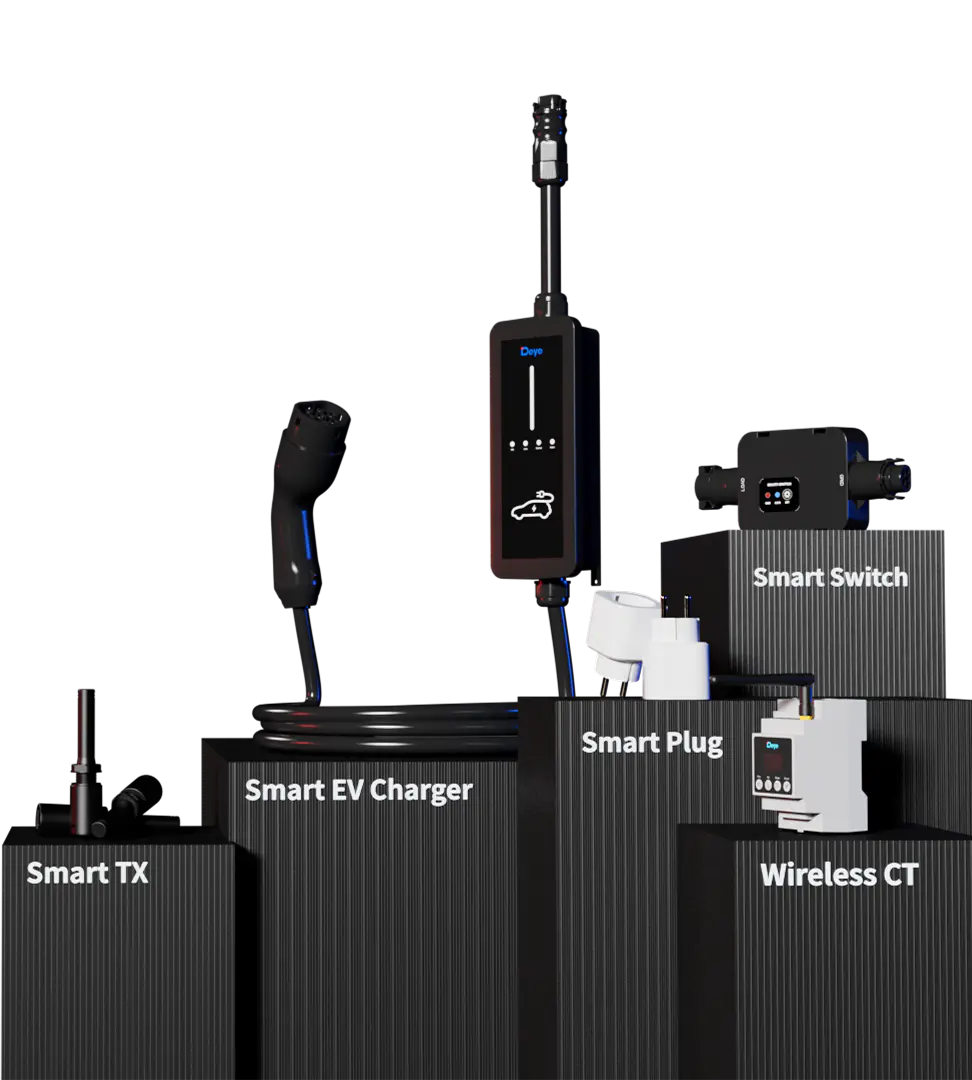
Wireless energy management system
System Components and Their Functions
SUN-SMART-CT01 Wireless Energy Meter
The SUN-SMART-CT01 serves as the measurement and energy data collection component. It supports single-phase connection through L1/N and three-phase connection through L1/L2/L3/N. Its current transformer input has a secondary current of 50 mA, allowing the device to measure electrical current without placing the full load current directly through the meter’s measuring circuit.
The operating voltage range is 85 to 300 V a.c. line to neutral. The device supports 50 Hz operation across 45 to 55 Hz and 60 Hz operation across 55 to 65 Hz. Its self-consumption power is specified as no more than 2 W, helping limit the energy required to operate the monitoring component itself.
The listed measurement accuracy includes ±0.1 V for voltage, ±0.01 A for current, ±0.01 Hz for frequency, and ±1 W for power. These specifications support practical monitoring and control decisions in residential and small commercial systems. The meter can display voltage, current, active power, reactive power, frequency, power factor, and energy on its LCD.
The SUN-SMART-CT01 supports both LoRa and RS485 communication. LoRa provides wireless communication with compatible devices, while RS485 offers a wired communication option for installations where a direct connection is preferred. The combination allows installers to select the communication method that best suits the electrical layout and physical environment.
The meter is designed for DIN-rail mounting and measures 53 by 96 by 64 millimeters, with a listed weight of 0.15 kilograms. Its operating temperature range is -40 to +60 degrees Celsius, and its rated ingress protection is IP20. The device is specified for operation at altitudes up to 4000 meters and includes a five-year warranty.
SUN-SMART-TX01 Wireless Transmitter
The SUN-SMART-TX01 is a compact LoRa transmitter used to support communication between compatible energy management devices. It operates from a DC 5 V input and provides approximately 200 meters of barrier-free communication distance.
Its operating temperature range is -40 to +60 degrees Celsius, and its permissible ambient humidity is listed as 0 to 100 percent. The product has an IP20 rating before installation and is identified as IP65 after installation, subject to correct installation procedures and enclosure conditions. Its dimensions are 137.8 by 31.3 by 31.3 millimeters, and its weight is 45.8 grams.
The transmitter supports the 863 to 870 MHz frequency range and includes a built-in antenna with a listed gain of 0.56 dBi. A small, lightweight transmitter can be useful when communication equipment must be placed in a confined cabinet or positioned near existing system hardware.
With a two-year warranty and compliance with IEC/EN 62368-1, the SUN-SMART-TX01 is designed to provide a dedicated communication bridge for the broader wireless energy management solution.
SUN-SMART-SWITCH01P3 Smart Switch
The SUN-SMART-SWITCH01P3 is intended for switching larger electrical loads than a standard smart plug. It supports single-phase L1/N and three-phase L1/L2/L3/N connection arrangements. Its voltage range is 94 to 238 V a.c. phase voltage, and the maximum phase current is 25 A a.c.
The device supports both 50 Hz and 60 Hz operating ranges. A connector plug-in connection helps simplify wiring and replacement, while LoRa communication allows the switch to receive control commands from the energy management system without requiring a separate data cable across the property.
The smart switch has an IP65 rating, Class I protection, and an operating temperature range of -40 to +45 degrees Celsius. It is specified for humidity from 0 to 100 percent relative humidity and altitudes up to 4000 meters. Its dimensions are 96.7 by 204.7 by 37.7 millimeters, and its weight is 0.4 kilograms.
The 25 A switching capability allows the device to manage suitable household or light commercial loads, subject to local electrical regulations, installation design, and the characteristics of the connected equipment. It can be used for smart load management where an appliance should operate only when sufficient solar power or battery capacity is available.
The switch uses the 863 to 870 MHz frequency range, with an internal antenna and a listed antenna gain of 1.58 dBi at 868 MHz. A five-year warranty and IEC/EN 61010-1 standard are listed for the product.
SUN-SMART-PLUG01-F Smart Plug
The SUN-SMART-PLUG01-F provides a simple way to control individual plug-connected appliances. It is rated for 220 to 250 V a.c. and a maximum current of 16 A a.c. Its plug-type connection allows it to be inserted into a compatible socket without the more extensive wiring required for a fixed switch installation.
The smart plug communicates through LoRa and has a listed communication distance of approximately 200 meters under barrier-free conditions. It operates from -40 to +60 degrees Celsius and has an IP20 rating. The unit is classified as Class I protection and is specified for altitudes up to 3000 meters.
Measuring 51.2 by 51.2 by 64 millimeters and weighing 0.08 kilograms, the SUN-SMART-PLUG01-F can be used for selected appliances that are suitable for smart switching. Possible applications may include a small water heater, circulation pump, office equipment, or another flexible load, provided that the appliance and electrical installation are compatible with the plug’s ratings.
The device includes a five-year warranty and lists VDE 0620-2-1 and EN 61058 among its standards. Its LoRa frequency range is 863 to 870 MHz, and it uses an internal antenna. The smart plug is particularly useful when a user wants to begin energy management with one or two controllable appliances instead of installing a complete fixed control cabinet.
Compatible EV Charging Devices
The Wireless Energy Management System can also work with compatible Deye EV chargers. The SUN-EVSE11K01-EU-AC provides a maximum output power of 11 kW and uses a 16 A input current with a three-phase 3L+N+PE connection. The SUN-EVSE22K01-EU-AC supports 7 kW in single-phase operation and up to 22 kW in three-phase operation, with input arrangements for single-phase or three-phase installations.
The chargers support plug-and-charge, charging after scanning, and scheduled charging functions. This makes them suitable for different user preferences, from simple immediate charging to time-based energy planning.
Protection functions include over-temperature, low-temperature, over-voltage, under-voltage, short-circuit, overload, earth-fault, and leakage-current protection. The listed leakage-current protection is DC 6 mA, and surge protection is specified as Type II. The chargers have an IP66 rating, an operating temperature range of -40 to +55 degrees Celsius, and a permissible ambient humidity range of 5 to 95 percent without condensation.
The charging equipment supports LoRa, Wi-Fi, and BLE communication. This combination can provide multiple communication options for installation, commissioning, and user interaction. The chargers are listed with a noise level below 25 dB, a cabinet size of 104 by 264 by 57.5 millimeters, and a gun cable length of 4.2 meters.
Improving Solar Self-Consumption
One of the central objectives of the system is to maximize the use of solar power. Solar self-consumption increases when locally generated electricity is used on site rather than exported or wasted. The Wireless Energy Management System helps achieve this by coordinating energy measurement with controllable loads.
Suppose a photovoltaic system produces more power than the building currently consumes. The energy management system can identify the available surplus through the meter. A suitable flexible load can then be activated, such as a water heating circuit, an appliance connected to a smart plug, or an EV charger. In this way, surplus generation is redirected toward a useful purpose.
If solar production falls, the system can respond according to its defined strategy. A non-essential load may be disconnected, the battery may take over part of the demand, or the building may return to grid supply. This prioritization helps prevent flexible loads from unnecessarily discharging the battery or increasing grid consumption.
Users can define essential and non-essential loads. Essential loads are generally kept available whenever the system can support them. Non-essential loads can be controlled according to solar output, time of day, battery state of charge, or other selected conditions. This distinction is important because energy management should not compromise the operation of critical equipment.
The system can also reduce electricity costs by shifting consumption. If electricity tariffs vary by time, charging or flexible loads can be scheduled for periods with favorable prices. When solar generation is available, the system can prioritize direct solar consumption. When solar output is low, the battery and grid can be used according to the selected operating rules.
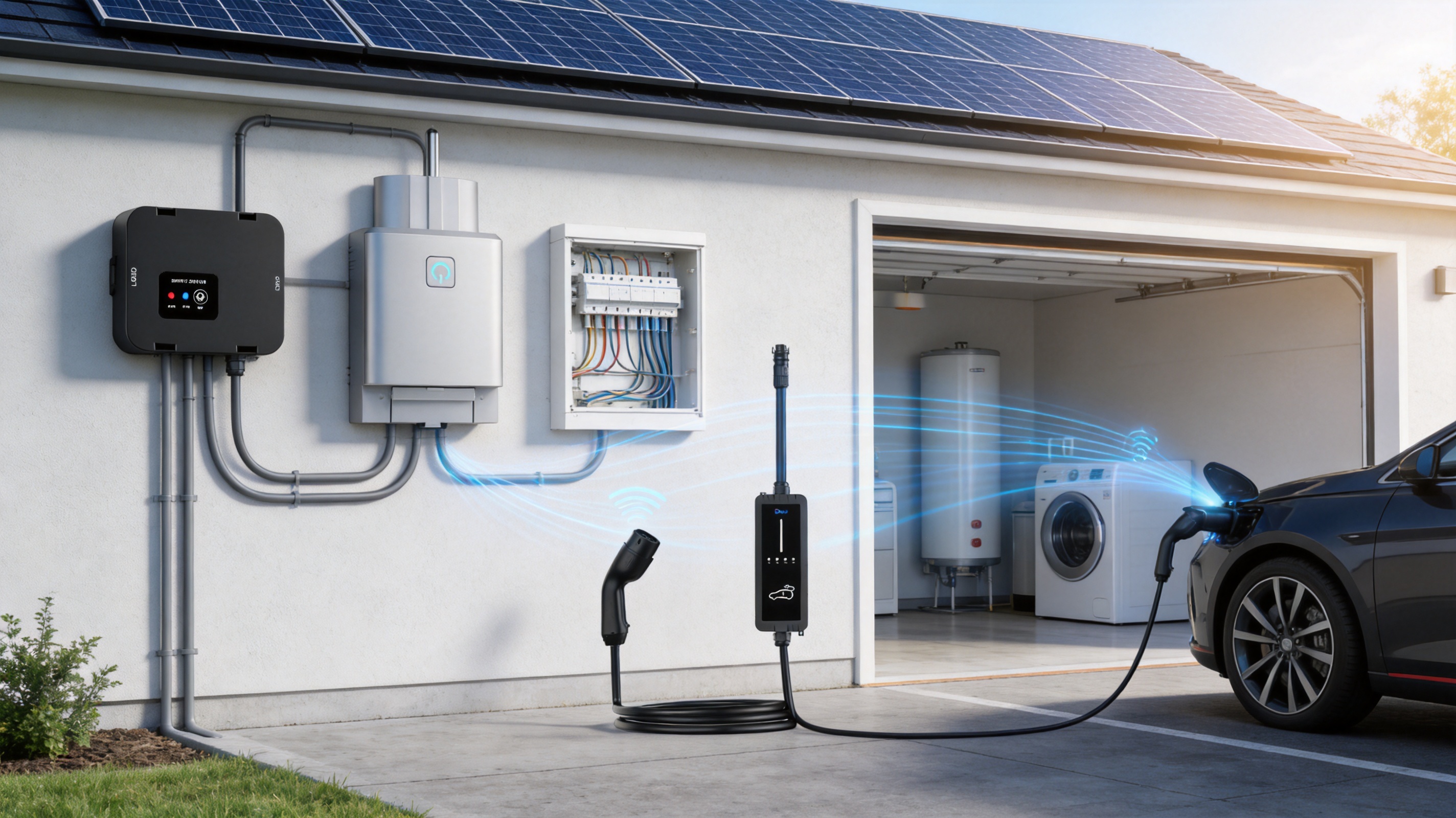
Battery Charging and State-of-Charge Strategies
Battery storage provides flexibility, but its value depends on how intelligently it is charged and discharged. A battery charged too early may have insufficient capacity to absorb later solar generation. A battery discharged too aggressively may be unavailable during an evening peak or unexpected outage. The Wireless Energy Management System supports charging control strategies based on time and state of charge.
Time-based control allows the system owner to define periods for battery charging, load operation, or EV charging. For example, a user may reserve the early morning for essential loads, prioritize solar charging during the daytime, and use stored energy during the evening. In regions with time-of-use tariffs, the battery can be managed to reduce purchases during high-price periods.
State-of-charge control adds another level of protection. The user can define a minimum battery reserve so that essential loads remain supported. Flexible appliances can be prevented from operating when the battery falls below a selected level. Alternatively, a charging load may be enabled when the battery has reached a sufficient state of charge and solar production remains available.
Combining time and state-of-charge conditions produces a more practical energy strategy than using either condition alone. A charger may be permitted to operate during a scheduled period only if the battery is above a selected reserve. A flexible load may run during daylight hours only when the inverter detects adequate solar power. These rules help align energy consumption with the user’s priorities.
The system does not eliminate the need for correct inverter configuration, battery commissioning, or professional electrical design. Instead, it provides the measurement and control tools needed to implement a more coordinated strategy within the compatible inverter ecosystem.
Advantages Compared with Conventional Control Methods
Compared with Manual Appliance Control
Manual switching depends on user attention and regularity. A user may remember to turn on an appliance when the sun is shining, but changing weather, work schedules, and daily routines make consistent optimization difficult. Wireless automatic control can respond to measured conditions without requiring the user to operate every device.
Manual control also makes it difficult to protect the battery from unnecessary discharge. A load may be switched on at a time when solar production is insufficient, causing the battery to supply energy that could have been reserved for essential consumption. Automated rules can reduce this risk by considering state of charge and system conditions.
Compared with Standalone Smart Plugs
A conventional smart plug may provide remote on-and-off control, but it may not understand the energy balance of a complete solar and storage installation. The Wireless Energy Management System combines measurement, inverter compatibility, load switching, and charging strategies. It therefore offers a more integrated approach than isolated appliance control.
The SUN-SMART-PLUG01-F remains useful for individual loads, but it functions as part of a larger energy strategy rather than as a stand-alone internet-connected accessory. This distinction is important for users who want appliance control based on solar generation or battery state of charge instead of simple remote switching.
Compared with Fully Wired Control Networks
Fully wired control networks can be effective, but installation may require additional communication cables, conduit, trunking, and building modifications. Wireless LoRa communication can reduce these requirements and make retrofits more practical.
A wireless network also offers greater placement flexibility. Devices can be positioned close to the loads they control, while the energy meter remains near the distribution board and inverter. This can reduce the distance between the control device and the appliance, helping simplify power wiring and maintenance.
Compared with Cloud-Dependent Systems
Cloud-dependent products may provide attractive remote dashboards, but control can be interrupted when internet access or a remote server is unavailable. The support for offline operation in this system gives local energy management greater independence.
Cloud connectivity can still be valuable for remote monitoring, reporting, software services, and user convenience. However, local communication provides an important foundation for essential control functions. This balance between local operation and broader digital services is a significant strength for installations where reliability matters.
Compared with Single-Function Energy Meters
A basic energy meter may show consumption data without being able to control loads. The SUN-SMART-CT01 is designed to provide measurement data within a system that also includes smart switches, smart plugs, wireless transmitters, and EV charging equipment. This creates a path from measurement to action.
Accurate voltage, current, frequency, power, and energy information supports better decisions. When the system knows what is happening electrically, it can coordinate loads more effectively than a timer or manually operated switch.
Manufacturing Strength and Product Development Capabilities
Ningbo Deye Technology Co., Ltd. was founded in 2000 and has developed into a technology manufacturing enterprise integrating research and development, product design, production, sales, and service. This integrated structure supports the development of complete solar, storage, and energy management solutions rather than isolated components.
The company’s product activities cover photovoltaic inverters, energy storage systems, environmental appliances, and energy IoT technologies. Its inverter portfolio includes string inverters from 1 kW to 136 kW, energy storage inverters from 3 kW to 80 kW, and microinverters from 300 W to 2.2 kW, according to the provided company information.
This breadth is relevant to the Wireless Energy Management System because energy management is most effective when measurement and control devices are designed with a strong understanding of inverter operation, battery storage, photovoltaic production, and load behavior. A manufacturer active across these product categories can develop the communication and control layer with the wider energy system in mind.
The company’s integrated research and development capabilities support product design across electrical, electronic, communications, software, and mechanical disciplines. A wireless energy management product must combine accurate measurement, safe switching, reliable radio communication, compact packaging, inverter compatibility, and practical installation procedures. These requirements demand coordination across multiple engineering fields.
Production quality is also important for equipment that operates continuously in electrical distribution environments. Components such as meters, switches, transmitters, and plugs must be manufactured consistently so that their electrical characteristics, communication behavior, and mechanical fit remain within specification. A dedicated manufacturing organization can establish repeatable processes for assembly, inspection, testing, and quality control.
The company’s international market presence provides additional experience with different electrical standards, grid conditions, installation methods, and customer requirements. Its products are sold in more than 140 countries and regions, creating exposure to residential, commercial, industrial, and utility applications.
Such experience can help inform product development, particularly where a wireless energy management system must operate across different voltage systems, frequency environments, climate conditions, mounting practices, and regulatory expectations. The listed standards for the individual devices demonstrate attention to electrical safety, product reliability, radio equipment, and EV charging requirements.
Manufacturing strength is not limited to factory scale. It also includes the ability to maintain product documentation, provide commissioning instructions, support installers, manage spare parts, and deliver after-sales service. The supplied product information includes manuals for the smart switch, smart plug, transmitter, CT meter, EV charger, and commissioning steps for smart devices. This documentation supports a more structured deployment process.
The company is listed on the Shanghai Stock Exchange, which reflects its position as an established publicly listed technology manufacturer. While company size alone does not guarantee performance in every installation, a stable organizational structure can support long-term product development, warranty management, supply-chain planning, and service investment.
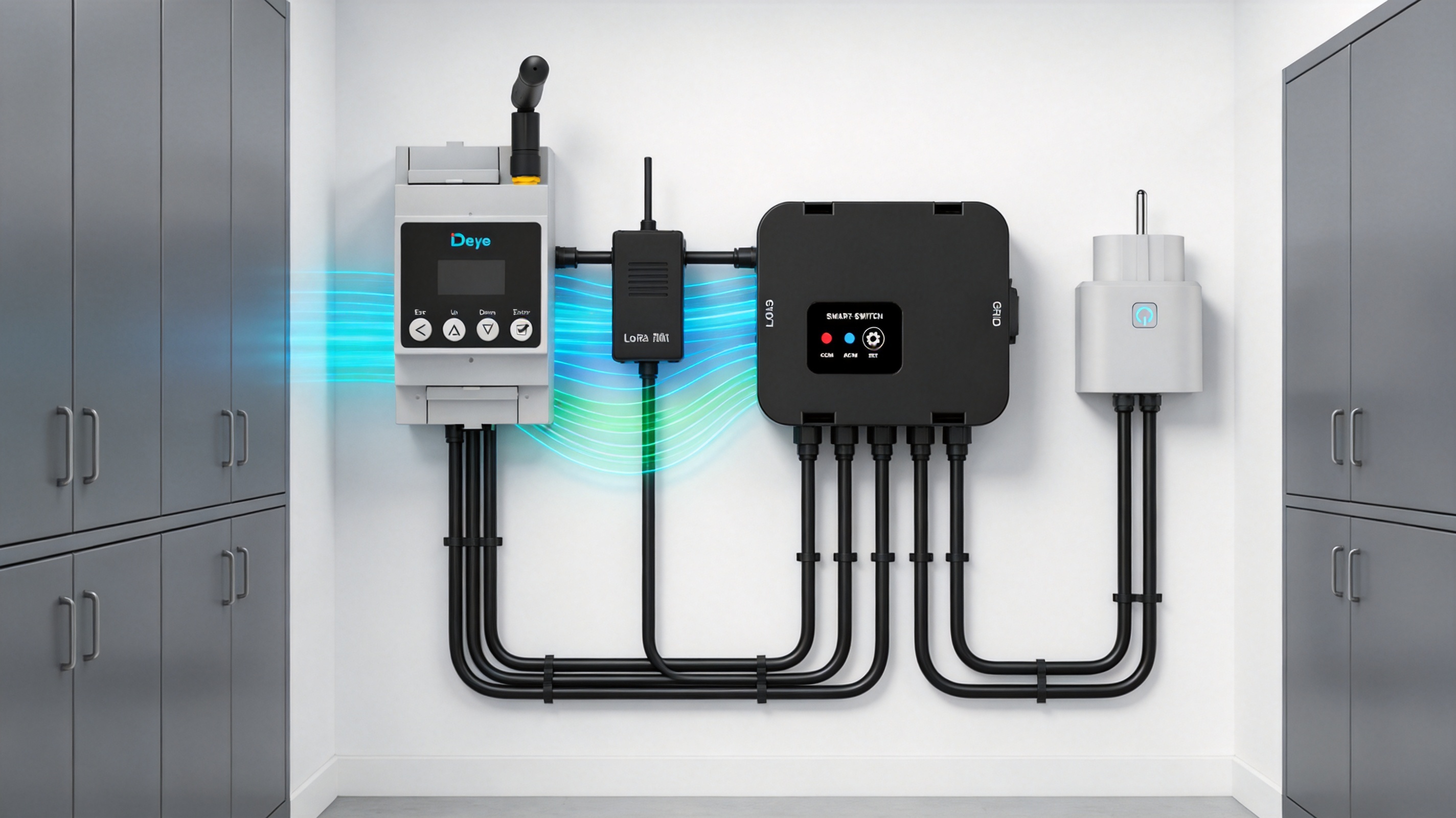
Safety, Environmental Design, and Installation Considerations
Energy management devices are connected to electrical systems, so safe installation is essential. The listed electrical ratings must not be exceeded, and each device should be installed by qualified personnel in accordance with local regulations, system design requirements, and the applicable installation manual.
The SUN-SMART-CT01 is designed for DIN-rail mounting and provides electrical isolation through current transformer measurement. Its AC voltage withstand rating is listed as 4 kV for one minute, and the product references IEC/EN 61010-1. The smart switch also references IEC/EN 61010-1 and is classified as Class I protection.
The smart switch has an IP65 rating, making it more suitable for demanding installation conditions than an IP20 indoor plug, although the final suitability depends on the installation environment and enclosure arrangement. The smart plug is rated IP20 and should be used in appropriate indoor or protected locations. The transmitter is listed as IP20 before installation and IP65 after installation, emphasizing the importance of correct installation procedures.
The EV chargers have an IP66 rating and include multiple protective functions, including over-temperature, over-voltage, under-voltage, short-circuit, overload, earth-fault, and leakage-current protection. They also reference EN IEC 61851-1 and related electromagnetic compatibility and radio standards in the supplied product data.
Operating temperature and humidity ratings should also be considered during system design. The CT meter, transmitter, and smart plug have operating ranges extending from -40 to +60 degrees Celsius, while the smart switch is specified from -40 to +45 degrees Celsius. The EV chargers are specified from -40 to +55 degrees Celsius. Equipment should be installed where environmental conditions remain within these limits.
Radio performance depends on the physical environment. Reinforced concrete, metal cabinets, underground areas, and large electrical installations may reduce communication range. Installers should consider device placement, avoid unnecessary obstructions, and verify communication performance during commissioning.
Electrical protection, conductor sizing, circuit isolation, earthing, overcurrent protection, and load compatibility must be evaluated separately for each installation. A smart control function does not replace the need for correctly designed electrical protection. In particular, high-power loads and EV chargers require careful circuit design and compliance with local codes.
Practical Applications
Residential Solar and Storage
In a home with photovoltaic generation and a hybrid inverter, the system can measure the building’s electrical flow and coordinate flexible appliances. A smart plug may control a selected appliance, while the smart switch manages a higher-current load. The inverter and battery can remain focused on maintaining energy availability for the home.
The homeowner can define which loads are essential and which can be interrupted. During a sunny period, flexible loads may operate using surplus solar energy. During evening hours, the system can prioritize essential consumption and use stored energy according to the selected reserve level.
Electric Vehicle Charging
EV charging is one of the most valuable flexible loads in a solar energy system. A vehicle battery can absorb substantial energy, but charging at the wrong time may increase grid imports or reduce the energy available for essential loads.
With compatible EV chargers, users can schedule charging, charge immediately, or coordinate charging with solar generation and storage conditions. The 11 kW and 22 kW product options provide flexibility for different residential and commercial electrical supplies, subject to the available grid connection and local requirements.
Small Commercial Buildings
Small commercial buildings often have distributed loads with changing schedules. Offices, workshops, retail units, and service businesses may have refrigeration, ventilation, water heating, pumps, process equipment, and EV charging requirements.
Wireless load control can make it easier to organize these loads without installing a complex communication cable network throughout the building. The energy meter provides a view of system conditions, while smart switches and plugs can control selected equipment according to operating priorities.
Remote or Retrofit Projects
Wireless communication is especially useful when a site is difficult to rewire. Retrofit projects may involve finished walls, occupied buildings, detached garages, agricultural structures, or equipment located far from the main inverter room.
The approximate 200-meter barrier-free LoRa distance provides design flexibility, while offline operation helps maintain local functionality when internet service is limited. A site survey remains important, but the system can reduce the physical complexity of many retrofit installations.
Commissioning and System Optimization
Successful commissioning begins with a clear understanding of the site’s energy priorities. The installer should identify the inverter, battery, main distribution point, essential loads, non-essential loads, EV charging equipment, and any appliances to be controlled.
The CT meter should be installed in the correct location and orientation, with current transformer placement verified against the electrical design. Incorrect CT orientation or phase assignment can cause measurement errors and lead to unsuitable control decisions.
Communication devices should then be installed and paired according to the relevant commissioning procedure. The installer should verify the LoRa network, confirm signal quality, and check that each smart switch, smart plug, transmitter, and charger responds correctly.
Measured voltage, current, power, frequency, power factor, and energy values should be compared with expected site conditions. Where possible, readings can be checked against a suitable reference instrument. This step helps identify wiring errors before automated control strategies are enabled.
Control rules should be introduced gradually. Essential loads should be protected first. Non-essential loads can then be assigned operating conditions based on solar output, time, battery state of charge, or charging requirements. Each load should be tested independently before several loads are allowed to operate simultaneously.
After commissioning, the system should be observed under different conditions, including high solar generation, low solar generation, battery charging, battery discharge, grid import, and communication interruption. This process helps confirm that the installation behaves as intended and that flexible loads do not compromise essential energy availability.
Periodic maintenance should include inspection of electrical connections, device status, communication performance, load behavior, and environmental conditions. Firmware, application, or configuration updates should be applied according to the manufacturer’s service instructions where applicable.
Commercial Value for Installers and System Owners
For installers, the system creates an opportunity to offer more than a basic inverter and battery installation. It provides a structured way to add load control, EV charging coordination, and consumption optimization. Because the product family includes multiple device types, installers can select only the components required for each project.
This modular approach can reduce unnecessary equipment. A small home may need a CT meter and one smart plug, while a larger property may require a meter, transmitter, several switches, and an EV charger. The same general energy management concept can therefore be scaled according to the project’s size and complexity.
For system owners, the value comes from improved use of generated energy, better visibility of electricity flows, reduced dependence on manual operation, and the possibility of lowering grid purchases. Actual savings depend on local tariffs, solar production, battery capacity, household behavior, load characteristics, and configuration quality.
The ability to define non-essential loads also gives users more control over comfort and priorities. A user may decide that EV charging should wait until the battery reaches a specified state of charge, or that a water heating load should operate during a scheduled solar window. These settings make the energy system more responsive to individual needs.
The five-year warranty listed for the CT meter, smart switch, and smart plug can support long-term project planning. The transmitter is listed with a two-year warranty, while the EV charger product data identifies its equipment specifications and standards. Warranty conditions should always be confirmed for the specific sales region and installation.
Q&A
What is a wireless energy management system?
A wireless energy management system measures electrical conditions and controls selected loads through a wireless communication network. In this case, the system uses LoRa communication and compatible devices to coordinate Deye hybrid inverters, batteries, smart switches, smart plugs, transmitters, meters, and EV chargers.
What is the main purpose of the system?
The main purpose is to maximize the use of solar power, manage flexible loads, reduce unnecessary grid consumption, and support charging strategies based on time and battery state of charge. It can help users decide when certain appliances or EV chargers should operate.
Does the system work with all Deye hybrid inverters?
The provided product information states that the Wireless Energy Management System supports all Deye hybrid inverters. Installers should still check the latest compatibility information, firmware requirements, regional versions, and commissioning instructions before deployment.
What communication technology does it use?
The primary wireless communication technology is LoRa. The listed communication distance is approximately 200 meters in barrier-free conditions. The SUN-SMART-CT01 also supports RS485, and the compatible EV chargers support LoRa, Wi-Fi, and BLE.
Can the system operate without the internet?
Yes. Offline operation is listed as one of the system’s features. Local communication can support energy management functions even when an external internet connection is unavailable. Remote monitoring and cloud services may depend on the specific network and application configuration.
What is the function of the SUN-SMART-CT01?
The SUN-SMART-CT01 is a wireless energy meter. It measures voltage, current, active power, reactive power, frequency, power factor, and energy. It supports single-phase and three-phase connections, uses current transformer measurement, and can communicate through LoRa or RS485.
What loads can the smart switch control?
The SUN-SMART-SWITCH01P3 is rated for a maximum phase current of 25 A a.c. and supports single-phase or three-phase connection arrangements. It can control suitable electrical loads within its ratings, provided that the installation, circuit protection, load characteristics, and local regulations are properly considered.
What is the maximum current of the smart plug?
The SUN-SMART-PLUG01-F is rated for a maximum current of 16 A a.c. at 220 to 250 V a.c. It should only be used with compatible appliances and electrical circuits that meet the product’s requirements.
Can the system manage an electric vehicle charger?
Compatible Deye EV chargers can be integrated into the energy management strategy. The listed SUN-EVSE11K01-EU-AC provides up to 11 kW, while the SUN-EVSE22K01-EU-AC provides up to 7 kW in single-phase operation or up to 22 kW in three-phase operation. Charging can be immediate, scheduled, or initiated after scanning, depending on the selected operating method.
How does the system increase solar self-consumption?
It measures the relationship between solar production, building demand, battery status, and flexible loads. When surplus solar energy is available, the system can activate a suitable load or charging device. When production decreases, it can reduce or stop non-essential loads according to the configured strategy.
Can users protect essential loads?
Yes. The system is designed to let users define essential and non-essential loads. Essential loads can receive priority, while non-essential loads may be scheduled or switched according to solar availability, battery state of charge, or time-based rules.
Is professional installation required?
Professional installation is recommended because the system includes devices connected to electrical circuits, distribution equipment, hybrid inverters, batteries, and potentially EV chargers. Qualified personnel should handle wiring, protection, commissioning, and compliance with local electrical requirements.
What factors can affect wireless communication?
Distance, walls, reinforced concrete, metal cabinets, underground areas, electrical interference, antenna placement, and building structure can affect communication. The approximate 200-meter distance is a barrier-free reference and should not be treated as a guaranteed range in every building.
What makes this system different from a basic smart plug?
A basic smart plug generally controls one appliance. This system combines metering, inverter compatibility, battery-aware strategies, LoRa communication, smart switching, plug-level control, and EV charging coordination. It is therefore designed for coordinated solar and storage management rather than isolated appliance switching.
Conclusion
The Wireless Energy Management System provides a practical control layer for modern solar and storage installations. By combining accurate electrical measurement, LoRa communication, offline operation, hybrid inverter compatibility, smart load management, and time- and state-of-charge-based charging strategies, it helps convert a solar installation from a passive generator into a more responsive energy system.
Its modular product family supports different project sizes and installation conditions. The SUN-SMART-CT01 provides measurement and display functions, the SUN-SMART-TX01 supports wireless communication, the SUN-SMART-SWITCH01P3 manages higher-current loads, and the SUN-SMART-PLUG01-F provides convenient control for individual appliances. Compatible EV chargers extend the system into electric mobility and allow vehicle charging to become part of the site’s broader energy strategy.
Compared with manual control, isolated smart plugs, fully wired networks, cloud-dependent systems, and basic energy meters, the solution offers a more integrated approach. Its value is strongest when the system is correctly designed around essential loads, flexible loads, battery reserves, solar production, and local electricity tariffs.
The company’s experience in photovoltaic inverters, energy storage, microinverters, energy IoT, and environmental technology provides a broad engineering foundation for this type of product. Its integrated research, design, manufacturing, sales, and service structure can support product consistency, compatibility development, documentation, and long-term market deployment.
As solar generation, batteries, EVs, and flexible appliances become more common, intelligent energy coordination will become increasingly important. A wireless, scalable, and locally capable energy management system can help users improve self-consumption, reduce avoidable electricity costs, and use renewable energy more effectively while maintaining control over the priorities that matter most to each installation.
References
1. Ningbo Deye Inverter Technology Co., Ltd., Wireless Energy Management System product information.
2. SUN-SMART-CT01 technical specifications and installation documentation.
3. SUN-SMART-TX01 technical specifications and installation documentation.
4. SUN-SMART-SWITCH01P3 technical specifications and installation documentation.
5. SUN-SMART-PLUG01-F technical specifications and installation documentation.
6. SUN-EVSE11K01-EU-AC and SUN-EVSE22K01-EU-AC product specifications.
7. Commissioning Steps of the Smart Devices, manufacturer installation guidance.
8. IEC/EN 61010-1, safety requirements for electrical equipment for measurement, control, and laboratory use.
9. IEC/EN 62368-1, safety requirements for audio/video, information, and communication technology equipment.
10. IEC 61851-1 and related EV charging equipment standards.
Product: Wireless energy management system

PREV:Why a 5–8 kW Split-Phase Hybrid Inverter Is a Strong Choice for Modern Energy Systems
NEXT:Wireless Energy Metering for Smarter Solar and Energy Storage Systems
Share
Product recommendations
news recommendations
-
 GLOBAL EXHIBITION TIMELINE
*Click to view larger image
-
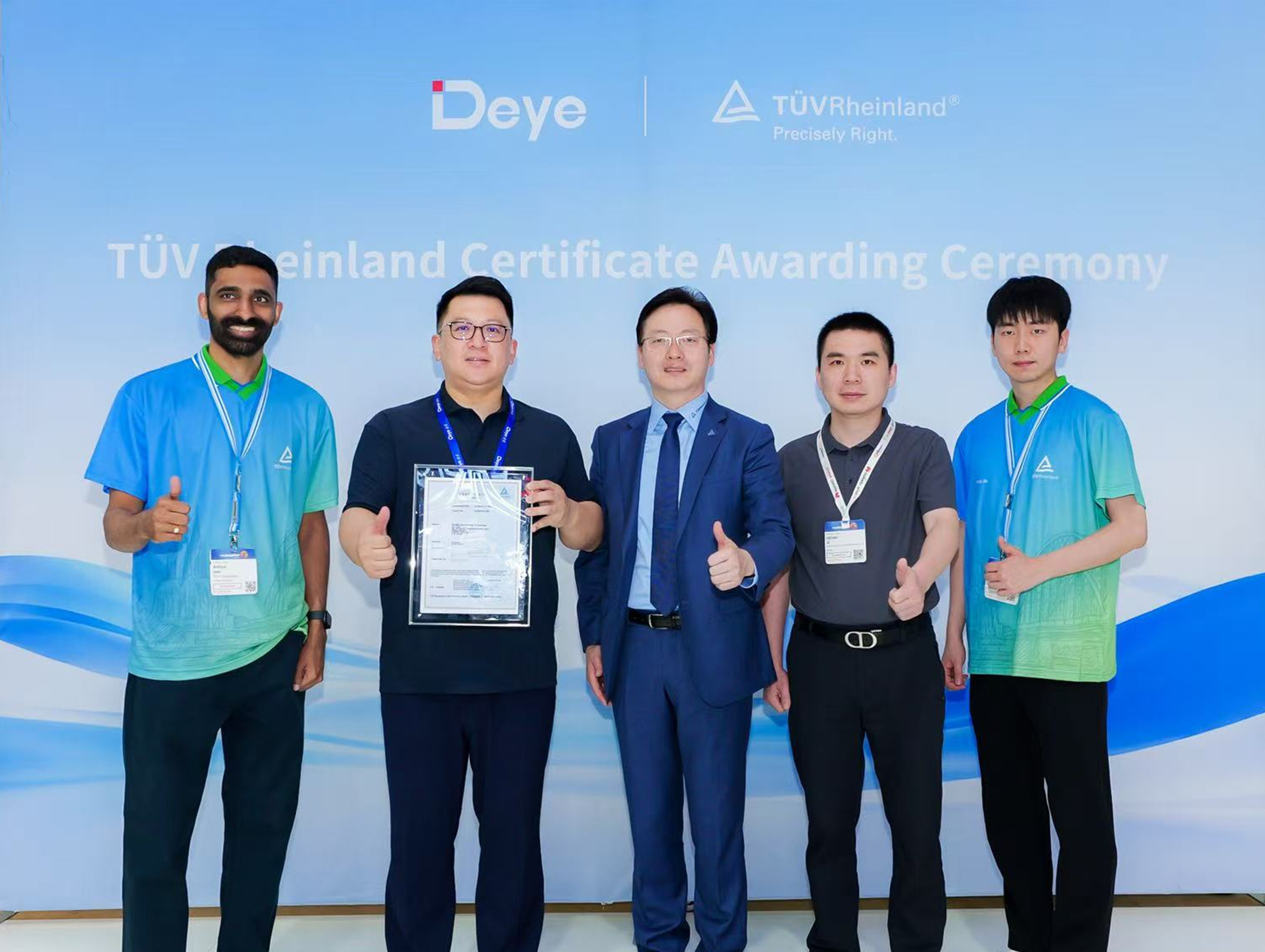 Deye Secures Multiple TÜV Rheinland Certifications at The smarter E Europe
On June 23, the opening day of The smarter E Europe 2026, Deye was officially awarded several presti...
-
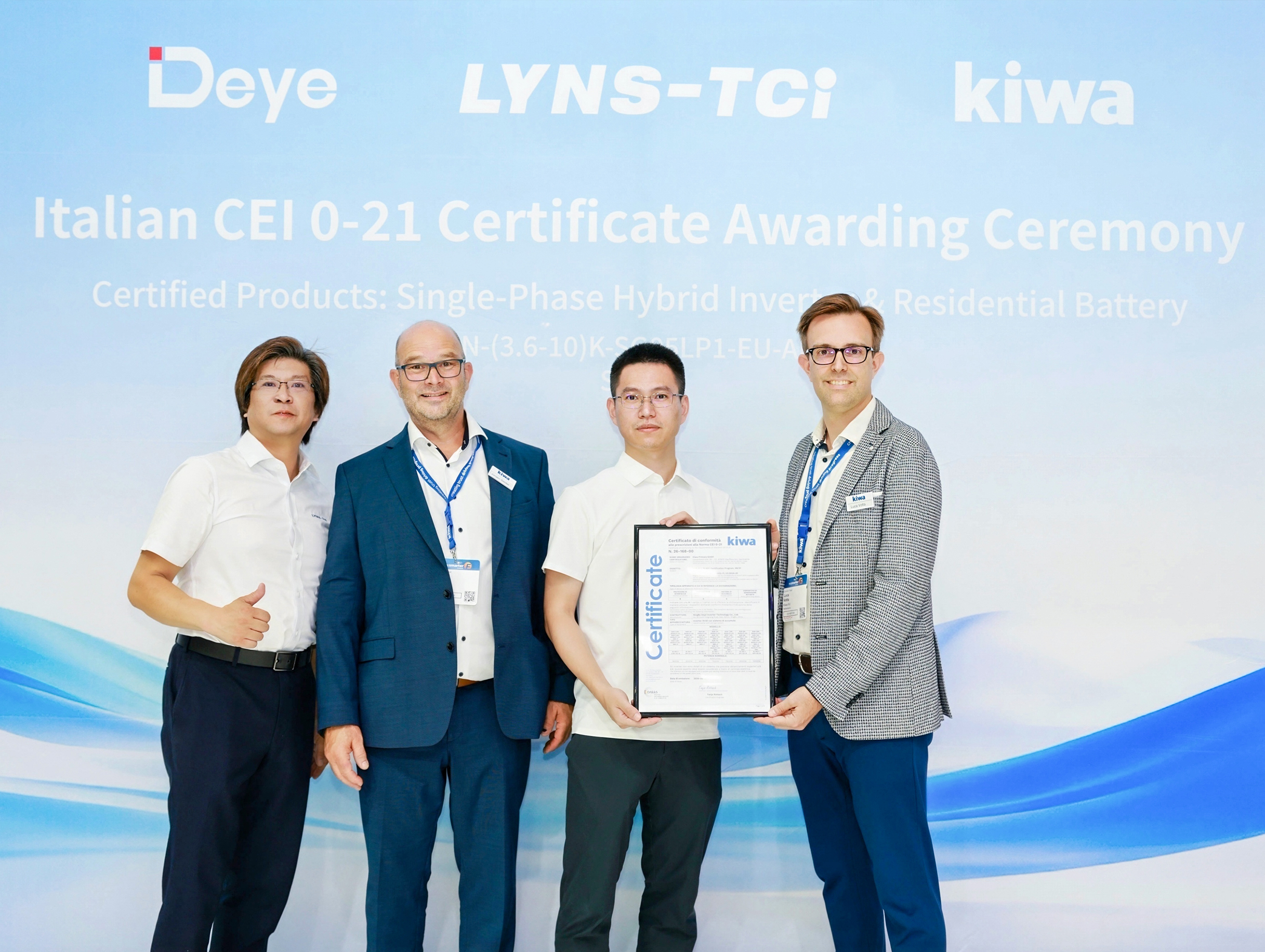 Deye Next-Gen Residential Energy Storage Products Receive Italian CEI 0-21 Certification from Kiwa
At The smarter E Europe 2026, Deye, a leading supplier of inverters and energy storage solutions, of...

Copyright@ 2024.Ningbo Deye Inverter Technology Co.,Ltd. All rights reserved. Solar Inverter Manufacturer
