
 Online Shop
 English
 China - 简体中文
 Global - English
 Brazil - Português
 Netherlands - Dutch
 Italy - Italiano
 Germany - Deutsch
 Spain - Español
 France - Français
 Vietnam - Tiếng Việt
 Poland - Polski
 Australia - English
 Japan - 日本語
Blog

Wireless Energy Metering for Smarter Solar and Energy Storage Systems
Modern solar installations require more than photovoltaic modules and an inverter. They also need accurate measurement, reliable communication, and intelligent control. Without dependable information about electricity flowing into and out of a property, an energy management system cannot properly optimize self-consumption, limit grid export, monitor demand, or coordinate solar generation with batteries and electrical loads.
Wireless CT 02 is designed to address these requirements with a compact, DIN-rail-mounted energy measurement and communication device. Developed for solar inverter, energy storage, and distributed energy applications, it combines current transformer measurement, voltage monitoring, bidirectional metering, local visualization, and remote communication in one practical solution. Its compatibility with single-phase, split-phase, and three-phase systems enables it to serve a wide range of residential and small commercial installations.
The product is available in several communication configurations. The standard model uses RS485, while wireless versions add Wi-Fi, LoRa, or a combination of LoRa and Wi-Fi. This allows installers to select an appropriate connection method according to the distance between the meter and inverter, the building layout, the availability of network infrastructure, and the requirements of the energy management system.
In addition to its technical capabilities, Wireless CT 02 benefits from the manufacturing and engineering strengths of Ningbo Deye Inverter Technology Co., Ltd. The company operates across research and development, product design, manufacturing, sales, and service. Its broad experience in photovoltaic inverters, energy storage systems, microinverters, and energy IoT solutions provides an important foundation for developing accessories that work as part of a complete energy ecosystem rather than as isolated measurement devices.
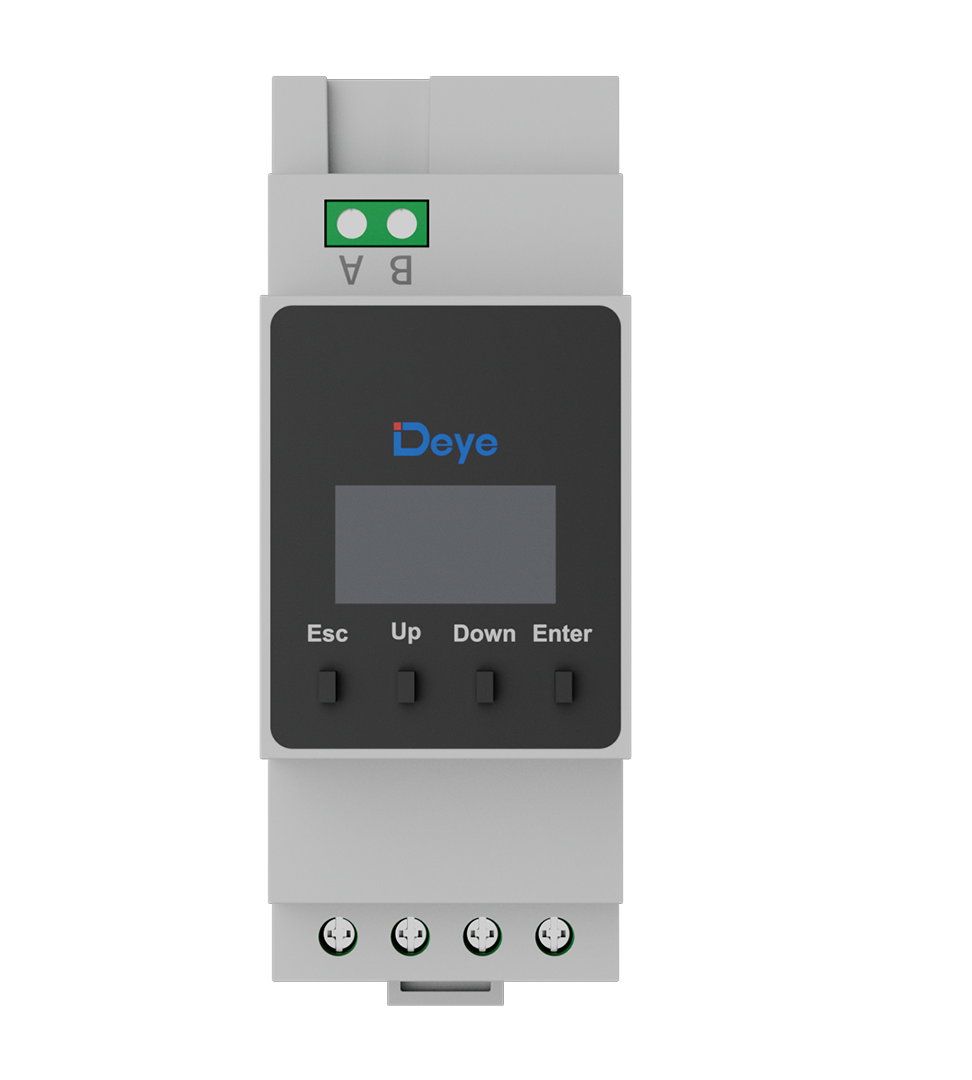
Wireless CT 02
The Role of Accurate Energy Measurement in Solar Systems
Solar power systems continuously change their operating conditions. Solar production rises and falls with irradiance, household consumption changes throughout the day, and batteries alternate between charging and discharging. Grid-connected systems must therefore measure power flows in real time if they are to make reliable control decisions.
An energy meter positioned at the grid connection point can determine whether a property is importing energy from the utility network or exporting surplus electricity. This information is essential for zero-export control. When local solar generation exceeds demand, the inverter can reduce its output or redirect available energy to a battery. When demand is higher than solar production, the system can increase generation, discharge stored energy, or continue importing electricity according to the configured strategy.
Measurement accuracy is equally important for energy monitoring. Users expect the data shown in an application or cloud platform to reflect actual electrical conditions. Installers and service teams also need trustworthy information when evaluating system performance, investigating abnormal consumption, or checking whether an inverter and battery are operating as intended.
Wireless CT 02 measures voltage, current, active power, reactive power, frequency, power factor, and energy. These parameters provide a useful operational picture of the electrical system. Bidirectional measurement allows the device to distinguish between imported and exported energy, making it suitable for installations where electricity may flow in both directions during normal operation.
Product Overview
Wireless CT 02 is an energy measurement accessory designed for integration with compatible inverter and monitoring systems. The device uses a current transformer connection and an electrical voltage connection to calculate key power parameters. Its communication architecture supports both wired and wireless installation strategies.
The product family includes the SUN-SMART-CT02, SUN-SMART-CT02-W, SUN-SMART-CT02-L, and SUN-SMART-CT02-WL variants. The basic model communicates through RS485. The Wi-Fi model supports Wi-Fi and RS485. The LoRa model supports LoRa and RS485, while the combined wireless version supports LoRa, RS485, and Wi-Fi.
This model structure gives distributors and installers flexibility without requiring a completely different measurement platform for every project. A wired installation may be appropriate when the inverter and meter are installed in the same electrical cabinet. Wi-Fi may be selected when the local wireless network is stable and accessible. LoRa can be useful when the measurement point is farther away or separated from the inverter by building materials that make traditional wiring difficult.
| Item | SUN-SMART-CT02 | SUN-SMART-CT02-W | SUN-SMART-CT02-L | SUN-SMART-CT02-WL |
|---|---|---|---|---|
| Primary communication | RS485 | Wi-Fi and RS485 | LoRa and RS485 | LoRa, RS485, and Wi-Fi |
| System compatibility | Single-phase, split-phase, and three-phase applications | Single-phase and three-phase applications | Single-phase and three-phase applications | Single-phase and three-phase applications |
| Display | LCD | LCD | LCD | LCD |
| Mounting | DIN rail | DIN rail | DIN rail | DIN rail |
| Wireless option | None | 2.4 GHz Wi-Fi | Sub-GHz LoRa | Sub-GHz LoRa and 2.4 GHz Wi-Fi |
Flexible Wired and Wireless Communication
One of the product’s central advantages is its communication flexibility. Traditional energy meters generally depend on a fixed wired connection. Wired communication can be highly reliable, but it may require additional cable routes, longer installation time, and more work inside finished buildings. In retrofit applications, cable routing can be particularly inconvenient and expensive.
Wireless CT 02 provides an alternative while retaining RS485 for projects that prefer a conventional communication link. This hybrid approach is valuable because different installation environments demand different solutions. A new residential installation may have simple access between the meter and inverter, making RS485 a cost-effective choice. A completed building, detached electrical room, or multi-zone facility may benefit from LoRa or Wi-Fi.
The LoRa versions are specified for a communication distance of up to 200 meters under barrier-free conditions. Actual performance depends on the building structure, antenna position, electromagnetic environment, and regional radio conditions. Even so, the long-range communication concept is an important advantage for installations in which a short cable connection is impractical.
Wi-Fi versions operate in the 2.4 GHz range and use an external antenna. Wi-Fi is widely available in homes, offices, shops, and small commercial buildings. When the local network is properly configured, it can provide a convenient path for data communication and remote monitoring.
The combined wireless model provides additional flexibility by offering both LoRa and Wi-Fi communication. This can be useful to system designers who want to standardize on one meter family while retaining options for different projects. It can also provide an alternative communication route when a site’s network conditions change.
Compared with products that offer only one communication method, the Wireless CT 02 family reduces the need to match every project with a completely different hardware platform. This simplifies product selection, training, stock management, and replacement planning for installers and distributors.
Single CT Per Inverter System
The product is designed to support synchronized zero-export control with a single current transformer per inverter system. This approach can simplify the measurement architecture. Instead of using multiple independent current measurement devices for separate phases or control functions, the installer can use one coordinated meter according to the supported system configuration.
A simplified measurement arrangement can reduce wiring complexity and limit the number of components inside the distribution board. It may also make commissioning easier because the installer has fewer measurement devices to configure, identify, and validate. Fewer components can mean fewer potential points of failure and a clearer service layout.
Zero-export control is particularly important in markets and applications where the solar system is not permitted to feed electricity into the utility grid, or where the user wishes to avoid exporting energy. The meter measures the grid exchange position and communicates the information to the inverter control system. The inverter can then adjust its output to match local load demand more closely.
For reliable zero-export performance, correct installation remains essential. The current transformer must be installed in the correct orientation and at the appropriate point in the electrical circuit. Phase identification, voltage reference, communication configuration, and system commissioning must also be completed according to the applicable installation instructions and electrical regulations.
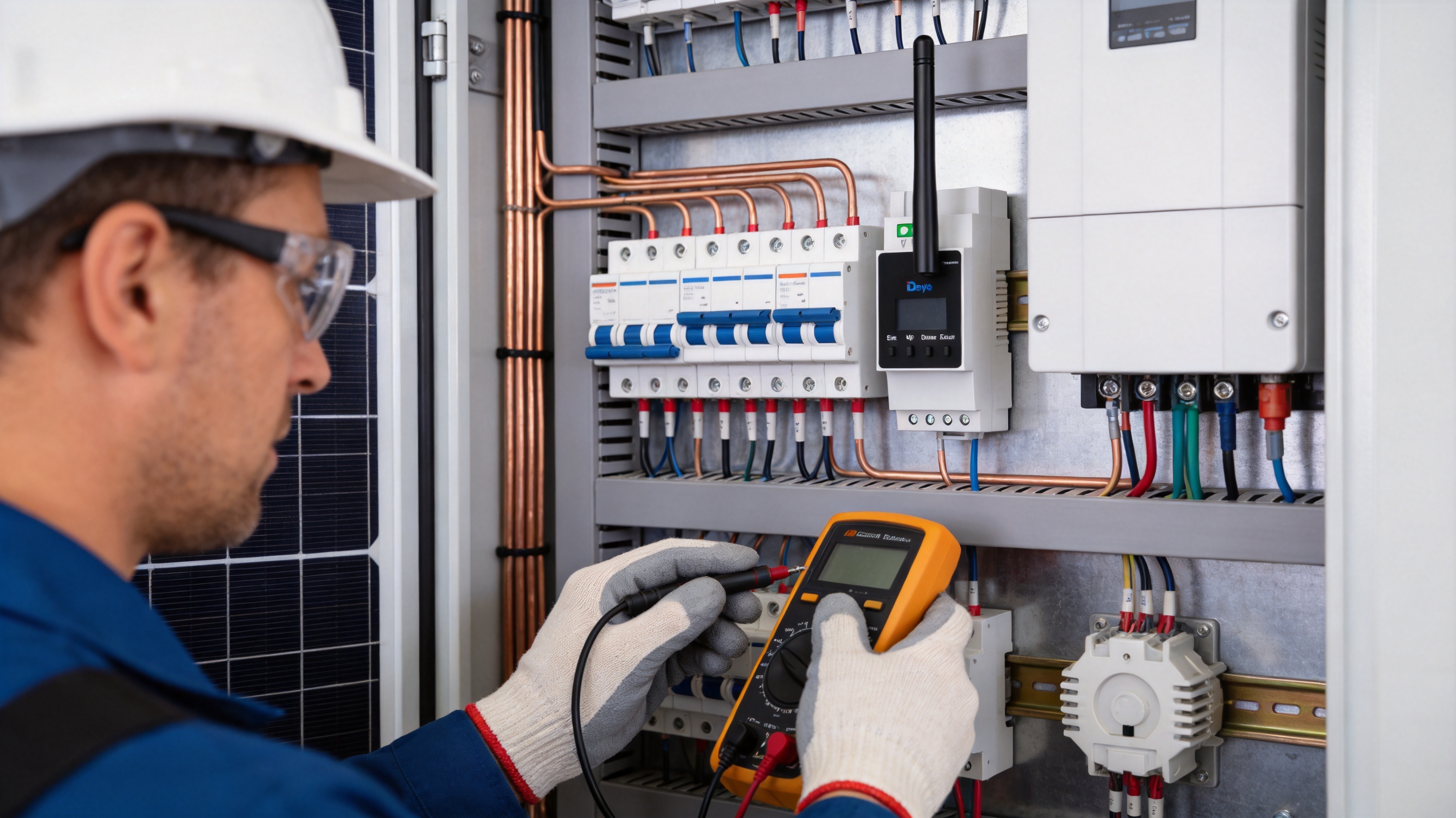
Support for Single-Phase, Split-Phase, and Three-Phase Applications
Electrical systems differ significantly between regions and building types. A small home may use a single-phase supply, while a North American-style residence may use a split-phase arrangement. Commercial properties and larger buildings often use three-phase power. A practical energy meter must be adaptable to these configurations.
Wireless CT 02 supports single-phase and three-phase connection arrangements, with the specified connection options including L1/N for single phase, L1/L2/L3/N for three phase, and L1/L2/N for split phase where supported by the relevant model and installation configuration.
This broad compatibility helps the product serve several market segments:
• Residential rooftop solar installations can use the device for household consumption monitoring and export limitation.
• Small commercial buildings can use it to observe energy demand and coordinate solar production with business loads.
• Energy storage installations can use bidirectional data to track battery-supported consumption and grid exchange.
• Multi-phase properties can use the meter as part of a coordinated inverter control system.
• Retrofit projects can use the available wireless variants to reduce the disruption associated with new communication cabling.
Supporting several electrical configurations in one product family can provide a commercial advantage over narrowly specialized meters. It gives engineering teams and installers a more consistent solution across different projects while reducing the risk of selecting incompatible hardware.
Measurement Performance and Data Quality
Wireless CT 02 is specified with voltage accuracy of ±0.1 V, current accuracy of ±0.01 A, frequency accuracy of ±0.01 Hz, and power accuracy of ±1 W. These specifications support detailed monitoring and responsive inverter control when the device is correctly installed and operated within its intended conditions.
The device measures active power, reactive power, frequency, power factor, and energy in addition to voltage and current. This is more informative than a basic energy counter that displays only cumulative consumption. Active power indicates the real rate of energy transfer, while reactive power and power factor provide additional information about the behavior of connected loads.
Frequency measurement can help confirm the condition of the electrical supply and support the monitoring of grid stability. Power factor information may be useful in commercial environments where inductive or electronic loads affect the relationship between voltage and current. Energy readings support daily, weekly, monthly, and long-term consumption analysis through the compatible monitoring system.
The measurement range and overall performance depend on the current transformer used, the installation arrangement, the quality of voltage connections, and the operating environment. Installers should always follow the product documentation and applicable electrical safety procedures. Accuracy specifications should not be interpreted as a substitute for correct phase identification, secure terminal connections, or suitable system commissioning.
Real-Time LCD Visualization
A local display remains valuable even in systems that offer cloud monitoring. Wireless CT 02 includes an LCD that can show essential operating information without requiring a smartphone, computer, or remote platform.
Local visualization supports several practical tasks. During commissioning, installers can verify whether the meter is receiving voltage and detecting current. They can check whether a phase is connected correctly and whether the measured power direction corresponds to the expected direction. During maintenance, technicians can review key values directly at the electrical cabinet before opening an application or connecting a service device.
For end users, the display provides immediate access to operating information. This can be useful when the internet connection is unavailable, when a user wants to make a quick check, or when a facility manager is standing near the distribution board.
The LCD displays voltage, current, active power, reactive power, frequency, power factor, and energy. Combining local display capability with remote monitoring gives users two levels of visibility: direct access at the installation site and historical or remote access through the digital monitoring platform.
Remote Monitoring Through a Cloud-Based Energy Platform
Wireless CT 02 can transmit essential energy data for remote monitoring through the Deye Cloud ecosystem when configured with a compatible system. Cloud-based monitoring allows users and service teams to view operating information without being physically present at the installation.
Remote monitoring is increasingly important as solar and energy storage systems become distributed across many locations. A service provider may be responsible for dozens or hundreds of installations. Without remote data, each diagnostic visit requires travel and on-site inspection. With cloud information, the service team can review system behavior first, identify possible issues, and determine whether a site visit is necessary.
Users can use monitoring data to understand solar production, electricity consumption, grid import, and grid export. This information supports better decisions about appliance scheduling, battery operation, and energy-saving measures. In a commercial application, historical data can help identify operating patterns and unusual demand.
Cloud monitoring also supports the long-term value of the complete inverter system. A solar installation is not a static product; it is an operating asset that must be observed over many years. Reliable energy data allows users to evaluate performance over time and makes preventive maintenance more practical.
Bidirectional Metering for Energy Flow Management
Many modern energy systems operate in both directions. During sunny periods, a photovoltaic system may supply local loads and export excess electricity. At night, the property may import electricity from the grid. A battery may charge from solar power and later discharge to serve local loads. The meter must therefore recognize both directions of flow.
Wireless CT 02 provides bidirectional metering for this purpose. It can help distinguish energy entering a property from energy leaving it, allowing the inverter and monitoring system to present a more complete picture of energy behavior.
This capability is especially useful for hybrid inverter systems. A hybrid inverter can coordinate PV generation, battery charging, battery discharging, local consumption, and grid interaction. Accurate bidirectional information gives the control system a better basis for deciding how to use available energy.
Bidirectional metering also improves user understanding. Instead of seeing only total production or total consumption, users can observe how much solar power was used locally, how much was stored, and how much moved to or from the grid. This supports informed energy management rather than simple generation monitoring.
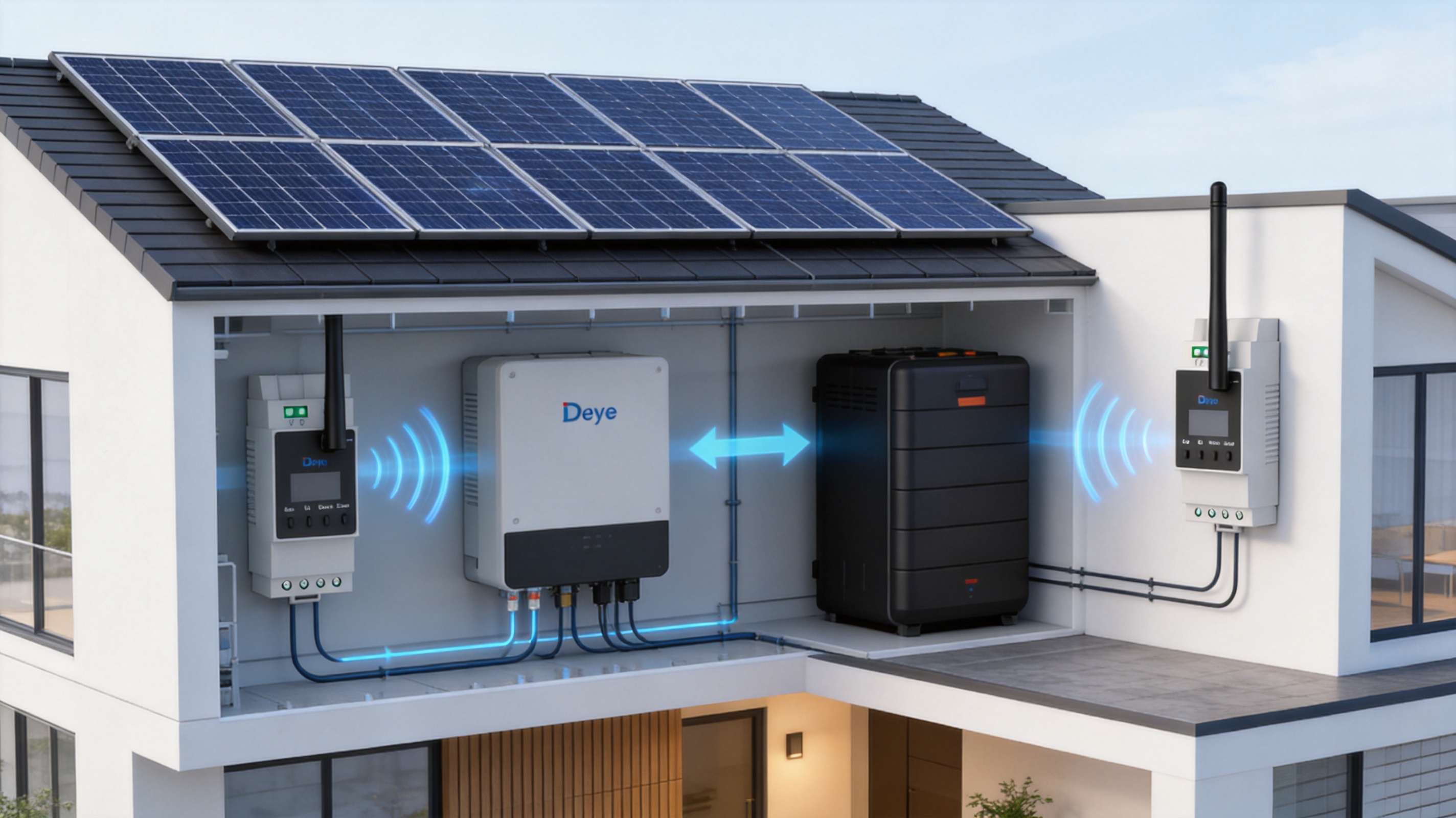
Compact DIN-Rail Design
Electrical cabinets are often crowded. Space is needed for circuit breakers, protection devices, contactors, communication equipment, inverter accessories, and terminal blocks. Wireless CT 02 uses a compact form factor measuring 36 by 94 by 64 millimeters and weighing approximately 0.12 kilograms.
DIN-rail mounting allows the device to be installed in standard electrical distribution equipment. This mounting method is familiar to electricians and supports a clean, organized cabinet layout. It also makes replacement and inspection more straightforward than mounting methods that require custom brackets or large surface areas.
The small size can be particularly helpful in residential retrofit projects. Existing distribution boards may have limited room, and a compact meter is easier to incorporate without extensive cabinet modification. In commercial installations, the DIN-rail format can support modular panel design and consistent arrangement of control components.
Mechanical design is an important part of installation efficiency. A device may have excellent electrical specifications but still create unnecessary project cost if it is difficult to mount, access, or replace. The compact DIN-rail structure of Wireless CT 02 addresses these practical concerns.
Environmental Performance and Safety Characteristics
Wireless CT 02 is specified for an operating temperature range of -40 to +60 degrees Celsius, with operating humidity from 0 to 75 percent. The broad temperature range supports use in a variety of indoor electrical environments, including equipment rooms, garages, utility spaces, and distribution cabinets that may experience seasonal temperature changes.
The device has an IP20 ingress protection rating. This means it is intended for suitable indoor or protected electrical cabinet installation and is not designed for direct exposure to rain, water jets, or outdoor weather. Installers must place it inside an appropriate enclosure and follow local requirements for protection against contact, moisture, dust, and environmental hazards.
The product is rated for an altitude of up to 3,000 meters and has an AC voltage withstand specification of 4 kV for one minute. It is certified according to IEC/EN 61010-1, a standard relevant to the safety of electrical measurement and laboratory equipment. These characteristics help support safe integration when the product is used within its specified limits.
Safety is not limited to the meter itself. Installation must be carried out by qualified personnel using suitable protective equipment and isolation procedures. Current transformers, voltage terminals, communication wiring, and phase conductors must be installed in accordance with the product manual and local electrical codes.
Wireless Communication Options in More Detail
RS485 Communication
RS485 is widely used in inverter and energy management systems because it is robust, economical, and suitable for communication over practical cable distances. It can be a strong choice for new installations where the meter and inverter are located in the same cabinet or in nearby rooms.
A wired RS485 connection may also be preferred in environments with heavy radio traffic, strict wireless restrictions, or a requirement for a physically controlled communication path. It offers a familiar commissioning process for installers who regularly work with inverter accessories and industrial control equipment.
Wi-Fi Communication
Wi-Fi can reduce the need for dedicated communication cabling. The Wi-Fi version operates in the 2.4 GHz frequency range and uses an external antenna. It may be suitable for homes and small businesses where a stable wireless network is already available.
Wi-Fi installation requires attention to signal strength, network configuration, security settings, and the position of the antenna. Electrical cabinets can attenuate radio signals, so the antenna should be installed according to the product instructions and positioned to support dependable communication.
LoRa Communication
LoRa is designed for low-power, long-range communication. The LoRa version operates in the 863–870 MHz range and uses an external antenna with a specified gain of 0.79 dBi at 868 MHz. Its stated communication distance can reach 200 meters under barrier-free conditions.
LoRa can be useful when the meter is located in a separate room, building, or electrical area. It may reduce the installation effort associated with long RS485 cable runs while offering greater range than many conventional short-distance wireless approaches.
Combined LoRa and Wi-Fi
The combined wireless version provides both LoRa and Wi-Fi functionality in addition to RS485. This broadens deployment options and can be useful for installers who want one product family to cover several communication architectures.
The most appropriate communication method depends on site conditions. Wireless communication should never be selected solely on nominal range. The building structure, metal cabinets, walls, radio interference, antenna location, network reliability, and local regulatory requirements must all be considered.
Manufacturing and Engineering Strengths
The performance of a smart energy accessory depends not only on its published specifications but also on the company’s ability to develop, manufacture, test, and support the product consistently. Ningbo Deye Inverter Technology Co., Ltd. operates as part of a broader technology manufacturing organization with capabilities covering research and development, design, production, sales, and service.
This integrated structure can improve coordination between product engineering and manufacturing. Measurement devices must combine electrical sensing, communication hardware, firmware, mechanical design, display technology, and safety considerations. When these disciplines are managed within an established product organization, design decisions can be evaluated across the entire product life cycle.
The company’s experience in photovoltaic inverters and energy storage systems is particularly relevant. Wireless CT 02 is not simply a standalone meter; it is intended to communicate with energy conversion equipment and support functions such as zero-export control, remote monitoring, and energy flow management. Experience with inverter control systems helps inform the development of measurement accessories that work within a larger power electronics ecosystem.
The company also has experience in microinverters, string inverters, hybrid inverters, off-grid inverters, and energy storage products. This broad portfolio exposes its engineering teams to different electrical architectures and application requirements. As a result, the company can design accessories with awareness of residential, commercial, industrial, and distributed energy use cases.
Advanced manufacturing in this context includes more than automated assembly. It involves controlled component selection, repeatable production processes, firmware integration, electrical safety testing, communication verification, quality inspection, and traceable service support. A measurement product must deliver consistent readings from one production unit to another, so manufacturing discipline is essential.
Quality Considerations for a Measurement Device
Energy meters are control and information devices. If their data is incorrect, an inverter may respond incorrectly, a monitoring platform may display misleading information, or a user may make decisions based on inaccurate energy information. Quality control must therefore cover both physical construction and measurement behavior.
Important production and inspection considerations include the integrity of voltage input circuits, current transformer interfaces, communication ports, LCD operation, wireless performance, insulation, temperature behavior, and enclosure quality. The AC voltage withstand requirement and IEC/EN 61010-1 certification provide relevant safety benchmarks.
Firmware is also an important part of the product. The meter must sample electrical parameters, calculate power values, handle bidirectional flow, update the display, and transmit data in a way that the connected inverter and monitoring platform can interpret correctly. Hardware and software validation are therefore closely connected.
For wireless products, quality assurance additionally involves antenna connections, radio performance, communication stability, and coexistence with other devices. The external antenna design allows the antenna position to be considered during installation, which can help improve communication in challenging environments.
Advantages Over Less Flexible Competitors
Wireless CT 02 has several advantages when compared with basic energy meters or narrowly designed monitoring accessories.
First, it combines wired and wireless communication options. A competitor that supports only RS485 may require additional cabling or installation labor in retrofit projects. A competitor that supports only Wi-Fi may be unsuitable in locations with poor network coverage or restrictive wireless policies. The Wireless CT 02 family gives installers more ways to solve the communication problem.
Second, the product supports bidirectional metering and zero-export control. Some basic meters are designed mainly for consumption display and do not provide the complete information required for coordinated inverter control. Bidirectional operation makes the device more suitable for hybrid solar and energy storage applications.
Third, it covers multiple electrical system types. Support for single-phase, split-phase, and three-phase applications allows it to serve a wider customer base than a model limited to only one configuration.
Fourth, it combines local LCD visualization with cloud-based remote monitoring. A product that offers only cloud access may be inconvenient during commissioning or in locations with unreliable internet connectivity. A product that provides only local display lacks the historical and remote service capabilities of a digital platform. The combination delivers both immediate and long-term visibility.
Fifth, its DIN-rail format and compact dimensions support practical cabinet integration. Installation efficiency can have a direct effect on project cost, especially in retrofit work and distributed residential deployments.
Finally, the product is supported by a company with a broad portfolio of solar inverters and energy storage systems. This ecosystem approach can make it easier to source compatible equipment, standardize training, and obtain technical support for complete system applications.
Applications in Residential Solar Installations
In a residential solar system, Wireless CT 02 can measure the energy exchange between the home and the grid. The inverter can use the information to limit export, optimize self-consumption, or coordinate battery operation.
Homeowners can view real-time energy information and review historical performance through the compatible monitoring platform. They may be able to identify periods of high consumption, understand how much solar energy is used directly, and determine whether a battery is charging or discharging according to the expected schedule.
The wireless variants are particularly useful for homes where the main distribution board and inverter are separated by finished walls, multiple floors, garages, or detached structures. Reducing the need for long communication cable routes can simplify the installation process.
Applications in Commercial and Small Industrial Sites
Small businesses often have more complex load profiles than homes. Refrigeration, pumps, motors, air-conditioning systems, office equipment, and production machinery may operate at different times and with different power characteristics. Monitoring active power, reactive power, frequency, and power factor can provide a more complete understanding of the site.
When paired with a solar or energy storage system, the meter can help the inverter respond to changing demand. A commercial customer may use the system to reduce grid imports during peak periods, increase on-site solar consumption, or prevent unwanted export.
LoRa communication can be useful when the meter is installed in a main switchboard and the inverter is located in another part of the facility. The combined communication model can offer additional flexibility for facilities that already use Wi-Fi while also requiring longer-range communication between equipment.
Applications in Energy Storage Systems
Energy storage systems depend on accurate information about load demand and grid exchange. A hybrid inverter may charge a battery when solar production exceeds local demand and discharge the battery when demand rises or grid electricity becomes more expensive.
Wireless CT 02 provides the bidirectional measurements needed to observe these changing flows. It can help the system distinguish between solar energy used by local loads, energy sent to the battery, energy imported from the grid, and energy exported to the grid.
For service teams, the measurement data can assist in determining whether a battery is operating according to its configured strategy. If a system is importing more energy than expected, exporting during a restricted period, or failing to respond to load changes, the meter data can provide an initial diagnostic reference.
Installation and Commissioning Considerations
Professional installation is essential for accurate operation. The current transformer must be installed around the correct conductor, with its orientation aligned with the intended measurement direction. The voltage connection must correspond to the correct phase and neutral arrangement. In three-phase applications, phase order and phase association require particular attention.
The installer should verify that the selected model matches the electrical system and communication requirements. A wired RS485 version may be appropriate for a short, accessible connection. A Wi-Fi model requires a suitable wireless network. A LoRa model requires attention to antenna placement and communication distance. The combined model should be configured according to the communication architecture selected for the project.
After installation, commissioning should include verification of displayed voltage, current, power direction, frequency, and communication status. If the site has known loads, the installer can compare expected operating conditions with the meter readings. Zero-export operation should be tested under appropriate conditions to confirm that the inverter responds correctly.
The product manual and local electrical regulations should always take precedence over general guidance. Electrical work must be performed by qualified personnel, and the system should be isolated and tested using appropriate safety procedures before the enclosure is opened or wiring is changed.
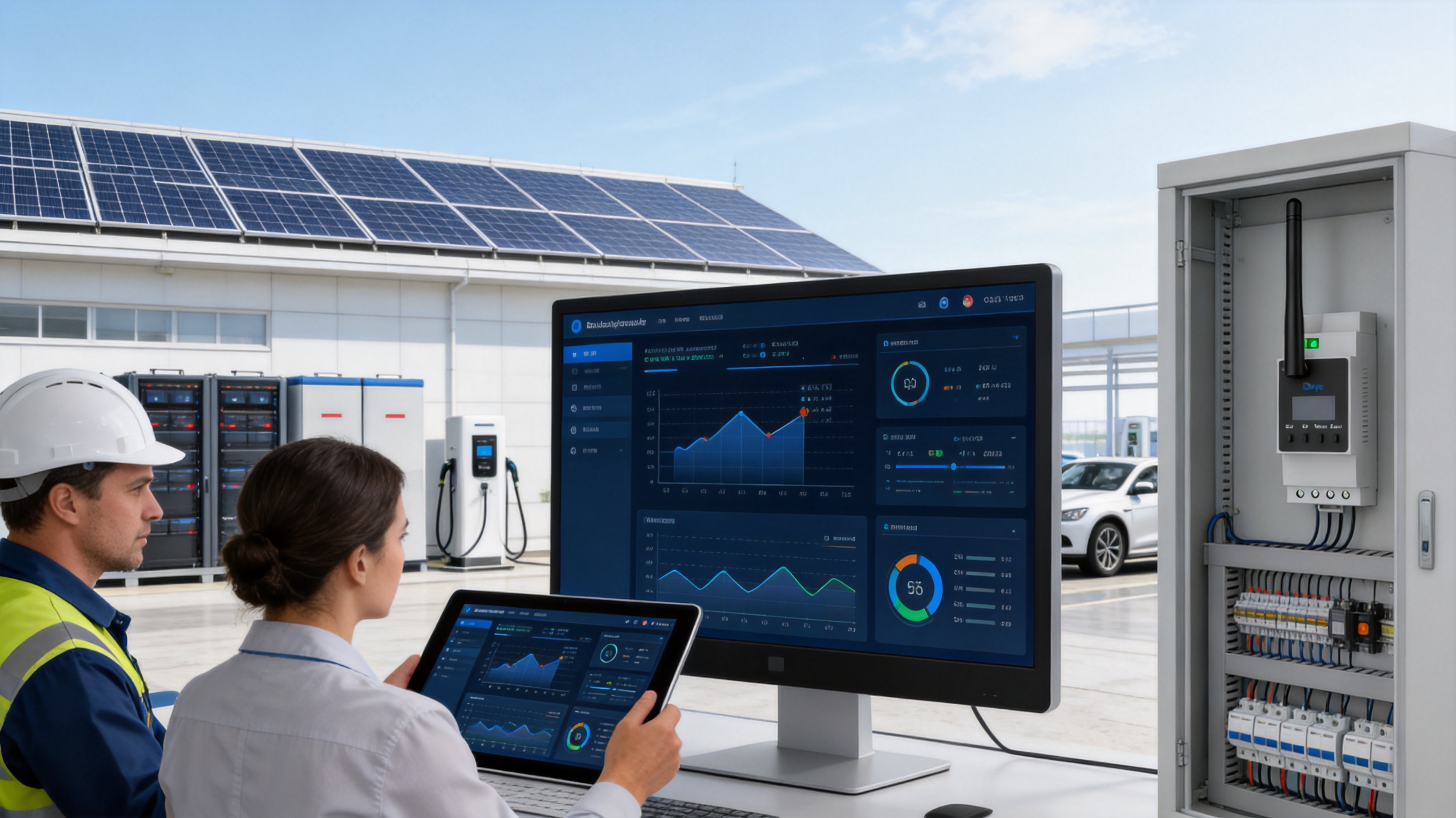
Maintenance and Long-Term Service
Wireless CT 02 is designed for long-term integration into a solar or energy storage system and includes a five-year warranty specification. Even when a device is maintenance-free under normal conditions, periodic system checks remain useful.
Service personnel can inspect the physical condition of the meter, confirm that terminals remain secure, check antenna connections, and verify that measured values are plausible. Communication status should also be reviewed, especially after changes to a Wi-Fi network, inverter, router, or energy management platform.
Cloud-based data can make maintenance more efficient by revealing trends before a complete communication failure occurs. A sudden loss of data, unusual power direction, or persistent discrepancy between expected and measured energy may indicate a configuration issue or a problem elsewhere in the system.
A standardized meter family can simplify spare-parts planning. Installers who work with multiple compatible inverter and storage products may be able to keep a smaller range of accessories in inventory while supporting different communication requirements.
Why an Integrated Ecosystem Matters
Solar equipment performs best when measurement, control, conversion, storage, and monitoring are designed to work together. An energy meter from an unrelated supplier may be technically suitable, but compatibility, communication interpretation, firmware behavior, and service responsibility may become more complicated.
Wireless CT 02 is positioned as part of an integrated ecosystem that includes photovoltaic inverters, energy storage systems, cloud monitoring, and wireless energy management solutions. This creates a more unified approach to system design. The installer can consider the complete energy flow rather than treating the meter as an independent add-on.
The company’s broad product portfolio also supports a range of system sizes. Its inverter and energy storage products cover residential, commercial, industrial, and utility-related applications, while microinverters and off-grid products address additional market segments. This experience helps the company understand how metering requirements vary between different types of energy systems.
For users, an integrated ecosystem can simplify operation. For installers, it can reduce compatibility uncertainty. For service providers, it can create a more consistent diagnostic process. These benefits become increasingly important as solar installations include batteries, electric vehicle chargers, heat pumps, and other flexible loads.
Future-Ready Energy Management
The electrical grid is becoming more distributed and interactive. Homes and businesses are no longer only consumers of electricity; they may also generate power, store energy, charge electric vehicles, and respond to time-based tariffs or demand management signals.
Accurate, connected measurement is a foundation for this transition. A meter that can report bidirectional power, communicate through several methods, and connect with a cloud monitoring platform is better suited to future energy management than a simple one-direction counter.
Wireless CT 02 can support this development by providing data for zero-export control, self-consumption optimization, energy storage coordination, and remote system analysis. Its combination of local display and network connectivity also makes it suitable for both current and evolving operating models.
Future applications may require more detailed load analysis, flexible charging, coordinated battery dispatch, and interaction with smart grids. The quality of the measurement layer will remain important regardless of how advanced the control software becomes. Reliable data is the basis for reliable decisions.
Q&A
What is Wireless CT 02?
Wireless CT 02 is an energy measurement and communication device for photovoltaic inverters, energy storage systems, and related energy management applications. It measures electrical parameters and communicates data through RS485, Wi-Fi, LoRa, or a combination of these interfaces, depending on the model.
What does CT mean in the product name?
CT refers to a current transformer. The current transformer detects current flowing through an electrical conductor and provides a measurement signal to the meter. Correct installation direction and conductor placement are essential for accurate power-flow measurement.
Can the meter measure energy in both directions?
Yes. Wireless CT 02 supports bidirectional metering, allowing it to monitor energy imported from the grid and energy exported from the property. This is useful for solar self-consumption, battery systems, and zero-export control.
Which electrical systems are supported?
The product family supports single-phase, split-phase, and three-phase applications according to the relevant model and connection configuration. Installers should confirm the precise model requirements before installation.
What communication options are available?
The standard model uses RS485. Other versions add Wi-Fi, LoRa, or both Wi-Fi and LoRa. The selection should be based on the distance between devices, network availability, building structure, and project requirements.
How far can the LoRa version communicate?
The specified LoRa communication distance is up to 200 meters under barrier-free conditions. Actual range depends on walls, metal structures, antenna position, radio interference, and other site conditions.
Does the product include a display?
Yes. The meter includes an LCD that can show voltage, current, active power, reactive power, frequency, power factor, and energy.
Can the meter support zero-export applications?
Yes. It is designed to support synchronized zero-export control with one CT per inverter system, provided that the inverter, meter, wiring, and configuration are compatible and correctly commissioned.
Where is the device installed?
The device is designed for DIN-rail mounting inside a suitable electrical cabinet or protected enclosure. Its IP20 rating means it should not be directly exposed to outdoor weather or water.
Can users monitor the data remotely?
Yes. When configured with a compatible system, the meter can support remote monitoring through the Deye Cloud platform. Local LCD visualization remains available for on-site checks.
What is the operating temperature range?
The specified operating temperature range is -40 to +60 degrees Celsius. The installation environment should also meet the stated humidity, altitude, enclosure, and safety requirements.
What warranty is specified?
The product information specifies a five-year warranty. Warranty terms, installation requirements, and service conditions should be confirmed with the authorized supplier or service channel.
Who should install the meter?
Installation should be performed by qualified electrical personnel who understand current transformer installation, phase identification, electrical isolation, inverter communication, and applicable local regulations.
Conclusion
Wireless CT 02 is a versatile energy measurement accessory designed for the practical requirements of modern solar and energy storage systems. Its combination of bidirectional metering, zero-export support, real-time data visualization, remote monitoring, and flexible communication makes it suitable for residential, commercial, and distributed energy applications.
The availability of RS485, Wi-Fi, LoRa, and combined wireless versions gives installers more freedom to match the meter to the building and communication environment. Support for single-phase, split-phase, and three-phase systems broadens its application range, while compact DIN-rail mounting helps simplify installation inside electrical cabinets.
The product’s value also comes from its relationship with a wider inverter and energy storage ecosystem. Developed by a company with experience in photovoltaic inverters, microinverters, hybrid systems, off-grid products, and energy storage, the meter is positioned as part of a coordinated energy management solution. Its electrical measurement functions provide the data required for effective control, monitoring, and long-term service.
As solar installations become more intelligent and energy flows become more dynamic, accurate measurement will remain essential. By combining flexible communication, practical installation, local visibility, cloud connectivity, and support for bidirectional energy management, Wireless CT 02 offers a strong foundation for smarter and more responsive solar power systems.
References
1. Wireless CT 02 Product Specification Sheet, SUN-SMART-CT02 Series.
2. Wireless CT 02 Installation and Operation Manual.
3. IEC/EN 61010-1, Safety Requirements for Electrical Equipment for Measurement, Control, and Laboratory Use.
4. General principles of photovoltaic inverter energy management and zero-export control.
5. General principles of current transformer installation and bidirectional electrical metering.
6. Technical information concerning RS485, Wi-Fi, and LoRa communication in distributed energy systems.
7. Product and corporate information supplied by Ningbo Deye Inverter Technology Co., Ltd.
Product: Wireless CT 02

PREV:Wireless Energy Management for Smarter Solar Power Utilization
NEXT:High-Performance Four-MPPT Microinverter for Modern Solar Installations
Share
Product recommendations
news recommendations
-
 GLOBAL EXHIBITION TIMELINE
*Click to view larger image
-
 Deye Secures Multiple TÜV Rheinland Certifications at The smarter E Europe
On June 23, the opening day of The smarter E Europe 2026, Deye was officially awarded several presti...
-
 Deye Next-Gen Residential Energy Storage Products Receive Italian CEI 0-21 Certification from Kiwa
At The smarter E Europe 2026, Deye, a leading supplier of inverters and energy storage solutions, of...

Copyright@ 2024.Ningbo Deye Inverter Technology Co.,Ltd. All rights reserved. Solar Inverter Manufacturer
