
 Online Shop
 English
 China - 简体中文
 Global - English
 Brazil - Português
 Netherlands - Dutch
 Italy - Italiano
 Germany - Deutsch
 Spain - Español
 France - Français
 Vietnam - Tiếng Việt
 Poland - Polski
 Australia - English
 Japan - 日本語
Show Post

How to Choose the Right Microinverter for Your Solar System
Choosing a microinverter should start with the module datasheet, not the inverter model name. The correct match depends on six inputs:
- module power
- module Voc
- module Vmp
- module Isc and Imp
- total module count
- installation layout
If these six points are clear, microinverter selection becomes much more direct. If they are not clear, it is easy to choose a model that looks powerful on paper but does not fit the module current, the voltage window, or the number of inputs required by the system.
Key Takeaways
- For Deye microinverters, module matching should always start with power, voltage, current, and module count together.
- The official Deye small-family datasheet shows 2 MPPT / 1 string per MPPT, while the larger family shows 4 MPPT / 1 string per MPPT.
- In practice, that means the SUN-M80G4-EU-Q0 and SUN-M100G4-EU-Q0 are two-input starting points, while the SUN-M160G4-EU-Q0 and SUN-M200G4-EU-Q0 are four-input starting points.
- The most important hard limits are max PV input voltage, MPPT voltage range, operating input current, and short-circuit current.
- A useful engineering article should not stop at "check the datasheet." It should explain how the datasheet changes the model choice. That is the goal of this guide.
Step 1: Collect the module parameters first
Before selecting a microinverter, collect these values from the module datasheet:
- module rated power
- open-circuit voltage Voc
- operating voltage Vmp
- short-circuit current Isc
- operating current Imp
- number of modules
- whether the array is a balcony PV system or a larger rooftop system
For technical selection work, these values matter more than any marketing description. A microinverter is a correct fit only when the module stays inside the inverter's voltage and current window and when the number of module inputs matches the architecture of the product.
Step 2: Know which Deye microinverter parameters actually decide the match
For Deye microinverters, the most important selection fields are:
- max PV input power
- max PV input voltage
- start-up voltage
- MPPT voltage range
- max operating PV input current
- max input short-circuit current
- number of MPPT trackers
- number of strings per MPPT tracker
- rated AC output power
These are the values that decide whether a module can be connected safely and whether the chosen model is technically reasonable.
Step 3: Understand the Deye input architecture before comparing models
The official Deye datasheets already tell you how many module inputs each product family is built around.
Deye 2-input family
The official SUN-M60/80/100G4-EU-Q0 datasheet lists:
- 2 MPPT / 1 string per MPPT
- 210-560 (2 Pieces) for SUN-M80G4-EU-Q0
- 210-700 (2 Pieces) for SUN-M100G4-EU-Q0
- 60V max PV input voltage
- 25-55V MPPT voltage range
- 13A + 13A max operating PV input current
- 19.5A + 19.5A max input short-circuit current
This means the family is built as a two-input architecture. In practical selection terms, this is the first family to check when the design is based on two modules per unit.
Deye 4-input family
The official SUN-M130/160/180/200/220G4-EU-Q0 page lists:
- 4 MPPT / 1 string per MPPT
- 210-560 (4 Pieces) for SUN-M160G4-EU-Q0
- 210-700 (4 Pieces) for SUN-M200G4-EU-Q0
- 60V max PV input voltage
- 25-55V MPPT voltage range
- 18A + 18A + 18A + 18A max operating PV input current on the higher-current models
- 27A + 27A + 27A + 27A max short-circuit current on the higher-current models
This is a four-input architecture. In practical selection terms, this is the first family to check when the design is based on four modules per unit.
Step 4: Answer the market team's key question directly: how many modules can one MPPT channel take?
On the Deye families used in this article, the official datasheets list:
- 2 MPPT / 1 string per MPPT for the small family
- 4 MPPT / 1 string per MPPT for the larger family
That means each MPPT tracker corresponds to one input string on these products.
For practical system planning, the engineering interpretation is:
- SUN-M80G4-EU-Q0 and SUN-M100G4-EU-Q0 are two-input units
- SUN-M160G4-EU-Q0 and SUN-M200G4-EU-Q0 are four-input units
This is exactly why MPPT count cannot be treated as a decoration in the spec sheet. It directly affects the number of modules a unit is designed to manage and therefore changes both model choice and system count.
Step 5: Use a model comparison table before making a shortlist
For the DeyeStore products currently in scope, the most useful comparison is not "small versus large." It is model versus module requirement.
| Model | Official family architecture | Max PV input power | Max PV input voltage | MPPT range | Max operating current | Max short-circuit current | Rated AC output |
|---|---|---|---|---|---|---|---|
| SUN-M80G4-EU-Q0 | 2 MPPT / 1 string per MPPT | 210-560 (2 Pieces) | 60V | 25-55V | 13A + 13A | 19.5A + 19.5A | 800W |
| SUN-M100G4-EU-Q0 | 2 MPPT / 1 string per MPPT | 210-700 (2 Pieces) | 60V | 25-55V | 13A + 13A | 19.5A + 19.5A | 1000W |
| SUN-M160G4-EU-Q0 | 4 MPPT / 1 string per MPPT | 210-560 (4 Pieces) | 60V | 25-55V | 18A + 18A + 18A + 18A | 27A + 27A + 27A + 27A | 1600W |
| SUN-M200G4-EU-Q0 | 4 MPPT / 1 string per MPPT | 210-700 (4 Pieces) | 60V | 25-55V | 18A + 18A + 18A + 18A | 27A + 27A + 27A + 27A | 2000W |
This table already gives a usable first screening rule:
- if the design is based on 2 module inputs, start with SUN-M80G4-EU-Q0 or SUN-M100G4-EU-Q0
- if the design is based on 4 module inputs, start with SUN-M160G4-EU-Q0 or SUN-M200G4-EU-Q0
Step 6: Match module power first, then check voltage and current
This is where selection becomes practical.
Case A: Two-module balcony or compact system
If the project is a two-module design, the first question is whether the module power range points to SUN-M80G4-EU-Q0 or SUN-M100G4-EU-Q0.
- If the module power falls inside the 210-560 (2 Pieces) range, SUN-M80G4-EU-Q0 is a valid starting point.
- If the module power is above that and still inside the 210-700 (2 Pieces) range, SUN-M100G4-EU-Q0 becomes the stronger starting point.
That is the first filter. The second filter is voltage and current:
- module Voc must stay inside the 60V limit
- module Vmp should sit inside the 25-55V MPPT window
- module Imp should not exceed 13A
- module Isc should not exceed 19.5A
If any of these fail, the model is not the right match even if the module power range looks acceptable.
Case B: Four-module rooftop system
If the project is designed around four module inputs, the first question becomes whether the module power range points to SUN-M160G4-EU-Q0 or SUN-M200G4-EU-Q0.
- If the module power falls inside 210-560 (4 Pieces), SUN-M160G4-EU-Q0 is the first four-input model to check.
- If the module power goes above that and still fits inside 210-700 (4 Pieces), SUN-M200G4-EU-Q0 is the better starting point.
Then run the electrical check:
- module Voc must stay inside 60V
- module Vmp should fit inside 25-55V
- module Imp should not exceed 18A
- module Isc should not exceed 27A
For larger rooftop modules, current is often the field that decides whether a compact model is still usable or whether the project should move into the higher-current family.
Step 7: Use technical pairing logic, not only product naming
Below is a more direct pairing logic for the four DeyeStore models.
When to start with SUN-M80G4-EU-Q0
Start with Deye SUN-M80G4-EU-Q0 when:
- the system is built around 2 module inputs
- module power fits the 210-560 (2 Pieces) range
- module current fits inside 13A / 19.5A
- the project is a balcony PV or compact rooftop design
When to start with SUN-M100G4-EU-Q0
Start with Deye SUN-M100G4-EU-Q0 when:
- the system is still built around 2 module inputs
- module power is above the SUN-M80G4-EU-Q0 range and still inside 210-700 (2 Pieces)
- the module current still fits inside 13A / 19.5A
In other words, SUN-M100G4-EU-Q0 is not just "the bigger one." It is the better two-input option when the module power level is higher.
When to start with SUN-M160G4-EU-Q0
Start with Deye SUN-M160G4-EU-Q0 when:
- the system is built around 4 module inputs
- module power fits the 210-560 (4 Pieces) range
- the module current needs the 18A / 27A class
- the project is a larger rooftop design rather than a compact two-module system
When to start with SUN-M200G4-EU-Q0
Start with Deye SUN-M200G4-EU-Q0 when:
- the system is built around 4 module inputs
- module power is above the SUN-M160G4-EU-Q0 range and still inside 210-700 (4 Pieces)
- the current requirement still fits inside 18A / 27A
For current high-power rooftop modules, SUN-M200G4-EU-Q0 is often the stronger four-input starting point than SUN-M160G4-EU-Q0.
Step 8: Do not ignore cold-weather Voc and real module current
Two engineering mistakes show up repeatedly in field selection:
- checking only module nominal power
- forgetting that Voc and current limits are hard boundaries
When site temperature drops, module Voc rises. That means the 60V max PV input voltage should be checked against the real low-temperature design condition, not only the standard test condition line on the module label.
Current also matters. If the module Imp or Isc is above the inverter input limit, that model should be removed from the shortlist even if the AC power and module count look attractive.
Step 9: Use a simple technical workflow before releasing the BOM
For an engineering or pre-sales check, this workflow is usually enough:
Module-side check
- confirm module count
- confirm rated power
- confirm Voc
- confirm Vmp
- confirm Isc
- confirm Imp
Inverter-side check
- confirm whether the project needs 2 inputs or 4 inputs
- confirm 60V max input voltage is respected
- confirm 25-55V MPPT window is respected
- confirm current limits are respected
- confirm the model power range matches the module range
Final model check
- use SUN-M80G4-EU-Q0 or SUN-M100G4-EU-Q0 for two-input projects
- use SUN-M160G4-EU-Q0 or SUN-M200G4-EU-Q0 for four-input projects
- move to the higher model only when the module data requires it
Conclusion
The right microinverter is not chosen by headline power alone. It is chosen by matching module power, module voltage, module current, and input architecture to the correct Deye family.
For two-input projects, Deye SUN-M80G4-EU-Q0 and Deye SUN-M100G4-EU-Q0 are the correct starting models. For four-input projects, Deye SUN-M160G4-EU-Q0 and Deye SUN-M200G4-EU-Q0 are the correct starting models.
The practical rule is simple: decide the input architecture first, then check power range, then check voltage and current. If those three levels all pass, the model belongs on the shortlist. If one of them fails, it does not.
Shop by System Size
FAQ
Which parameters should be checked first when pairing a module with a Deye microinverter?
Check module power, Voc, Vmp, Isc, Imp, and total module count first. Then compare them with the Deye microinverter's input voltage, MPPT range, current limits, and input architecture.
How many modules can one MPPT channel take on these Deye microinverter families?
The official Deye datasheets used here list 1 string per MPPT tracker. In practical selection terms, the SUN-M80G4-EU-Q0 and SUN-M100G4-EU-Q0 are two-input units, while the SUN-M160G4-EU-Q0 and SUN-M200G4-EU-Q0 are four-input units.
Is module power alone enough to select the correct model?
No. Module power is only the first filter. Voltage and current limits can disqualify a model even when the module power range looks correct.
When should I choose SUN-M200G4-EU-Q0 instead of SUN-M160G4-EU-Q0?
Choose SUN-M200G4-EU-Q0 when the project still needs a four-input architecture but the module power range is above the SUN-M160G4-EU-Q0 window and still inside the official 210-700 (4 Pieces) range, with voltage and current limits also satisfied.
PREV:Indoor C&I ESS
NEXT:How Many Microinverters Do You Need? A Technical Sizing Guide
Share
Product recommendations
news recommendations
-
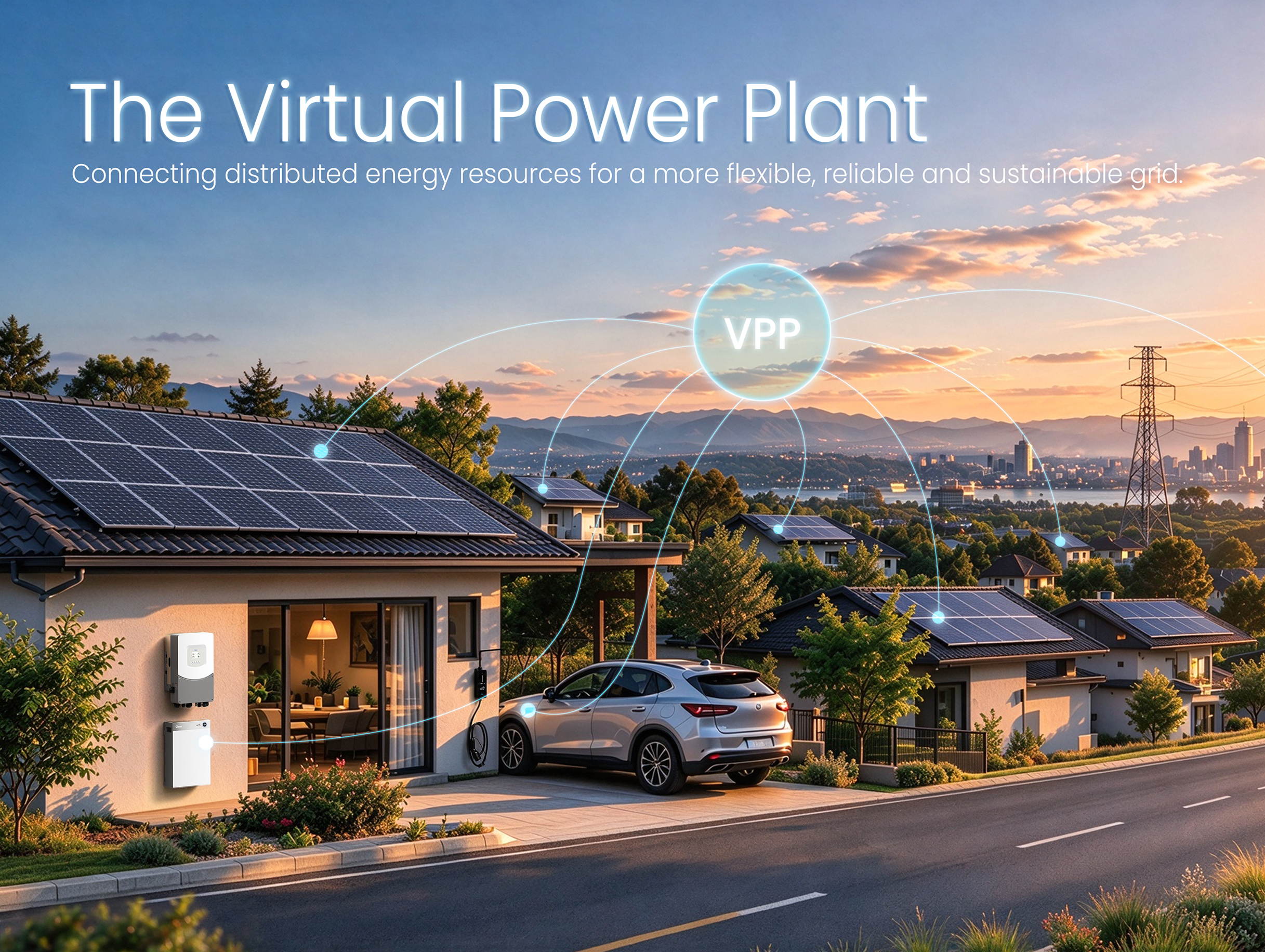 From Centralized Grids to Virtual Power Plants: The Next Evolution of the Power System
For more than a century, power systems around the world have relied on a centralized model. Large p...
-
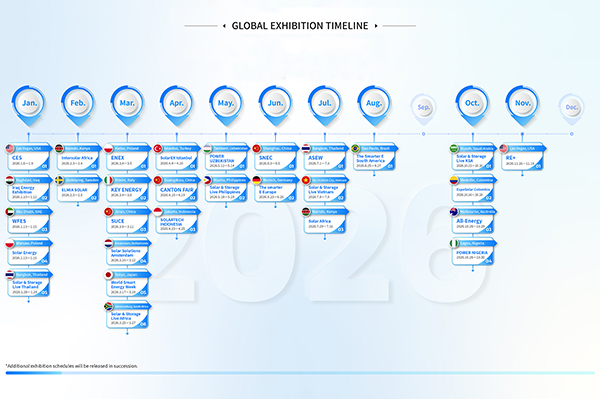 GLOBAL EXHIBITION TIMELINE
*Click to view larger image
-
 Deye Secures Multiple TÜV Rheinland Certifications at The smarter E Europe
On June 23, the opening day of The smarter E Europe 2026, Deye was officially awarded several presti...

Copyright@ 2024.Ningbo Deye Inverter Technology Co.,Ltd. All rights reserved. Solar Inverter Manufacturer
