
 Online Shop
 English
 China - 简体中文
 Global - English
 Brazil - Português
 Netherlands - Dutch
 Italy - Italiano
 Germany - Deutsch
 Spain - Español
 France - Français
 Vietnam - Tiếng Việt
 Poland - Polski
 Australia - English
 Japan - 日本語
Blog

600–1000W Single-Phase Microinverter for High-Performance Residential Solar Systems
Residential solar power is changing rapidly. Homeowners increasingly expect photovoltaic systems to deliver more than basic energy conversion. They want higher energy harvest, safer operation, simple installation, reliable communication, long service life, and compatibility with modern distributed-generation requirements. The SUN-M60/80/100G4-EU-Q0 microinverter series addresses these expectations with a compact single-phase design, two independent maximum power point trackers, integrated Wi-Fi, rapid shutdown capability, and module-level monitoring.
Available in 600W, 800W, and 1000W versions, the series is designed for small residential arrays, balcony photovoltaic systems, and other applications where flexibility and quick deployment are important. Instead of connecting multiple modules to one centralized inverter, the microinverter architecture places power conversion close to the modules. This enables each input channel to operate more independently and reduces the effect of shading, different module orientations, and module-to-module performance variation.
The product is manufactured by Ningbo Deye Inverter Technology Co., Ltd., a solar and energy-storage technology company with experience in research and development, product design, production, sales, and service. The company’s product portfolio includes microinverters, string inverters, hybrid inverters, energy-storage systems, electric-vehicle charging equipment, and related monitoring solutions. This broad technical foundation supports the development of compact power electronics that can be used in residential, commercial, industrial, and utility applications.
The SUN-M60/80/100G4-EU-Q0 series combines practical installation features with electrical and environmental protection. Its IP67 enclosure, natural cooling, wide operating-temperature range, integrated communication, and 15-year warranty make it suitable for demanding outdoor use. Its design lifetime of up to 25 years also aligns with the long operating expectations of a modern photovoltaic installation.
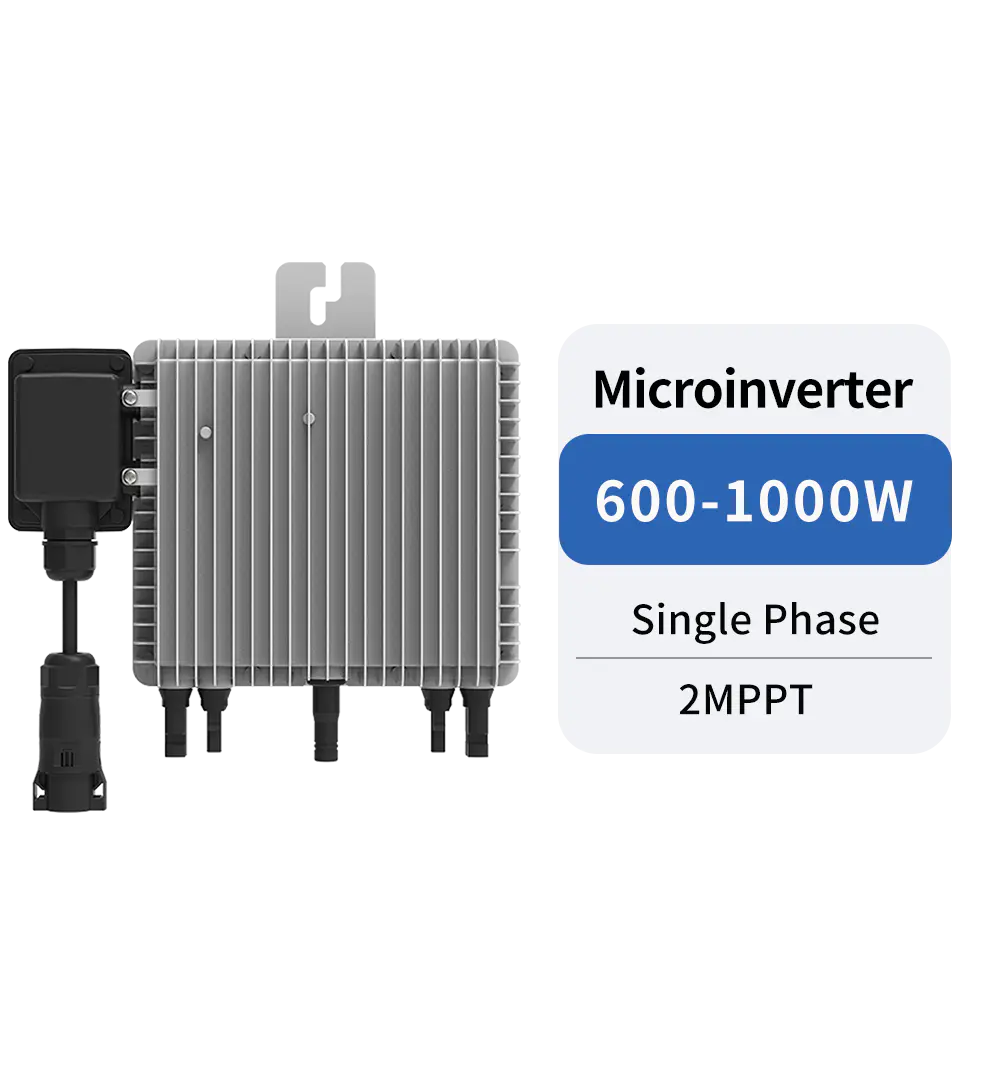
SUN-M60/80/100G4-EU-Q0
Product Overview
The SUN-M60/80/100G4-EU-Q0 is a single-phase microinverter family rated for 600W, 800W, or 1000W of active AC output power. Each unit includes two MPP trackers, with one photovoltaic string connected to each tracker. The two-input arrangement is especially useful for systems using two solar modules or for installations where modules may receive different levels of sunlight.
The three models share the same main electrical platform while providing different AC output ratings. The SUN-M60G4-EU-Q0 delivers 600W, the SUN-M80G4-EU-Q0 delivers 800W, and the SUN-M100G4-EU-Q0 delivers 1000W. This product range allows installers to select a suitable power level without changing to an entirely different system architecture.
| Specification | SUN-M60G4-EU-Q0 | SUN-M80G4-EU-Q0 | SUN-M100G4-EU-Q0 |
|---|---|---|---|
| Rated AC active power | 600W | 800W | 1000W |
| Maximum AC apparent power | 600VA | 800VA | 1000VA |
| Maximum PV input power | 210–420W, 2 modules | 210–560W, 2 modules | 210–700W, 2 modules |
| Maximum PV input voltage | 60V | 60V | 60V |
| MPPT voltage range | 25–55V | 25–55V | 25–55V |
| Number of MPPT trackers | 2 | 2 | 2 |
| Maximum efficiency | 96.5% | 96.5% | 96.5% |
| Communication | Wi-Fi | Wi-Fi | Wi-Fi |
| Ingress protection | IP67 | IP67 | IP67 |
| Warranty | 15 years | 15 years | 15 years |
All three models support a rated output voltage of 220V or 230V and can operate within a voltage range of 0.85 to 1.1 times the nominal voltage. They support 50Hz and 60Hz grid frequencies, with corresponding frequency ranges of 45–55Hz and 55–65Hz. This provides flexibility for different grid environments and regional installation requirements.
Two Independent MPP Trackers
One of the most important advantages of the series is its two-MPPT architecture. A maximum power point tracker continuously adjusts the electrical operating point of a photovoltaic module or string to obtain the highest practical energy output under changing irradiance and temperature conditions.
In a conventional central or string-based design, several modules may share one MPPT channel. If one module is shaded, dusty, poorly oriented, or affected by a different temperature, the mismatch can reduce the performance of the other modules connected to the same tracker. A two-channel microinverter reduces this dependency by allowing each input to be controlled separately.
This configuration is useful for balcony systems, small rooftop arrays, and installations with limited space. Modules may be installed at slightly different angles or on different sections of a roof while still benefiting from independent tracking. The system can also accommodate normal differences between individual modules caused by manufacturing tolerances, aging, or operating conditions.
The input voltage range of 25–55V and the 60V maximum PV input voltage are designed for compatible low-voltage photovoltaic modules. The maximum operating input current is 13A per channel, while the maximum short-circuit current is 19.5A per channel. Installers should always verify module electrical characteristics and local installation rules before commissioning a system.
Compared with a basic single-MPPT microinverter, the dual-MPPT design offers greater layout freedom. Compared with a conventional string inverter, it can provide finer control at the module or two-module level. This makes the SUN-M60/80/100G4-EU-Q0 particularly suitable when roof geometry, shading, or module orientation prevents a perfectly uniform array.
Module-Level Monitoring and Integrated Wi-Fi
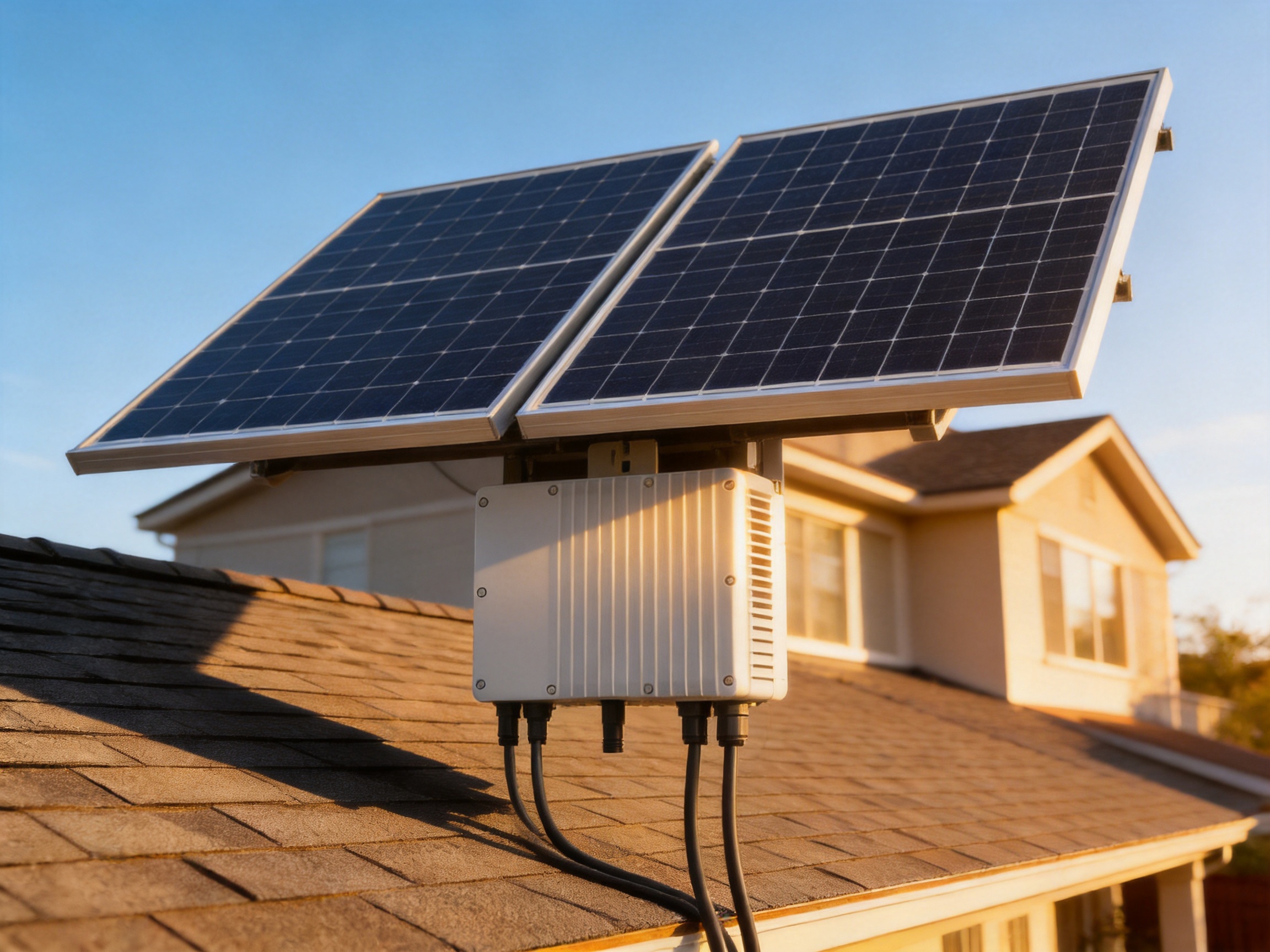
Monitoring is central to the practical operation of a distributed solar system. The series supports module-level monitoring and includes integrated Wi-Fi communication. This allows users and installers to obtain more detailed information about system operation than would normally be available from a single system-level measurement.
Module-level visibility can help identify abnormal production, underperforming modules, connection problems, or changes caused by shading. When a system contains multiple independent microinverters, performance information can be used to distinguish an issue affecting one module from an issue affecting the complete installation.
Integrated Wi-Fi also simplifies commissioning in small residential projects. There is no requirement to install a separate external communication module solely for basic wireless connectivity. Fewer external components can reduce installation time, simplify the equipment layout, and limit the number of additional connection points that may require maintenance.
For homeowners, monitoring can make solar energy easier to understand. Production trends can be reviewed over time, helping users compare generation with household consumption. For installers and service teams, monitoring provides a practical tool for commissioning, troubleshooting, and preventative maintenance.
The communication design is particularly relevant for balcony PV applications. These systems are often installed in compact locations where additional communications hardware would be inconvenient. By integrating Wi-Fi into the microinverter, the product supports a cleaner and more streamlined installation approach.
Designed for Balcony and Quick-Plug PV Systems
Balcony solar has become an accessible entry point for residential renewable energy. These systems generally use a small number of photovoltaic modules, limited installation space, and a simplified connection method. The SUN-M60/80/100G4-EU-Q0 is designed to support this type of application through its compact form, two-module input arrangement, integrated Wi-Fi, and quick-plug compatibility.
The enclosure measures 280.5mm by 190mm by 40mm, excluding connectors and mounting brackets, and weighs approximately 3kg. Its slim profile is helpful where space behind modules or near a balcony railing is restricted. The relatively low weight also reduces the physical burden during installation.
A quick-plug approach can reduce the time required to connect modules and AC branch equipment. It also helps installers organize the system in a predictable way. Nevertheless, all connectors must be correctly matched, securely engaged, and installed according to the relevant technical instructions. Electrical work should be completed by qualified personnel where required by local regulations.
The maximum number of units per branch depends on the selected model. Up to eight SUN-M60 units, six SUN-M80 units, or five SUN-M100 units may be connected per branch under the specified system design. This makes it possible to create small arrays with a consistent product family while keeping branch planning straightforward.
| Model | Maximum units per branch | Rated branch power at maximum quantity |
|---|---|---|
| SUN-M60G4-EU-Q0 | 8 | 4800W |
| SUN-M80G4-EU-Q0 | 6 | 4800W |
| SUN-M100G4-EU-Q0 | 5 | 5000W |
Branch sizing, protective devices, cable selection, and grid connection limits must be checked for every project. The values above describe the product’s stated maximum unit arrangement and should not replace a complete electrical design.
Rapid Shutdown and Human Safety
Safety is a major differentiator in modern photovoltaic equipment. Solar modules can continue to generate DC voltage whenever they receive light, even if the grid connection is disconnected. Rapid shutdown reduces the time required to lower the relevant electrical energy during emergency conditions, maintenance, or intervention by first responders.
The SUN-M60/80/100G4-EU-Q0 includes a rapid shutdown function and supports AC fast discharge of less than 100 milliseconds. This is faster than the stated requirement of less than 200 milliseconds under the new DIN VDE V 0126-95 standard referenced in the product materials.
The rapid shutdown feature can improve safety during emergency response and maintenance. It is particularly valuable in residential installations, where photovoltaic equipment may be located close to living spaces, balconies, roof access areas, or other places regularly used by occupants.
The series also includes complete network and system protection functions with self-check capability. These functions help the microinverter assess operating conditions and respond to abnormal grid or equipment states. Protection features include anti-islanding protection, AC overcurrent protection, AC overvoltage protection, AC short-circuit protection, insulation impedance detection, thermal protection, and DC reverse-polarity protection.
The external relay design provides an additional safety and maintenance advantage. According to the product information, the external relay operates with lower temperature, supports a longer service life, and is easier to maintain. Separating this switching function from the main internal power electronics can assist service procedures and reduce thermal stress on critical components.
Safety functions are not a substitute for correct installation. Appropriate grounding, protection devices, cable routing, connector assembly, commissioning tests, and compliance with local standards remain essential. The microinverter should be used only within its specified operating conditions.
Electrical Performance and Efficiency
The three microinverters provide maximum efficiency of 96.5 percent, Euro efficiency of 96.0 percent, and MPPT efficiency above 99 percent. MPPT efficiency describes how effectively the tracker follows the module’s available maximum power point, while conversion efficiency describes how effectively DC power is converted into AC power.
High MPPT efficiency is valuable in real-world conditions because solar irradiance changes continuously. Clouds, reflections, temperature variation, and partial shading can all change the module’s ideal operating point. A responsive tracker helps the system capture available energy as conditions move throughout the day.
The stated total current harmonic distortion is below 3 percent. Low harmonic distortion contributes to cleaner AC output and helps the inverter meet grid-quality expectations when installed in an appropriate electrical system. The product also provides a power factor adjustment range from 0.9 leading to 0.9 lagging, supporting grid-management requirements where reactive power control is required.
Rated AC output currents are 2.8A or 2.7A for the 600W model, 3.7A or 3.5A for the 800W model, and 4.6A or 4.4A for the 1000W model, depending on the nominal voltage. The output connection uses L/N/PE, representing line, neutral, and protective earth connections for the single-phase system.
The isolated inverter topology provides electrical separation between relevant circuit sections. Combined with insulation impedance detection and protection functions, this supports a robust approach to system safety. The equipment is rated for overvoltage category OVC II on the DC side and OVC III on the AC side.
Outdoor Durability and Thermal Management
Photovoltaic microinverters are installed outdoors and must withstand heat, moisture, dust, and repeated environmental changes. The SUN-M60/80/100G4-EU-Q0 has an IP67 ingress protection rating. This indicates a high level of protection against dust ingress and temporary water immersion under defined test conditions.
The operating temperature range is specified as -40°C to +65°C, with derating above 45°C. This broad range helps the product operate in diverse climates. Derating at elevated temperatures is a normal power-electronics design strategy: when ambient temperature rises, the inverter reduces output when necessary to control internal thermal stress.
The product uses natural cooling rather than a fan-based cooling system. Fanless or naturally cooled equipment can offer several practical benefits. It avoids moving mechanical parts, reduces acoustic output, and limits maintenance related to fan wear or dust accumulation. The stated noise level is no more than 25dB, making the product appropriate for residential environments where acoustic comfort matters.
The combination of IP67 protection, natural cooling, and a compact metal enclosure contributes to long-term outdoor suitability. The design also reduces the need for frequent mechanical intervention. Installers should still provide sufficient ventilation and avoid placing the microinverter where heat can accumulate unnecessarily.
Humidity tolerance is specified at 0–100 percent permissible ambient humidity, and the allowable installation altitude is up to 2000 meters. These specifications provide useful guidance during project planning, particularly for installations exposed to humid conditions or located in elevated areas.
Standards and Grid Compatibility
Grid-connected equipment must satisfy technical requirements related to voltage, frequency, anti-islanding behavior, electromagnetic compatibility, electrical safety, and national grid codes. The SUN-M60/80/100G4-EU-Q0 product documentation lists several grid regulations and standards, including IEC 61727, IEC 62116, CEI 0-21, EN 50549, NRS 097, RD 140, UNE 217002, G98, and VDE-AR-N 4105.
The listed standards cover different regional requirements. Their inclusion demonstrates that the product has been developed for use across multiple markets, subject to the precise model certification, firmware configuration, utility requirements, and installation conditions applicable in each region.
The safety and electromagnetic compatibility references include IEC/EN 61000-6-1, IEC/EN 61000-6-2, IEC/EN 61000-6-3, IEC/EN 61000-6-4, IEC/EN 62109-1, and IEC/EN 62109-2. These standards address immunity, emissions, and safety considerations for power conversion equipment.
Certification documents listed with the product include German VDE 4105 certification materials, an NS protection certificate, a RED certificate, and an EU declaration. Availability and applicability should be confirmed with the supplier for the target market. Grid approval is always dependent on local regulations and the requirements of the relevant distribution network operator.
Comparison with Conventional Solar Architectures
The principal competitive advantage of a microinverter is its distributed architecture. A conventional string inverter gathers the DC output of several modules and converts it to AC at a central location. This can be cost-effective for large, uniform arrays, but performance may be affected when modules operate under different conditions.
The SUN-M60/80/100G4-EU-Q0 converts power close to the modules and uses two independent MPPT channels. This can improve design flexibility for roofs with multiple orientations or intermittent shading. It also limits the scale of a problem: an issue affecting one microinverter does not necessarily disable the complete photovoltaic array.
Compared with a basic microinverter with one tracker, the two-MPPT arrangement can better accommodate two modules with different electrical behavior. Compared with a system requiring a separate wireless gateway for basic communication, integrated Wi-Fi can reduce component count in compact projects.
The rapid shutdown function is another important advantage over older photovoltaic architectures that may require additional equipment to achieve comparable emergency shutdown performance. The less-than-100-millisecond AC fast-discharge capability offers a strong safety profile when correctly integrated with the complete system.
The product is not intended to replace every type of inverter. Large utility-scale arrays may benefit from high-power central or string inverters because of their lower equipment count and specialized plant-control functions. However, for residential rooftops, balcony systems, small commercial installations, and modular distributed generation, the microinverter approach can offer practical advantages in flexibility, monitoring, and safety.
Manufacturing Strength and Product Development Capability
Ningbo Deye Inverter Technology Co., Ltd. was founded in 2000 and has developed into a comprehensive technology manufacturing enterprise. Its activities include research and development, design, production, sales, and service. This integrated structure is important for power-electronics products because reliable performance depends on the coordination of electrical engineering, mechanical design, firmware, production control, testing, certification, and after-sales support.
The company became listed on the Shanghai Stock Exchange in April 2021. Its business includes photovoltaic inverters, energy-storage systems, dehumidification equipment, and HVAC-related products. The breadth of these product areas indicates experience in power conversion, thermal management, environmental equipment, and international product delivery.
Deye’s inverter portfolio covers products from 1kW to 136kW for string applications, energy-storage inverters from 3kW to 80kW, and microinverters from 300W to 2.2kW. This range allows the company to address different system sizes while applying knowledge developed across multiple inverter platforms.
Advanced manufacturing is not limited to the final assembly stage. A dependable microinverter requires controlled sourcing of semiconductor devices, capacitors, magnetic components, connectors, enclosures, communication modules, and protective components. It also requires disciplined control of soldering, thermal interfaces, sealing, firmware loading, calibration, and functional testing.
The product’s compact enclosure and integrated functions reflect a high level of design integration. Wi-Fi communication, rapid shutdown, protection circuits, dual MPPT control, and AC output switching must work together without compromising thermal performance or serviceability. The external relay arrangement is an example of how the product architecture addresses both electrical protection and maintenance considerations.
Large-scale manufacturing experience can also support consistency between units. For a distributed microinverter system, many devices may operate across one roof or balcony installation. Consistent electrical characteristics, firmware behavior, connector quality, and communication performance are therefore essential. A mature manufacturing organization can establish repeatable production and inspection procedures to support this consistency.
The company reports that its products are sold in more than 140 countries and regions. International distribution requires attention to different grid codes, environmental conditions, packaging standards, documentation requirements, service models, and installer expectations. This global experience strengthens the company’s ability to design products for diverse markets.
Installation and System Design Considerations
Correct system design begins with module compatibility. Each input must remain within the specified voltage and current limits. The module’s open-circuit voltage should not exceed the maximum PV input voltage under the lowest expected temperature, and the operating current should remain within the microinverter’s maximum input current rating.
Installers should also consider the module power range. The stated maximum PV input powers are 420W for the SUN-M60, 560W for the SUN-M80, and 700W for the SUN-M100, based on two modules. These values should be evaluated together with local temperature conditions, module characteristics, expected clipping, and the desired annual energy yield.
Physical placement is equally important. Although the IP67 enclosure offers strong environmental protection, the unit should be mounted according to the installation manual and positioned to avoid unnecessary heat accumulation. The rear of a photovoltaic module can become hot in direct sunlight, so airflow and mounting clearance should be considered.
AC branch planning must account for the maximum number of units, conductor capacity, voltage drop, protective-device ratings, and local code requirements. The stated maximum units per branch are model-specific and should be treated as a design limit rather than a recommendation for every installation.
Grounding and bonding must be completed correctly. The L/N/PE connection requires appropriate line, neutral, and protective-earth arrangements. All connectors should be inspected for correct polarity, complete engagement, and mechanical security. Commissioning should include verification of communication, grid parameters, protective functions, and monitoring data.
Where rapid shutdown is required, the complete system should be tested after installation. The microinverter function, module connection arrangement, control equipment, and any required initiation device must operate together. Installers should maintain records of commissioning tests and provide users with operating and emergency information.
Applications
Balcony Photovoltaic Systems
The product is especially suitable for balcony PV systems using one or two modules per microinverter. Its compact dimensions, low weight, quick-plug compatibility, integrated Wi-Fi, and rapid shutdown function support fast installation in space-constrained environments.
Small Residential Rooftops
For homes with a small number of modules, a microinverter system can avoid the need for a large central inverter. Module-level monitoring and independent MPPT control are valuable where roof sections have different orientations or experience partial shading during the day.
Extensions to Existing PV Arrays
Homeowners may want to expand a photovoltaic system in stages. The 600W, 800W, and 1000W models provide options for adding capacity in a modular manner, subject to grid, branch, and structural limitations. The installer should confirm compatibility with the existing AC distribution and monitoring arrangement.
Small Commercial and Specialty Installations
Small offices, workshops, garden buildings, and other low-power facilities can benefit from distributed conversion. The product’s low noise, natural cooling, outdoor enclosure, and detailed monitoring make it suitable where equipment is installed close to occupants or work areas.
Reliability, Service Life, and Warranty
The series is specified with a 25-year design lifetime and a 15-year warranty. These figures provide confidence for long-term solar projects, where the equipment is expected to operate through many seasons of changing temperature and irradiance.
A long warranty is valuable because it reduces perceived investment risk. It also reflects the importance of product design, component selection, manufacturing control, and service support. The warranty remains subject to the supplier’s terms, installation requirements, operating conditions, and maintenance procedures.
The external relay design supports serviceability by providing a component arrangement described as easier to maintain. Natural cooling reduces reliance on fans, while IP67 protection helps shield internal electronics from environmental contamination. Together, these features can reduce common sources of outdoor equipment stress.
Reliability also depends on the system around the inverter. Correct module selection, proper connector installation, suitable cable routing, adequate AC protection, stable communication, and periodic visual inspection all contribute to the expected service life. A high-quality product delivers its best results when integrated into a high-quality installation.
Why Choose This Microinverter Series?
The SUN-M60/80/100G4-EU-Q0 series offers a balanced combination of power range, electrical flexibility, safety, monitoring, and outdoor durability. Its most notable advantages include two independent MPP trackers, module-level monitoring, integrated Wi-Fi, rapid shutdown, less-than-100-millisecond AC fast discharge, IP67 protection, natural cooling, and a 15-year warranty.
Its three power options allow the same product family to serve different residential requirements. The 600W model is suitable for smaller systems, the 800W model provides additional output for higher-power module configurations, and the 1000W model supports the largest PV input and AC output in the family.
Against conventional single-point conversion systems, the product provides a more distributed approach that can improve performance in arrays affected by mismatch or partial shading. Against entry-level microinverters, its dual-MPPT configuration, rapid shutdown functions, integrated communication, and external relay design provide a more complete feature set.
From a manufacturing perspective, the company’s broad product portfolio, international presence, R&D capability, and integrated production model support the product’s market position. Deye’s experience across photovoltaic inverters, energy storage, HVAC products, and energy IoT solutions provides a foundation for continued technical development.
For installers, the series can simplify project selection and commissioning. For homeowners, it offers monitoring and safety features that make distributed solar easier to manage. For system designers, it provides a compact solution for installations where roof geometry, limited space, or phased expansion makes a conventional string inverter less suitable.
Frequently Asked Questions
What is the SUN-M60/80/100G4-EU-Q0?
It is a single-phase microinverter series available in 600W, 800W, and 1000W AC output versions. Each microinverter has two MPP trackers and is designed to convert power from compatible photovoltaic modules into grid-connected AC electricity.
How many photovoltaic modules can one unit support?
The product is designed around two PV input channels, with one string per MPP tracker. The stated PV input power ranges identify configurations using two modules. Actual module compatibility must be checked using voltage, current, and power specifications.
What is the benefit of two MPP trackers?
Two independent trackers allow the connected inputs to operate more separately. This can reduce mismatch losses when modules have different orientations, shading conditions, temperatures, or electrical characteristics.
Does the microinverter support Wi-Fi?
Yes. Wi-Fi communication is integrated into the product. The series also supports module-level monitoring, helping users and installers review the performance of individual parts of the system.
Does it include rapid shutdown?
Yes. The product includes a rapid shutdown function and supports AC fast discharge of less than 100 milliseconds, according to the supplied product information.
What is the enclosure protection rating?
The microinverter has an IP67 ingress protection rating. It is designed for outdoor use, but it must still be installed according to the manufacturer’s instructions and local electrical requirements.
What temperatures can the product withstand?
The specified operating temperature range is -40°C to +65°C, with output derating above 45°C. Correct mounting and ventilation remain important in hot environments.
Does the unit use a cooling fan?
No. The product uses natural cooling and has a stated noise level of no more than 25dB. The absence of a cooling fan can reduce acoustic output and eliminate fan-related maintenance.
How long is the warranty?
The listed warranty period is 15 years. The product also has a stated design lifetime of 25 years. Warranty conditions should be confirmed in the applicable sales and service documentation.
How many units can be installed on one branch?
The stated maximum is eight units for the SUN-M60, six units for the SUN-M80, and five units for the SUN-M100. Branch design must also consider cable capacity, voltage drop, protection devices, local regulations, and grid requirements.
What grid standards are listed for the series?
The product materials list IEC 61727, IEC 62116, CEI 0-21, EN 50549, NRS 097, RD 140, UNE 217002, G98, and VDE-AR-N 4105, along with safety and EMC standards. The applicable approval must be confirmed for the installation location.
Is the product suitable for every solar installation?
No single inverter is suitable for every project. This series is particularly appropriate for small residential, balcony, distributed, and modular systems. Larger projects may require a different inverter architecture after evaluating power, grid-control, storage, and installation requirements.
Conclusion
The SUN-M60/80/100G4-EU-Q0 series is a flexible microinverter solution for modern residential and small-scale photovoltaic systems. Its two independent MPP trackers support better adaptation to varied module conditions, while module-level monitoring and integrated Wi-Fi improve visibility and commissioning convenience.
Its safety platform includes rapid shutdown, less-than-100-millisecond AC fast discharge, anti-islanding protection, insulation monitoring, overcurrent protection, overvoltage protection, short-circuit protection, thermal protection, and reverse-polarity protection. These functions are supported by an IP67 enclosure, natural cooling, low acoustic output, and a broad operating-temperature range.
The three available power ratings make the product family adaptable to different module sizes and system requirements. A 15-year warranty and 25-year design lifetime further support its long-term value.
Behind the product is a manufacturing organization with experience in research, design, production, international distribution, photovoltaic conversion, energy storage, environmental equipment, and energy management. This combination of product specialization and company-wide technical capability positions the series as a strong option for installers and homeowners seeking safe, compact, monitorable, and modular solar power conversion.
References
Deye. SUN-M60/80/100G4-EU-Q0 Series Product Datasheet.
Deye. SUN-M60/80/100G4-EU-Q0 Series Installation and Operation Manual.
IEC 61727. Photovoltaic Systems: Utility Interface Characteristics.
IEC 62116. Utility-Interconnected Photovoltaic Inverters: Test Procedure of Islanding Prevention Measures.
IEC 62109-1 and IEC 62109-2. Safety of Power Converters for Use in Photovoltaic Power Systems.
IEC 61000 Series. Electromagnetic Compatibility Requirements.
EN 50549. Requirements for Generating Plants to Be Connected in Parallel with Distribution Networks.
VDE-AR-N 4105. Technical Requirements for the Connection and Operation of Customer Installations with Low-Voltage Distribution Networks.
DIN VDE V 0126-95. Requirements Related to Fast Disconnection and Safety Functions for Photovoltaic Systems.
Product: SUN-M60/80/100G4-EU-Q0

PREV:Three-Phase String Inverters for Efficient, Flexible, and Reliable Commercial Solar Systems
NEXT:High-Efficiency Three-Phase String Inverter for Modern Commercial Solar Systems
Share
Product recommendations
news recommendations
-
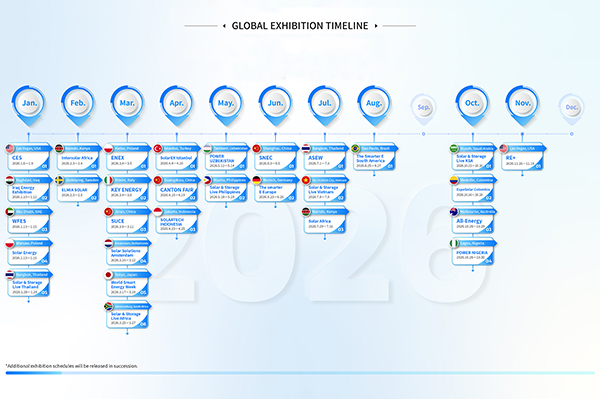 GLOBAL EXHIBITION TIMELINE
*Click to view larger image
-
 Deye Secures Multiple TÜV Rheinland Certifications at The smarter E Europe
On June 23, the opening day of The smarter E Europe 2026, Deye was officially awarded several presti...
-
 Deye Next-Gen Residential Energy Storage Products Receive Italian CEI 0-21 Certification from Kiwa
At The smarter E Europe 2026, Deye, a leading supplier of inverters and energy storage solutions, of...

Copyright@ 2024.Ningbo Deye Inverter Technology Co.,Ltd. All rights reserved. Solar Inverter Manufacturer
