
 Online Shop
 English
 China - 简体中文
 Global - English
 Brazil - Português
 Netherlands - Dutch
 Italy - Italiano
 Germany - Deutsch
 Spain - Español
 France - Français
 Vietnam - Tiếng Việt
 Poland - Polski
 Australia - English
 Japan - 日本語
Technical Topics

How Many Microinverters Do You Need? A Technical Sizing Guide
You do not always need one microinverter for every solar panel. The correct number depends on the architecture of the selected Deye microinverter family.
For the Deye models in current scope, the question becomes very practical:
- SUN-M80G4-EU-Q0 and SUN-M100G4-EU-Q0 are built around 2 MPPT / 1 string per MPPT
- SUN-M160G4-EU-Q0 and SUN-M200G4-EU-Q0 are built around 4 MPPT / 1 string per MPPT
That means the unit count should be calculated from module inputs per unit, not from a generic assumption about microinverters.
Key Takeaways
- Microinverter quantity depends on the Deye product architecture first, then on module count.
- The two-input Deye family is the starting point for 2-module-per-unit designs.
- The four-input Deye family is the starting point for 4-module-per-unit designs.
- Panel count alone is not enough. Module power, Voc, Vmp, Imp, and Isc still need to fit the selected model.
- The best sizing workflow is: count modules -> choose architecture -> verify voltage/current -> confirm final quantity.
Step 1: Read the architecture before counting units
The official Deye datasheets already define the input structure of each family.
Deye two-input family
The official SUN-M60/80/100G4-EU-Q0 datasheet lists:
- 2 MPPT / 1 string per MPPT
- SUN-M80G4-EU-Q0: 210-560 (2 Pieces)
- SUN-M100G4-EU-Q0: 210-700 (2 Pieces)
- 60V max PV input voltage
- 25-55V MPPT voltage range
- 13A + 13A max operating current
- 19.5A + 19.5A max short-circuit current
For quantity planning, this is a two-input family.
Deye four-input family
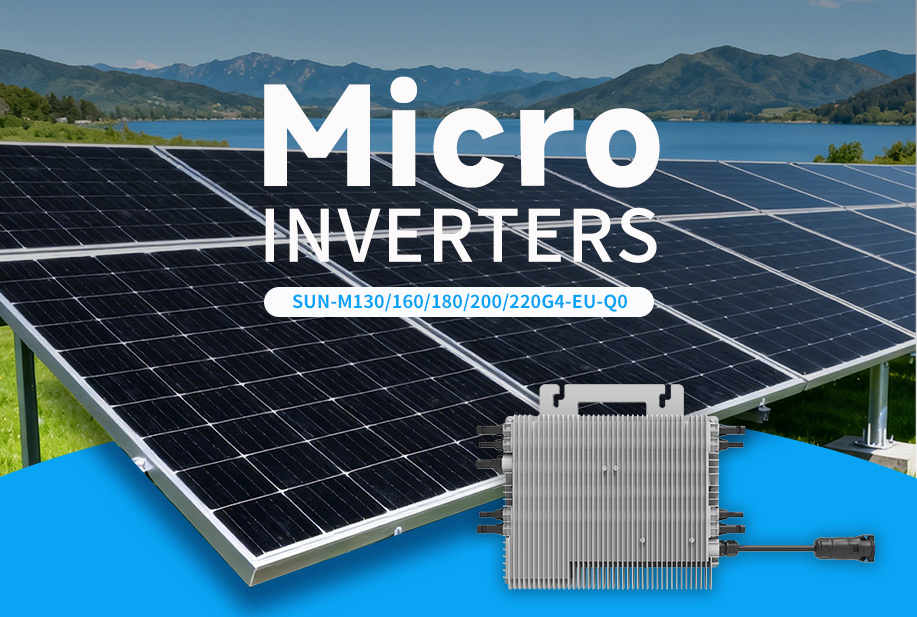
The official SUN-M130/160/180/200/220G4-EU-Q0 page lists:
- 4 MPPT / 1 string per MPPT
- SUN-M160G4-EU-Q0: 210-560 (4 Pieces)
- SUN-M200G4-EU-Q0: 210-700 (4 Pieces)
- 60V max PV input voltage
- 25-55V MPPT voltage range
- 18A + 18A + 18A + 18A max operating current on the higher-current models
- 27A + 27A + 27A + 27A max short-circuit current on the higher-current models
For quantity planning, this is a four-input family.
Step 2: Convert product architecture into a counting rule
Once the family architecture is clear, the first sizing formula becomes straightforward:
- if the chosen unit is a 2-input family, divide module count by 2
- if the chosen unit is a 4-input family, divide module count by 4
That is the structural count.
But that is not the final answer yet. The structural count is valid only if the module power, voltage, and current also fit the selected model.
Step 3: Use the right count formula for the right Deye family
Formula for SUN-M80G4-EU-Q0 and SUN-M100G4-EU-Q0
These products are two-input units. If the project is based on this family:
Required units = total modules / 2
Examples:
- 2 modules -> 1 unit
- 4 modules -> 2 units
- 6 modules -> 3 units
- 8 modules -> 4 units
This formula is valid only if the selected module fits:
- 60V max PV input voltage
- 25-55V MPPT range
- 13A max operating current
- 19.5A max short-circuit current
Formula for SUN-M160G4-EU-Q0 and SUN-M200G4-EU-Q0
These products are four-input units. If the project is based on this family:
Required units = total modules / 4
Examples:
- 4 modules -> 1 unit
- 8 modules -> 2 units
- 12 modules -> 3 units
This formula is valid only if the selected module fits:
- 60V max PV input voltage
- 25-55V MPPT range
- 18A max operating current
- 27A max short-circuit current
Step 4: Decide whether the project should use a two-input or four-input family
This is the real sizing decision.
Use the two-input family when:
- the layout is naturally built around two module inputs per unit
- the project is compact
- the system is a balcony PV setup or smaller rooftop design
- module current fits inside the 13A / 19.5A window
For these projects, Deye SUN-M80G4-EU-Q0 and Deye SUN-M100G4-EU-Q0 are the correct first models to compare.
Use the four-input family when:
- the layout is naturally built around four module inputs per unit
- the project is a broader rooftop installation
- a four-input architecture simplifies the system count
- module current needs the 18A / 27A class
For these projects, Deye SUN-M160G4-EU-Q0 and Deye SUN-M200G4-EU-Q0 are the correct first models to compare.
Step 5: Let module power decide which model inside the family is more suitable
Once the architecture is selected, the module power range helps choose the specific model.
Inside the two-input family
- SUN-M80G4-EU-Q0 is the first model to check when the module falls inside the official 210-560 (2 Pieces) range
- SUN-M100G4-EU-Q0 is the first model to check when the module range moves above that and still fits inside 210-700 (2 Pieces)
Inside the four-input family
- SUN-M160G4-EU-Q0 is the first model to check when the module falls inside 210-560 (4 Pieces)
- SUN-M200G4-EU-Q0 is the first model to check when the module range moves above that and still fits inside 210-700 (4 Pieces)
This is a much better sizing method than choosing by AC power name only.
Step 6: Work through practical sizing cases
Case 1: Two-module balcony PV system
If the design is exactly two modules, start with the two-input family.
The count logic is:
- 2 modules
- 2 inputs per unit
- 1 microinverter unit
Then choose between SUN-M80G4-EU-Q0 and SUN-M100G4-EU-Q0 by checking:
- whether module power fits the official range
- whether Voc stays below 60V
- whether Vmp stays inside 25-55V
- whether Imp and Isc fit the current limits
Case 2: Four-module rooftop system
A four-module project is where many buyers make the wrong assumption. They often think "four modules means four microinverters." That is not automatically true for the Deye families in scope.
There are two valid starting architectures:
- 2 x two-input units
- 1 x four-input unit
The correct direction depends on the real project:
- If the design goal is to stay with the compact two-input family, the count is 4 / 2 = 2 units
- If the design goal is to use a four-input family, the count is 4 / 4 = 1 unit
This is exactly why architecture must be decided before quantity.
Case 3: Eight-module rooftop system
For eight modules, the same logic scales directly:
- 8 / 2 = 4 units with the two-input family
- 8 / 4 = 2 units with the four-input family
The final engineering answer depends on whether the modules fit the current and voltage limits of the selected family and whether the project is meant to be built as a compact distributed layout or a broader four-input architecture.
Step 7: Add the electrical validation before finalizing the BOM
Do not finalize microinverter quantity until these checks are complete.
Voltage validation
For the Deye families used here:
- max PV input voltage is 60V
- MPPT voltage range is 25-55V
That means module Voc and Vmp must be checked against these limits. In practical design, Voc should be reviewed under the lowest expected site temperature because module open-circuit voltage rises in cold weather.
Current validation
For the two-input family:
- max operating current is 13A + 13A
- max short-circuit current is 19.5A + 19.5A
For the four-input family:
- max operating current is 18A + 18A + 18A + 18A
- max short-circuit current is 27A + 27A + 27A + 27A
If a module exceeds these limits, the selected model should be removed from the quantity plan.
Step 8: Avoid the most common sizing mistakes
Mistake 1: Dividing panel count without choosing the family first
This produces the wrong unit count because the Deye families in scope do not use the same input architecture.
Mistake 2: Looking only at rated AC power
Rated AC output is important, but it does not replace:
- input count
- voltage window
- current limit
- module power range
Mistake 3: Ignoring MPPT structure
On these Deye families, 2 MPPT / 1 string per MPPT and 4 MPPT / 1 string per MPPT are not minor details. They are the basis of quantity planning.
Mistake 4: Ignoring current on modern high-power modules
For many modern modules, current can be the field that decides whether the smaller family still works or whether the project must move to the higher-current four-input family.
Step 9: Use a simple technical checklist before confirming the count
Module checklist
- total module count
- module power
- module Voc
- module Vmp
- module Isc
- module Imp
Inverter checklist
- 2-input or 4-input architecture
- official Deye power range
- 60V max PV input voltage
- 25-55V MPPT range
- current limits
Quantity checklist
- divide by 2 for the two-input family
- divide by 4 for the four-input family
- verify no electrical limit is exceeded
Conclusion
How many microinverters you need depends first on which Deye architecture you are using.
If the project is based on Deye SUN-M80G4-EU-Q0 or Deye SUN-M100G4-EU-Q0, use a two-input count logic. If the project is based on Deye SUN-M160G4-EU-Q0 or Deye SUN-M200G4-EU-Q0, use a four-input count logic.
The practical rule is straightforward:
- choose the family architecture first
- choose the model by module power range
- verify Voc, Vmp, Imp, and Isc
- then lock the final microinverter quantity
Explore Recommended Models
FAQ
Do I always need one microinverter per panel?
No. For the Deye families covered here, the official architecture is either 2 inputs per unit or 4 inputs per unit, so unit count depends on the chosen family.
How do I count microinverters for four modules?
You can count four modules as 2 units if the design uses the two-input family, or 1 unit if the design uses the four-input family and the modules fit the electrical limits.
What is the most important technical check before finalizing the quantity?
The most important checks are input architecture, max PV input voltage, MPPT voltage range, and module current against the inverter's operating and short-circuit current limits.
When should I use SUN-M200G4-EU-Q0 instead of two SUN-M100G4-EU-Q0 units?
Use SUN-M200G4-EU-Q0 when the project is intentionally designed around a four-input architecture and the module power and current fit the official SUN-M200G4-EU-Q0 limits. Use 2 x SUN-M100G4-EU-Q0 when the project is intentionally kept in the two-input architecture.
PREV:No previous article
NEXT:Deye Inverter Creates A Green Future With India
Share
Product recommendations
news recommendations
-
 How Many Microinverters Do You Need? A Technical Sizing Guide
You do not always need one microinverter for every solar panel. The correct number depends on the ar...
-
 Deye Awarded EUPD Top Brand PV 2026 for Inverters and Storage Across Key Global Markets
Deye, a global provider of photovoltaic inverter and energy storage solutions, has been recognized ...
-

Copyright@ 2024.Ningbo Deye Inverter Technology Co.,Ltd. All rights reserved. Solar Inverter Manufacturer
